

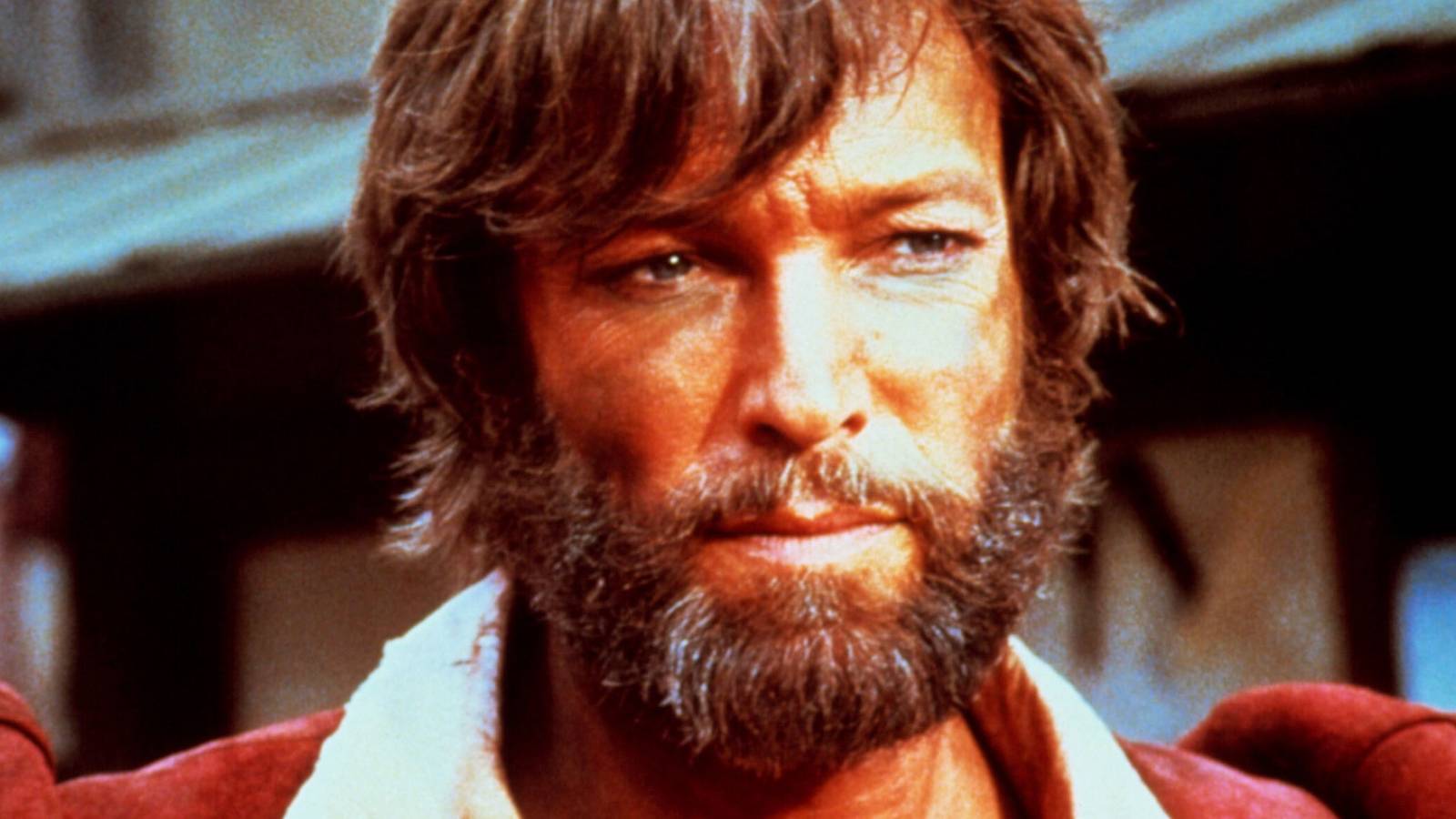
In 1980, Shōgun hit the airwaves, sparking a television revolution. Every decade or so, a new TV show drops that completely shifts the way production companies approach projects. Whether it’s a unique format, a new take on a familiar genre, or a closer look at previously unfamiliar ideas, these shows resonate with viewers in a profound way, prompting other screenwriters to do all they can to replicate that success.
Shōgun is an example of one of these series. It originally aired on NBC in 1980, with five two-to-three-hour-long episodes released over five consecutive nights. This miniseries format was introduced by 1977’s Roots, and Shōgun further popularized it. The story, based on the 1975 novel by James Clavell, revolves around English pilot John Blackthorn, who shipwrecks in Japan in the early 17th century. Blackthorn quickly becomes a contentious asset to Lord Yoshii Toranaga, who uses the Englishman’s knowledge to gain the upper hand over his Portuguese and Jesuit enemies.
NBC’s Shōgun Was A Masterpiece Ahead Of Its Time
It’s no stretch to say that Shōgun was a masterpiece. The show was unlike anything seen on Western television before 1980. Not only was that unique miniseries format, with feature-film-length episodes released nightly, relatively new, but Shōgun consistently pushed boundaries regarding what content was permitted on network TV. The show was violent and sexually explicit, but not without substance. Shōgun proved that long-form, movie-quality projects could be profitable, paving the way for other trend-setting shows like Game of Thrones.
Perhaps even more revolutionary was the way Shōgun immersed viewers in its setting. Japanese culture wasn’t particularly familiar to mainstream Western audiences at the time, but this miniseries changed that. There was a massive uptick in interest in the samurai genre, and even Japanese cuisine became more popular. This look into a portion of history, about which the general audience knew little, gave NBC the highest weekly Nielsen ratings in its history prior to 1980.
Shōgun (1980) Was Not Without Flaws

As can be expected from any TV show, Shōgun had some flaws. At the time, common criticisms revolved around the show’s pacing. During that single week in September 1980, audiences were handed a whopping 12 hours of content, and that certainly wouldn’t be for everyone. Still, the biggest issues came down to authenticity. Shōgun was widely unpopular in Japan when it was broadcast, since the show’s historical details were considered highly inaccurate.
In truth, historical inaccuracy is more of a modern problem. Shōgun‘s representation of 17th-century Japan went largely unnoticed by Western audiences in 1980. However, this detail did cause the series to age a bit more poorly. Add in the outdated filming quality, and Shōgun wouldn’t be a common binge for the modern casual viewer. There are those who will appreciate the masterpiece for what it is, and those who won’t. This is where the new version of Shōgun comes in.
How NBC’s Shōgun Compares To The New Version

In 2024, a new version of Shōgun was released, this time through FX on Hulu. Created by Rachel Kondo and Justin Marks, this series wasn’t set up as a remake of the 1980 miniseries. Instead, it was Clavell’s original book that served as the primary source. This ultimately meant that the new series was far more faithful. Unlike its predecessor, 2024’s Shōgun came with a stronger layer of historical accuracy. The cast was predominantly Japanese, and the majority of the show’s dialogue was in Japanese as well. Unlike the original TV show, FX’s Shōgun was widely praised by Japanese viewers.
The new Shōgun was also set up as a miniseries, though it used today’s standard formula rather than the original series’ formula. NBC’s Shōgun received its fair share of awards in the 1980s, including three Golden Globe Awards (Best Television Series, Best Actor, and Best Actress). 2024’s Shōgun, however, was the first Japanese-language series to win a Primetime Emmy Award for Outstanding Drama Series. Perhaps even more impressively, this Shōgun set the record for the most awards won for a single-season TV show in Emmy history, claiming wins in 18 categories.
Though 2024’s Shōgun was meant to be a miniseries, it was ultimately greenlit for two additional seasons.
Which Version Of Shōgun Is Better?

The two versions of Shōgun might be based on the same source, but their differences make it challenging to rank them against one another. Taking a look at the general reception doesn’t help much. According to Rotten Tomatoes, 79% of critics reviewed the original Shōgun favorably, while the general audience score sits at 91%. The new Shōgun‘s scores are a bit higher, but switched, since critics reviewed the show more favorably with a score of 99% compared to viewers 85%.
Based on these figures, the only easy conclusion is that both versions of Shōgun are great for different reasons. The 1980s series provides that unique viewing experience, but moves along at a slower pace. The 2024 version has all the bells and whistles of modern TV making, but it lacks that deliciously artistic creativity of 1980s television.
Overall, contemporary, casual viewers without an interest in classic TV or television history are more likely to enjoy FX’s Shōgun. Additionally, this series is more likely to please those who value accuracy in their historical dramas. Still, there’s something to be said for those classic masterpieces of decades past. Given the industry significance, it’s hard not to prefer the original Shōgun.
-

Shogun
- Release Date
-
1980 – 1980-00-00
- Directors
-
Jerry London
- Writers
-
Eric Bercovici
-

Richard Chamberlain
Pilot-Major John Blackthorne / Anjin-san
-
Toshirō Mifune
Lord Yoshi Toranaga
-
Yoko Shimada
Lady Toda Buntaro – Mariko
-

John Rhys-Davies
Vasco Rodrigues
-