

Eiichiro Oda’s One Piece is often celebrated for its vibrant aesthetics and how it frames adventure through the pursuit of treasure. However, beneath all the color, most of its emotional backbone comes from some of the most tormenting character histories in all of anime.
From the pain of familial exile to haunting massacres, many of the series’ most resonant moments arrive when characters reveal histories shaped by traumas of unspeakable proportions. Beyond justification for battle, they explain loyalties, moral priorities, and why certain characters carry their burdens as though they are private missions.
To this end, this piece selects eight figures whose origins read like sustained tragedies: stories of surviving atrocity, of choices made under impossible pressure, and of quiet endurance beneath public optimism. Each entry focuses on the human consequences that drive action and define character. These are the stories that make the series emotionally uncompromising.
Sanji
Defined by engineered cruelty and the crushing expectations of an obsession with genetic superiority, Sanji’s life and childhood within the Vinsmoke lineage are one of One Piece’s many disturbing explorations of familial abuse. Born a royal prince of the Germa Kingdom, Sanji spent his childhood as a defect, rejected by his father and viciously tormented by his brothers.
Though Zeff’s intervention saved his life, the trauma Sanji suffered remained, shaping a worldview built on compassion for the hungry alongside a desperate need for external validation. As a result, Sanji’s traumatic background influences every emotional decision he makes throughout the story.
Even after he gains his freedom, the shadow of the Germa legacy from his childhood still haunts him, famously resurfacing during Whole Cake Island when family wounds reopen. Finally, Sanji’s past remains among the story’s darkest because it is one of the most poignant depictions of systemic abuse, a theme the story emphasizes.
Kouzuki Oden

Formerly, the daimyo of Kuri, Oden’s life delicately balances fierce ambition with bitter betrayal, creating one of the series’ most tragic arcs. Born into the Kozuki bloodline, he possessed a charisma that inspired loyalty and a curiosity that pushed him across the world with Whitebeard and Roger.
Unfortunately, upon returning to Wano, what he found was his homeland strangled by Orochi’s deception alongside Kaido’s military grip. His attempt to reclaim his country came at the cost of humiliating compromises of five years of calculated endurance that left, not only his reputation but his mind and body in ruins.
Even sadder, he had to bear the weight of it all alone. All of his sacrifices culminated in the ‘Legendary Hour’, a horrifying execution that remains one of One Piece’s most painful moments. Dying with a smile to a gunshot to the head, Oden’s suffering essentially reshaped the series’ political landscape, leaving behind generational trauma felt by all of Wano.
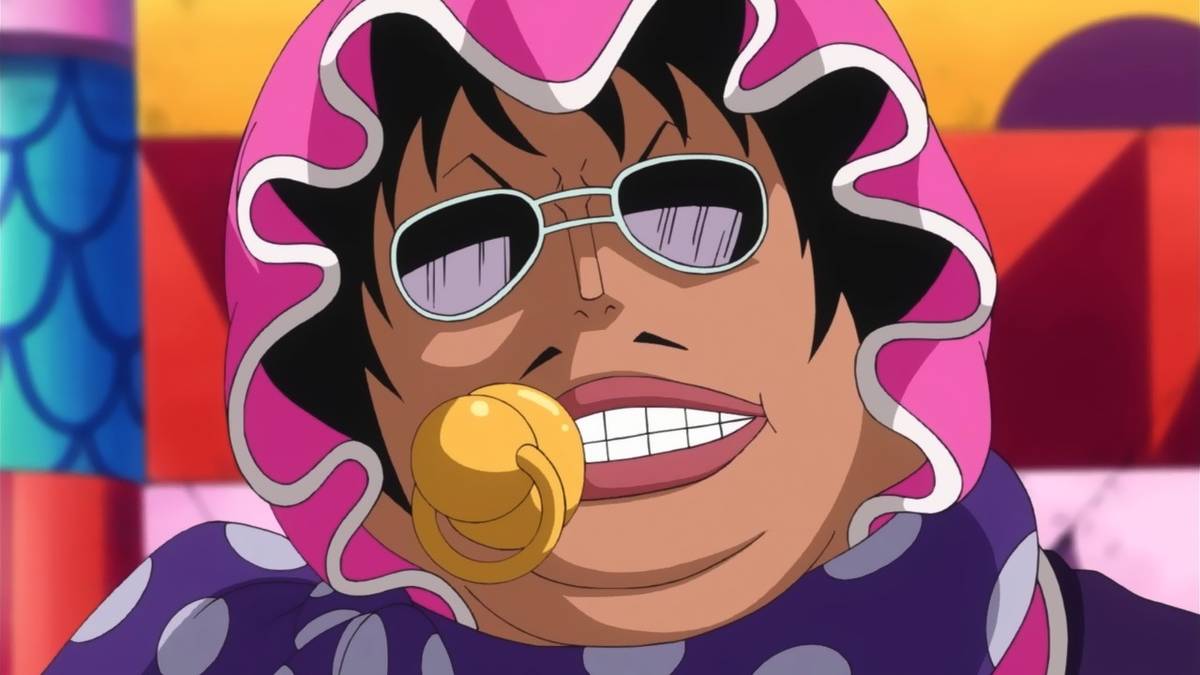
Senor Pink

Father of Gimlet and husband to Russian, Señor Pink’s outward ridiculousness hides a private grief that rivals the most heartbreaking backstories in One Piece’s universe. Before joining the Donquixote Pirates, Pink lived a quiet life with the love of his life, until their relationship collapsed under the weight of his half-truths.
Due to the death of their infant child, coupled with his wife’s subsequent coma, he became emotionally suspended between mourning and denial. His baby attire, initially a joke to stimulate his vegetative wife, became a ritual of devotion in an attempt to preserve the last image his wife accepted before her mind shut him out.
It is this strange, painful symbolism that defines his character, beneath his bravado and combat prowess as a man unable to heal. Holding onto a costume as the only remaining connection to the family he lost, his loyalty to Doflamingo’s crew becomes a sort of refuge, only explainable because he has nowhere else to place his grief.
Trafalgar Law

Born in the Flevance of the North Blue, Law’s backstory is a direct indictment of political neglect and the brutal economics of resource exploitation explored in the series. Having witnessed his home slowly poisoned by Amber Lead, a substance that enriched the world, he also watched as the government’s refusal to acknowledge responsibility escalated the crisis into genocide.
Thus, Law became one of the few survivors of a nation erased for political and economic convenience. The aftermath of the trauma of losing his family and his homeland left him with a single aim: to dismantle the systems that enabled such cruelty.
However, it is Corazon’s death and its surrounding circumstances that further cemented Law’s resolve, shaping his identity as a pirate. Though his cold demeanour is a coping mechanism refined through years of grief, his calculated actions against Doflamingo reflect the long arc of a survivor who learned that justice rarely arises from institutions but from individual resolve.
Brook

The Soul King of the Straw Hat Pirates, Brook’s One Piece story begins with joy and ends with an isolation almost unimaginable for any normal human. Being part of the Rumbar Pirates, he lived among musicians and friends who valued shared purpose. However, the sickness that overtook the crew marked only the beginning of his tragedy.
Without a cure, Brook watched each crewmate die until he succumbed as well, only to awaken through the power of the Revive-Revive Fruit. Unfortunately, his soul returned too slowly, and decades passed in silence, with his mind straining under the burden of solitude. The result of this prolonged isolation turned his cheerfulness into a deliberate practice rather than a natural trait.
Every joke, every song, and every polite mannerism became an act of resilience against the mind-bending solitude he had to endure. On the surface, Brook’s character radiates a liveliness with no trace of sadness. However, beneath it, the skeletal Soul King is proof of a life built on loss and the emotional endurance required to outlive everyone he ever loved.
Chopper

Known as the Cotton Candy Lover, Chopper’s suffering is tied to identity, belonging, and the harshness of a world quick to label difference as danger. Born a reindeer with an unusual blue nose, he was ostracized by his herd even before consuming the Human-Human Fruit, which further made him an outcast among humans and animals alike.
Until his encounter with Dr Hiriluk, Chopper’s early life was defined by constant confusion and societal rejection. It is the doctor’s teachings that gave Chopper the sense of purpose that his death later robbed him of, leaving Chopper to absorb the painful lesson that compassion does not guarantee survival.
After meeting Dr. Kureha, Chopper developed the discipline that would define his future, but the scars of his formative years never truly disappeared. Ironically, his determination to become a doctor stems from the same sense of loss that taught him the fragility of life.
Nami

Born as an orphan of the war of the Oykot Kingdom, Nami’s past was entirely shaped by economic exploitation and child labor. Adopted by Bellemere, she found warmth in a home that valued devotion over wealth. However, that fragile peace collapsed alongside the arrival of the Arlong Pirates.
Right before Nami’s eyes, she watched as Bellemere’s refusal to deny her daughters cost her her life, leaving the little girl to negotiate her survival under Arlong’s control. To make matters worse, due to her talent for cartography, she was forced to join the very pirate crew that murdered her adoptive mother.
Forced into servitude for eight years, all of her anger, secrecy, and sharp pragmatism emerge from those years of coerced labour. When Luffy finally intervenes, the emotional impact hits because the story dismantles the systems that made her suffering routine.
Nico Robin

In One Piece, Robin’s backstory stands as one of the most devastating examples of state violence in the series, if not the most. Born to a family of archaeologists and raised on Ohara, Robin also studied archaeology under scholars seeking the truth behind the Void Century.
Unfortunately, her pursuit of knowledge earned her the World Government’s overwhelming response: a Buster Call that annihilated her island and branded her a criminal. Escaping with only her life, Robin became the last of a forbidden civilisation. The result of her survival was twenty-odd years of persistent witchhunts and bounties, which sowed the seed of self-hate within her very fertile mind.
Ultimately, though the Straw Hats’ acceptance transformed her life, Robin is still very much defined by her deep-seated sense of nihilism. Nonetheless, Robin’s backstory is unique in that it goes beyond personal loss. It is the weight of being the last of a forbidden culture that the world treats like a stain on the Earth.

- Release Date
-
October 20, 1999
- Network
-
Fuji TV
- Directors
-
Hiroaki Miyamoto, Konosuke Uda, Junji Shimizu, Satoshi Itō, Munehisa Sakai, Katsumi Tokoro, Yutaka Nakajima, Yoshihiro Ueda, Kenichi Takeshita, Yoko Ikeda, Ryota Nakamura, Hiroyuki Kakudou, Takahiro Imamura, Toshihiro Maeya, Yûji Endô, Nozomu Shishido, Hidehiko Kadota, Sumio Watanabe, Harume Kosaka, Yasuhiro Tanabe, Yukihiko Nakao, Keisuke Onishi, Junichi Fujise, Hiroyuki Satou
-

Mayumi Tanaka
Monkey D. Luffy (voice)
-
Kazuya Nakai
Roronoa Zoro (voice)
