

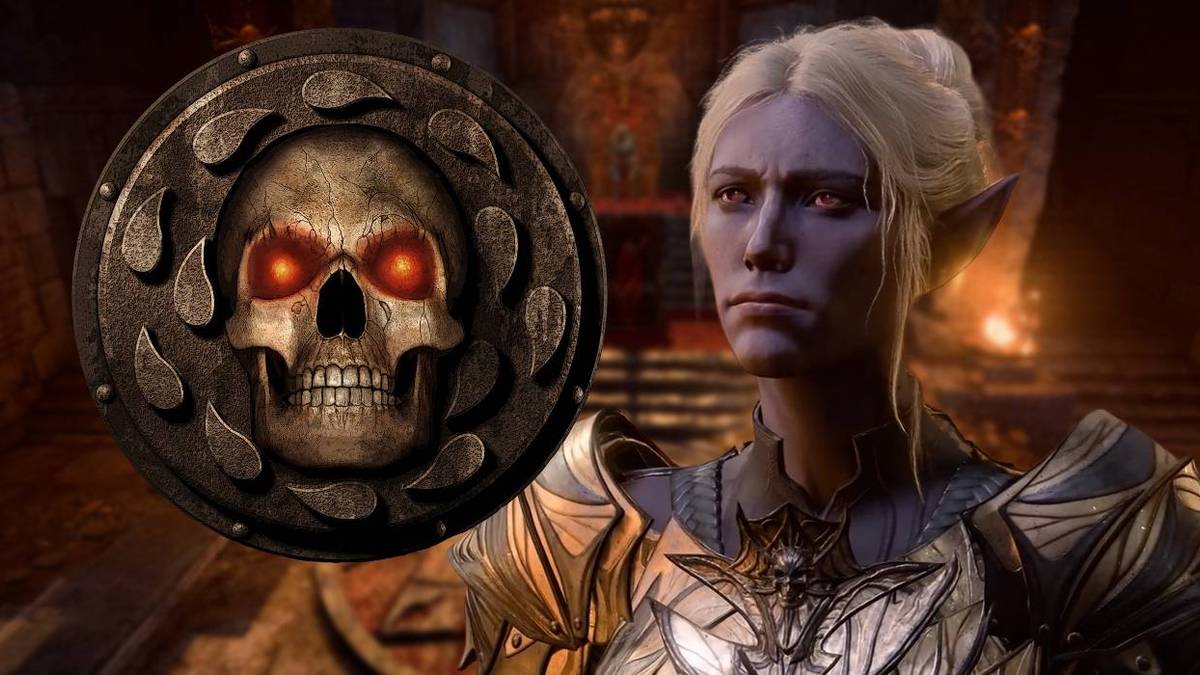
Many bosses in Baldur’s Gate 3 have unique traits and skills that make them distinct from one another, challenging your party’s synergy and strategy in fresh ways. However, the best designed bosses will punish you for falling into old habits, forcing you to think outside the bos to beat them. One such boss in Act 3 is perhaps the epitome of this idea, and even foreshadows their punishing nature.
Some Act 3 enemies have aspects of their boss fights tied to specific quests, like Gortash, where you can disable the Steel Watch to make the battle easier. Other bosses can be similarly weakened, such as using the spell Daylight on the vampire Cazador. That being said, the hardest bosses have abilities and vulnerabilities you must learn on the fly, with no prior hints as to what works against them.
Sarevok Is Arguably The Best Designed Boss Fight In The Game
Ramping Up Damage And Absorbing Abilities From Reckless Murder
Heading to the Murder Tribunal in Act 3 will lead your party to Sarevok Anchev, a former boss from the first two Baldur’s Gate games. Should you choose to fight this murderous champion of Baal, he can be among the strongest foes you face, capable of slaying party members in a single hit.
One of Sarveok’s strongest abilities is called Deathbringer Assault, a single attack that can deal 20–200 damage to a target. This skill is charged through Sarveok’s Murderous Strikes, which he gains from dealing damage with any single strike. If Sarveok has 4 Murderous Strike charges, he can use Deathbringer Assault.
Yet, Sarveok’s individual strength isn’t the key to his boss fight, it’s everyone else he fights with. Sarveok’s boss fight has you face multiple Echoes of Baal’s chosen, including several murderous shades and three high-tier ghosts with strong spellcasting. While normal Tribunal Ghosts are relatively standard enemies, the stronger ones can cast dangerous magic, from Counterspell, Slow, or Command on your party to Haste or Sanctuary on Sarveok to buff him.
While these Baldur’s Gate 3 characters don’t seem as threatening next to Sarveok, that’s entirely the point of the boss fight. Sarveok gains additional passive abilities when the Tribunal Echoes are killed, gaining ridiculous benefits from their deaths. Some include Sarveok regaining health each time he attacks, a +6 increase to Sarveok’s Armor Class, or becoming permanently Hastened with immunity to Paralyzed, Restrained, or any other condition that reduces movement speed.
Former Baldur’s Gate Villain Punishes Strategies That Work Everywhere Else
Removing The Boss’ Allies May Not Be The Right Plan

For many other boss fights, your party might want to immediately get rid of the Tribunal Echoes to remove any of Sarevok’s allies. This is even more tempting when one of them will almost always cast Counterspell, preventing any spellcasters in your party from doing anything. The multiple buffs the Echo ghosts apply to Sarevok make them seem like your first targets, but this is exactly what Sarevok wants you to do.
Those who decide to become an Unholy Assassin in BG3 before facing Sarevok will have an even harder time, as there will be more Echo ghosts to face alongside the champion. The ability for Sarveok to gain even more passive buffs makes the battle against him far trickier than you may have imagined. Taking out all of Sarevok’s allies makes him almost too strong to face, with too many buffs for your party to overcome.
This boss design is fascinating for how it fits into the themes surrounding Sarevok as a champion of Baal. As a disciple of the murder god, Sarevok wishes for your party to cause as much death as possible, as the murder of his allies will only make him stronger. Sarveok punishes parties that absentmindedly take out fodder, a strategy that may work in other boss fights.
Other BG3 Bosses Are More Straightforward To Approach
Taking Out Secondary Foes Usually Lets Your Party Focus More

Sarevok stands out as perhaps the only boss in the game who directly challenges you for trying to single him out by removing his minions. Most boss fights are easier to win when it’s just your four party members against the solo boss, after you’ve removed any factors that could complicate the fight further. This is especially true with foes like Auntie Ethel in BG3, whose summoned clones can greatly turn the fight in her favor.
Rarely do bosses in BG3 directly punish you for reducing a combat encounter’s actors, making Sarevok serve as an important teaching moment in the game’s final Act. Sarevok shows you how bosses may benefit from you continuing to follow straightforward plans that have gotten your party out of bad spots from Acts 1 and 2.
Sarevok’s multitude of buffs from his slain allies may help you remember potent spells or items that you rarely use to turn the battle in your favor. For example, Sarevok’s lack of a good Wisdom stat makes him quite vulnerable to spells like Otto’s Irresistible Dance.
While enemies like Orin, Gortash, Cazador, Mystic Carrion, or other possible bosses in Act 3 are best tackled 1v4, Sarevok may be the only one where that isn’t the case. The design of Sarevok’s boss fight in Baldur’s Gate 3 fits not only the character’s identity, but what he represents, making any fight with him feel among the most thematic you’ll find in your adventure.


- Released
-
August 3, 2023
- ESRB
-
M for Mature: Blood and Gore, Partial Nudity, Sexual Content, Strong Language, Violence
- Developer(s)
-
Larian Studios
- Publisher(s)
-
Larian Studios
- Engine
-
Divinity 4.0
- Multiplayer
-
Online Co-Op, Local Co-Op
- Cross-Platform Play
-
Full cross-platform play.
- Cross Save
-
Full cross-platform progression.
