

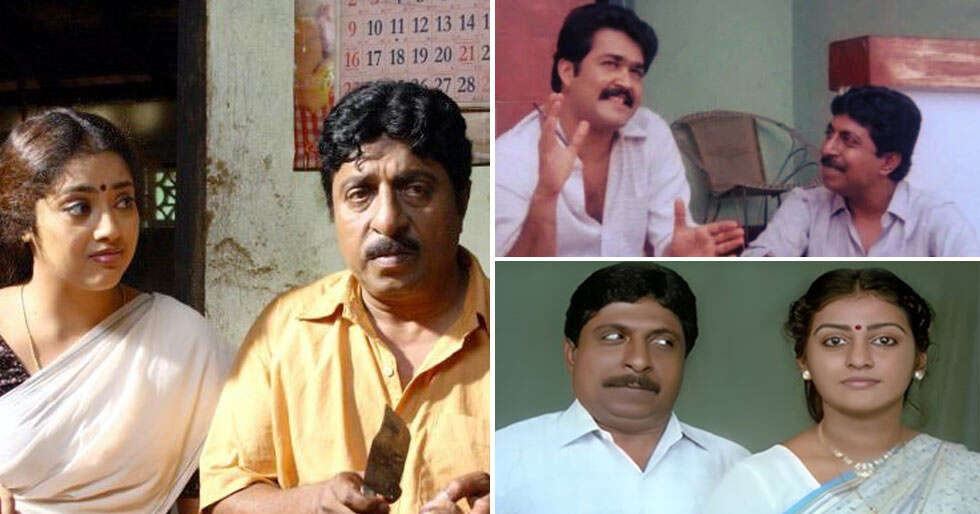
The passing of Sreenivasan on December 20 closes a chapter that shaped the moral grammar of Malayalam cinema for nearly five decades. Very few figures in Malayalam cinema sustained equal authority as a writer, actor, and director, and fewer still managed to leave a consistent philosophical imprint across all three. Sreenivasan did not merely participate in the evolution of Malayalam cinema. He quietly redirected it, insisting that popular films could carry social memory, ethical tension, and emotional honesty without sacrificing humour or reach.
Spectacle was never the organising principle of his cinema. Instead, his films were concerned with systems, and the individuals caught within them. Families, workplaces, political parties, marriages, and friendships became sites of examination. The conflicts were rarely epic, but they were always recognisable. That recognisability was his greatest strength.
Rewriting Popular Cinema from Within
Sreenivasan emerged as a screenwriter during a period when Malayalam cinema was negotiating the boundaries between arthouse realism and mainstream entertainment. His early scripts offered a third path. Films like Odaruthammava Aalariyam, Gandhinagar 2nd Street, and Aram + Aram Kinnaram were accessible comedies, yet beneath their humour lay sharp observations about hypocrisy, gender roles, and moral shortcuts. The jokes never floated free of context. They were anchored in behaviour.
His long association with Sathyan Anthikad produced some of the most enduring films of the 1980s and early 1990s. Works such as Sanmanassullavarkku Samadhanam and Varavelpu examined middle class anxiety with empathy rather than mockery. These films understood that economic pressure shapes personality, and that goodness often survives despite disappointment rather than because of success.
Nadodikkattu remains a defining text in this phase. What elevated the film beyond comedy was its refusal to treat unemployment as a mere narrative device. Dasan and Vijayan were not lovable fools. They were casualties of a system that promised dignity but delivered uncertainty. The humour came from resilience, not stupidity. That distinction allowed the film and its sequels to endure far beyond their era.
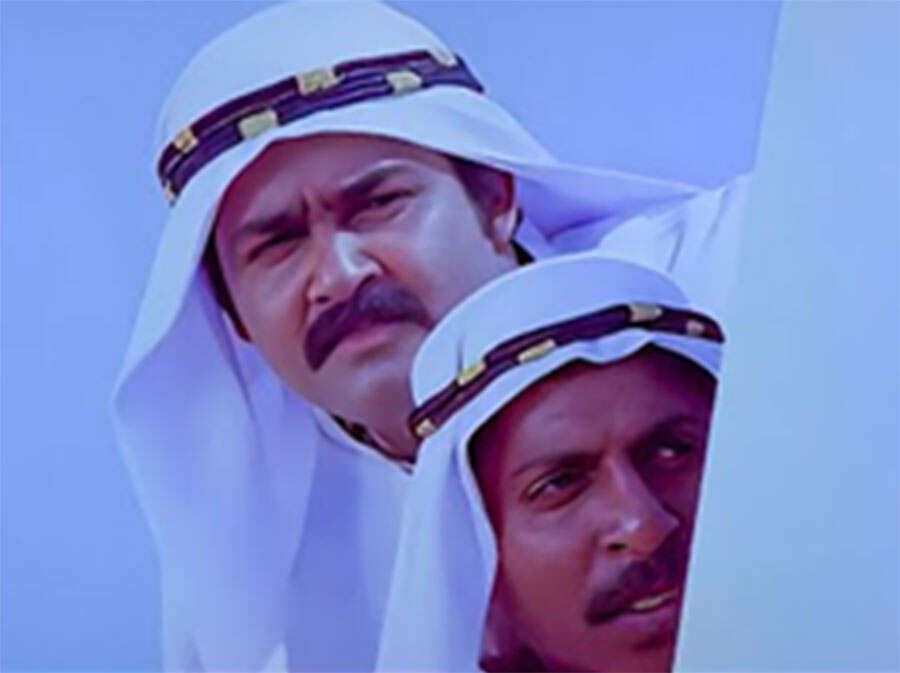
Over time, many of his lines from this period escaped the films altogether, entering everyday Malayalam speech. Quoted casually, repurposed endlessly, and instantly recognisable, Sreenivasan’s dialogues became part of popular culture not because they chased catchiness, but because they sounded exactly like how people spoke.
Political Satire Without Illusion
If Nadodikkattu captured economic frustration, Sandesam addressed ideological exhaustion. Released at a time of intense political polarisation, the film dismantled performative politics by relocating it within the domestic space. Party loyalty, generational conflict, and moral posturing collided inside a single household.
What made Sandesam remarkable was its balance. It did not replace one ideology with another. Instead, it questioned the emptiness of inherited beliefs when detached from lived ethics. The film trusted the audience to recognise the absurdity of slogans without instruction. That restraint is why the film remains relevant, often uncomfortably so.
Ambition, Industry, and Self Deception
As Malayalam cinema entered the 2000s, Sreenivasan’s writing adapted without losing its core concerns. Udayananu Tharam offered one of the industry’s sharpest self-portraits, examining creative insecurity and opportunism within the film world itself. The protagonist’s moral decline was not framed as villainy but as erosion. Dreams curdled slowly, shaped by envy and validation.
Later, Njan Prakashan returned to familiar terrain. The restless individual chasing shortcuts to success. The film’s popularity rested on its clarity. It did not romanticise ambition, nor did it demonise it. It simply observed how entitlement forms and how experience dismantles illusion.
Across decades, Sreenivasan’s scripts repeatedly asked the same question in different contexts, whether set in cramped homes, film studios, or political households. What does success cost, and who pays for it.
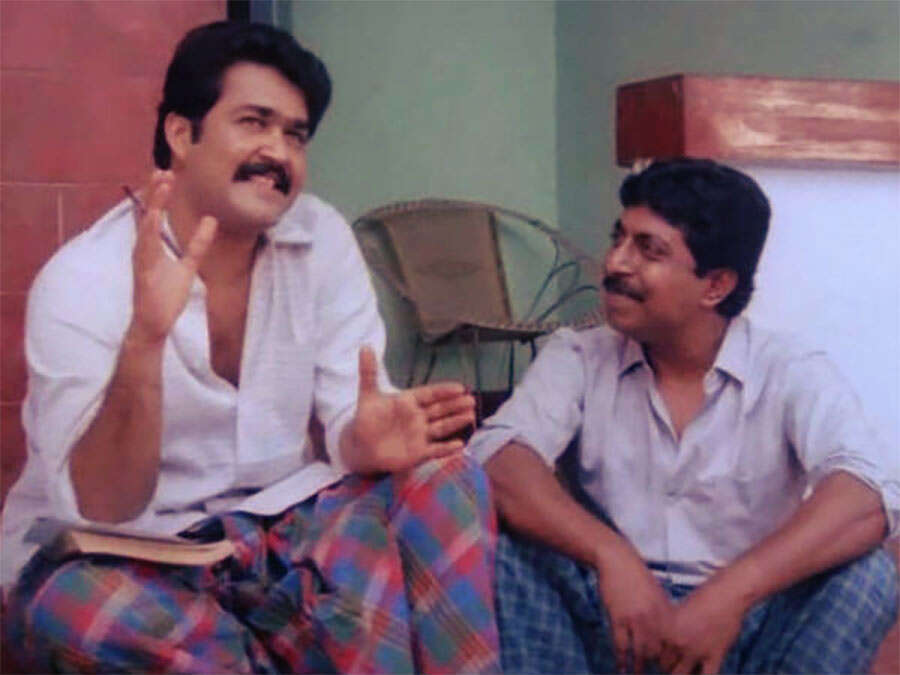
The Actor as Witness
Sreenivasan’s acting career deserves equal consideration. He was not a character actor in the conventional sense, nor a leading man chasing stardom. His screen presence functioned as connective tissue, quietly holding scenes together even when the narrative focus lay elsewhere. He made fictional worlds feel inhabited.
In films like Sanghaganam, Sreenivasan’s acting worked precisely because it did not push for effect. The character carries conflict, but the performance never tries to underline it. He lets the writing and situation do the work, keeping his delivery measured and his reactions contained. The result is a performance that sits naturally within the film, without calling attention to itself.
A similar quality defines his work in Ponmuttayidunna Tharavu. Playing a man in love within an ethically compromised world, Sreenivasan avoids playing the character as either victim or villain. His humour is muted, often uneasy, and his choices feel casual rather than dramatic. The performance gains credibility because it mirrors how such compromises usually happen quietly, without announcement. This makes the character’s later decisions feel believable and earned.
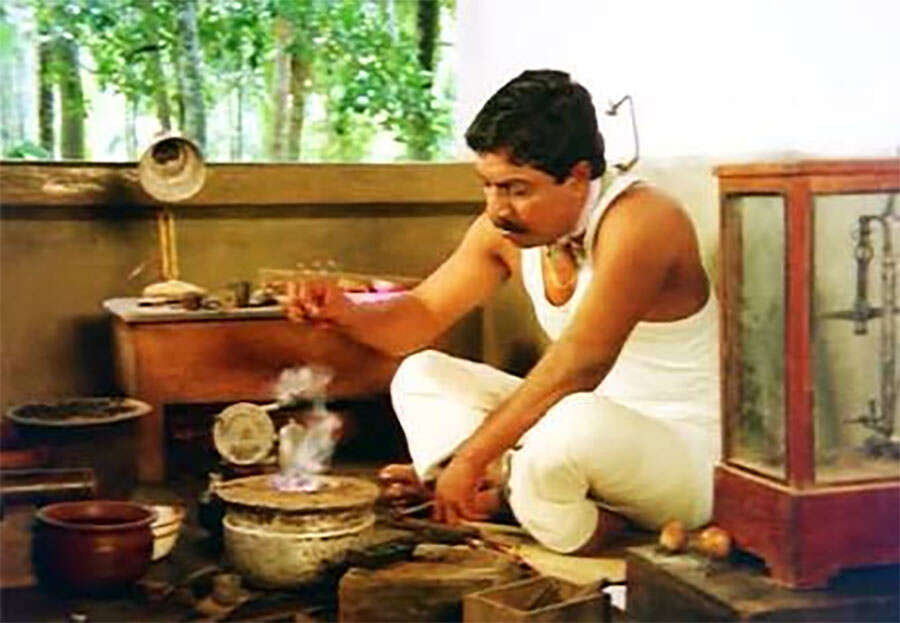
In Kaalapani, Sreenivasan is introduced seemingly almost as a hateful yet comic character. That surface gradually cracks when he makes his Ephialtes-like turn, betraying his fellow prisoners to the British. The performance finds its force in the aftermath of that choice. Sreenivasan plays the weight of guilt and fear not through grand gestures, but rather interestingly, through burts of mad laughter.
That instinct reaches a late career high point in Kadha Parayumbol. As an ordinary barber navigating pride, poverty, and friendship, Sreenivasan delivers a performance built on familiarity. Nothing is overstated. The emotion emerges from everyday situations rather than dramatic scenes. His strength here lies in how believable the character feels, allowing the film’s emotional turns to land without strain.

Across these roles, Sreenivasan’s acting rarely chased transformation or display. Instead, it offered consistency. He brought the same grounded presence to films of very different scales, adapting himself to the story rather than reshaping it around him. That quality is what made his performances last.
Direction Rooted in Behaviour
As a director, Sreenivasan gravitated toward domestic spaces and emotional stalemates. In Vadakkunokkiyantram, Sreenivasan’s direction turns insecurity into narrative grammar. He stages his protagonist Dineshan’s jealousy not as melodrama but as a quiet, creeping distortion of everyday life, where ordinary gestures ultimately acquire a sinister meaning.
Chinthavishtayaya Shyamala explored emotional paralysis, presenting inner conflict as a slow accumulation rather than a single rupture. There are no villains in the film, only exhaustion and miscommunication. His directorial style avoided visual flourish. The emphasis was on rhythm, dialogue, and lived in performances. These films did not entirely resolve neatly because life rarely does.

Contradictions and Continuities
In later years, Sreenivasan’s public positions invited debate. Some found his views unsettling; others saw them as extensions of a lifelong contrarian streak. What remained consistent was his refusal to seek approval. He engaged with society as it was, not as he wished it to be. That engagement, sometimes uncomfortable, is inseparable from his work.
Sreenivasan’s cinema insists that ordinary lives are worthy of serious attention. That laughter can coexist with critique; that popular films can retain moral complexity without alienation. His influence continues to shape writers, actors, and filmmakers who understand that realism is not the absence of drama, but the presence of consequence.
Malayalam cinema has lost one of its most formative voices. What remains is a body of work that will continue to argue, provoke, and resonate.
Also Read: Veteran Malayalam Actor and Writer Sreenivasan Passes Away at 69
