
Close Menu
The Industry Highlighter MagazineThe Industry Highlighter Magazine
    Trending
    • The Mandalorian & Grogu Debuts With One Of The Worst Rotten Tomatoes Scores Of Star Wars’ Disney Era
    • Kim Kardashian’s SKIMS Clothing Line Helps Convict Cocaine Smuggler in England
    • Morat Announce 2027 North American Tour Dates
    • GV Prakash Kumar Wraps Shooting for Horror Thriller Immortal
    • Marvel’s Wolverine Will Officially Be Unplayable For Millions
    • OJ Simpson Was Privately ‘Thankful’ For Mark Fuhrman Despite Him Being Racist
    • How Drake Lit Up CN Tower for Iceman Album Trilogy Release
    • Aamir Khan Compares Thugs of Hindostan to Sholay & Explains The Reason Behind Its Box Office Failure
    The Industry Highlighter Magazine
    • Home
    • Travel/Adventure
    • Entertainment
    • Fashion
    • Film/Tv
    • Food
    • Money Business
    • Music
    The Industry Highlighter Magazine
    You are at:Home»Celebrities»Editor’s Take: The Silent Brooding Cinema of Govind Nihalani
    Celebrities

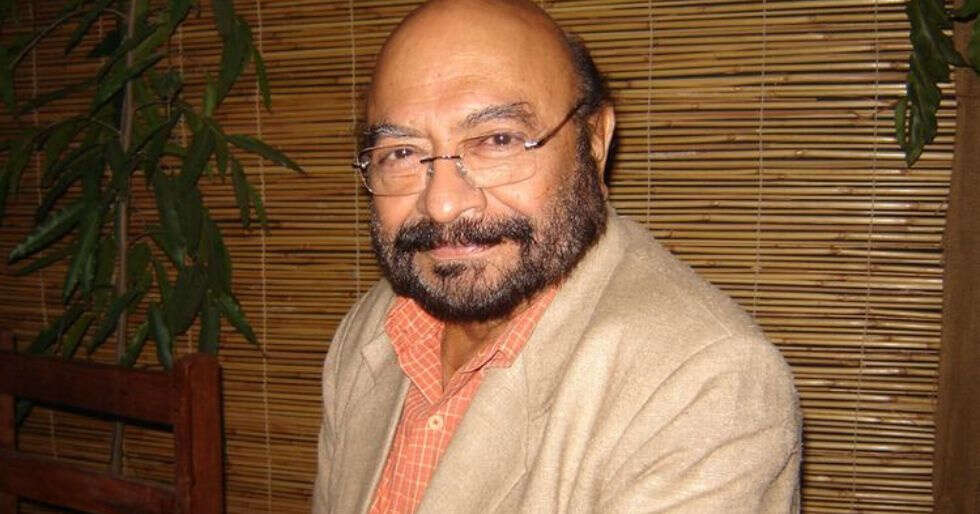
    Editor’s Take: The Silent Brooding Cinema of Govind Nihalani

    Team_The Industry Highlighter Magazine By Team_The Industry Highlighter MagazineApril 24, 2026No Comments3 Mins Read
    Facebook Twitter Pinterest LinkedIn Tumblr Email
    Share
    Facebook Copy Link LinkedIn Email Threads


    Govind Nihalani, director and cinematographer, is a towering figure of India’s parallel cinema movement. A recipient of five Filmfare Awards and six National Film Awards, his career spans over five decades with landmark films such as Ankur, Nishant, Manthan, Bhumika, Kalyug and Hazaar Chaurasi Ki Maa, among others.

    Filmfare’s Editor-In-Chief Jitesh Pillaai revisits his filmography, unpacking his craft and offering insight into a body of work that remains deeply influential.

    In Jitesh Pillaai’s own words:

    He could be the sledgehammer or he could be silent, like Nishant. You still hear that piercing scream when Om Puri hacks his sister to death to save her from the indignity of rape. Om Puri’s voice of the marginalized in Aakrosh, and Om’s anger of upheaval in Ardh Satya after slaying Rama Shetty the villain—it is stark, in-your-face, and disturbing.


    Govind Nihalani championed the oppressed, but not always in an overt way; it was as if he took up a cause and espoused it. He would never drill it down your throat; since he believed in the cause, he felt it would be nice if you showed empathy, too. You see that empathy amidst all the socialite posturing in Party. You see it in Tamas. Perhaps it was born of his years as Shyam Benegal’s cameraman in films like Ankur, Nishant, Manthan, Bhumika, and Kalyug. Govindji’s lens was not an attribute used to highlight someone’s beauty or accentuate the beauty of nature. His camera was an organic truth-seeker; it became the character, it told stories.

    You see the camera heighten the economy of expression in Ardh Satya. You see the camera gaze through Jaya Bachchan’s resolute stoicism as she looks for her dead son in Hazaar Chaurasi Ki Maa. Nihalani is never didactic or instructional. At his most fierce, he will put his arms around you (metaphorically) as if to emphasize his point, be it in Vijeta or Drohkaal. But I still want to know why Rekha’s brilliant character was abruptly cut off in Vijeta.

    Govind Nihalani gave us many truths, but in between all the truths he revealed, he talked of redemption—and maybe that it was worth giving one more shot. Consider the way his camera lens caresses Smita Patil making love to Om in Aakrosh, the soliloquy by Om in Ardh Satya, Rekhaji’s “Man Anand Anand Chhayo” in Vijeta, or Tabu’s resoluteness in Takshak.


    If you want to see the greatness of Jaya Bachchan, do watch her in Hazaar Chaurasi Ki Maa. Kareena Kapoor doesn’t get enough credit for her luminosity in Dev. Watch the Malayalam actor Bharat Gopy give an astounding performance in Aaghat.

    The cussedness and fickleness of the box office is perhaps what took Nihalani away from us. One of the great strengths of Shyam Benegal’s take on the Mahabharata (Kalyug) is the way Nihalani’s camera pieces together the brilliant screenplay and helps you navigate the allegory of one of the greatest texts of mythology. I repeat: Govind Nihalani isn’t celebrated as much as his contemporaries. It’s a huge disservice to his genius, both as a cameraman and a director. It is a good time to look back, both with awe and affection.

    Also Read: Editor’s Take: Revisiting Aparna Sen’s 36 Chowringhee Lane, a Must-watch Classic


    Source link

    Share. Facebook Twitter Pinterest LinkedIn Tumblr Email
    Team_The Industry Highlighter Magazine
    • Website

    Related Posts

    GV Prakash Kumar Wraps Shooting for Horror Thriller Immortal

    May 19, 2026

    Aamir Khan Compares Thugs of Hindostan to Sholay & Explains The Reason Behind Its Box Office Failure

    May 19, 2026

    Alia Bhatt to Appear on Samay Raina’s India’s Got Latent Season 2?

    May 19, 2026

    Comments are closed.

    Categories
    • Celebrities
    • COCO'S GOSPEL
    • Entertainment
    • Fashion
    • Film/Tv
    • FILM/TV
    • Food
    • Health and Wellness
    • Money Business
    • Music
    • NEW RELEASES
    • RALEIGH/DURHAM NEWS
    • Travel/Adventure
    • Uncategorized
    • WORLD NEWS
    Copyright © 2024 Industryhighlighter.com All Rights Reserved.
    • Privacy Policy
    • Disclaimer
    • Terms and Conditions
    • About IHM
    • Advertise With Us!
    • Contact us

    Type above and press Enter to search. Press Esc to cancel.