

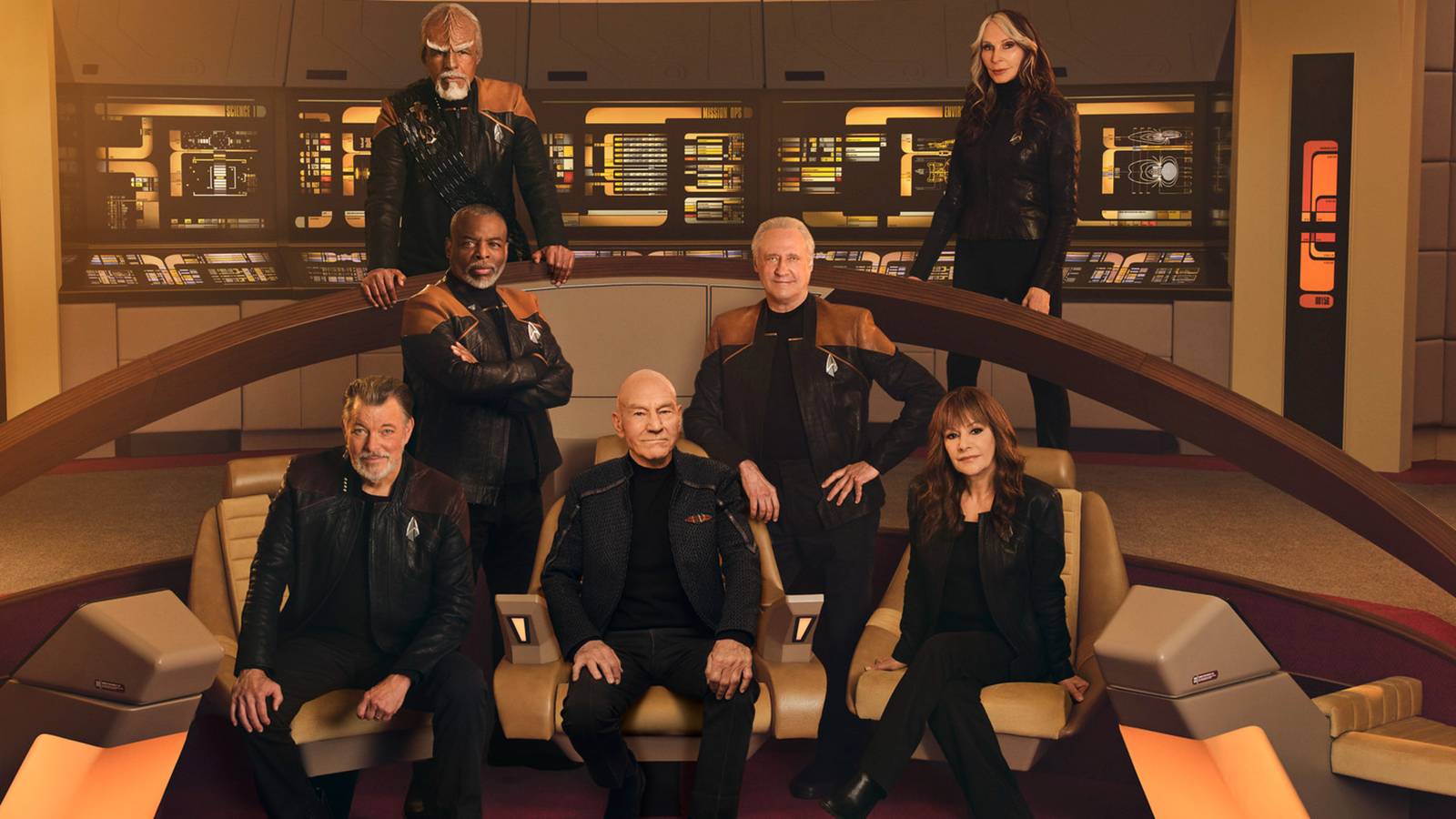
Star Trek: Picard season 3 showrunner Terry Matalas suggests that Star Trek: The Next Generation should be the model for what Paramount+ does next with Star Trek‘s TV future.
Saturn Award winner Terry Matalas is preparing for the premiere of his newest series, Marvel Studios’ Vision Quest, which premieres October 14 on Disney+. Terry was recruited by Marvel Studios head and Star Trek fan Kevin Feige because of his acclaimed work as the mastermind of Star Trek: Picard season 3, one of the most well-received Star Trek seasons of the past decade by critics and fans.
TrekMovie‘s Anthony Pascale caught up with Terry Matalas at the Los Angeles premiere of the new documentary, The Sixty-Year Mission: How Star Trek Changed Television and the World. Matalas shared his thoughts on Star Trek‘s future, explaining why Star Trek: The Next Generation is “a wonderful template on how to make Star Trek.” Read Terry’s quotes below:
Terry Matalas: “I think Star Trek: The Next Generation was a wonderful template on how to make Star Trek… If it’s not broken, don’t fix it.
It’s a very complicated question because Star Trek has the issue of it’s got to bring in new viewers, but it can’t alienate the old viewers. So there’s going to be a hybrid of some kind of merging of ideas. But I also don’t think it has to be that difficult. I think good stories, and good characters, and great science fiction, that’s going to always win the day. And I think that’s what Star Trek: The Next Generation was.
I think whoever comes in is facing essentially what was facing the passing of the torch from The Original Series to Next Gen. It’s great writing. It’s great storytelling. It’s amazing actors. And I think Star Trek will shine through… So, I think it’s a difficult task for anyone, but I think it’s totally achievable. And I hope whoever jumps in, I wish them nothing but luck.”
Matalas’ work on Star Trek: Picard season 3 exemplified how to please fans by “merging” old and new. Picard season 3 brought back the legendary cast of Star Trek: The Next Generation, but also introduced new characters who fans wanted to see continue what TNG began aboard the new USS Enterprise-G in the proposed spinoff, Star Trek: Legacy.
Whoever Paramount+ selects to replace Alex Kurtzman as the next executive producer of Star Trek will face the same challenge of trying to win over new fans to the 60-year-old sci-fi franchise, while pleasing the disparate demands of its existing fanbase. It’s an uphill battle, but one Star Trek: The Next Generation won after initial resistance in its early years from fans of Star Trek: The Original Series.
By focusing on great stories and characters and maximizing the talents of the cast led by Patrick Stewart, Star Trek: The Next Generation became one of the greatest science fiction series of all time. 2027 marks TNG‘s 40th anniversary, and the series remains beloved and revered by Star Trek fans.
Although Matalas isn’t looking for the job, he responded enthusiastically if he were asked by Paramount+ to succeed Alex Kurtzman as Star Trek executive producer:
Terry Matalas: “Yes, of course, of course! I mean, knowing Kevin, I know that it’s really hard to be a Kevin Feige. But for Star Trek? That’s a dream come true. I grew up wanting to do that, so of course I would.”
Alex Kurtzman’s decade of leading Star Trek on Paramount+ draws to a close with the final seasons of Star Trek: Strange New Worlds and Star Trek: Starfleet Academy in 2027. A common refrain from fans is that Star Trek needs to go back to focusing on intelligent and complex storytelling, like Star Trek: The Next Generation did, and less on the big-budget ‘movie every week’ approach of shows like Strange New Worlds.
Although Matalas enjoys Strange New Worlds‘ genre-hopping ‘big swings,’ he posits the idea of future Star Trek shows filming closer to Star Trek: The Next Generation‘s model, where episodes were produced faster because there were 24 to 26 per season, rather than the current streaming model of two weeks to film each episode for shorter 10-episode seasons:
Terry Matalas: “[Shoot each episode] in seven days? Put a gun to my head, I’ll say yes. But seven to ten days, yeah, you could do it… I think a lot of that is how streaming operates when you only make eight [episodes for a season] and then you shut down, and then you make eight [for next season]. It’s a slow process. I think amortizing costs – which is what Star Trek was doing by making more at one time, is the way to do it.”
Longer seasons of Star Trek is another wish from fans, although this runs counter to the current business model of streaming. One solution is for Star Trek to leave the paywall of Paramount+ and go to a network like CBS to allow it a 22-episode season that could stream on Paramount+ the next day.
Whatever happens to Star Trek next after its upcoming hiatus, since there is no new Star Trek currently in production, many fans would agree with Terry Matalas that a return to the type of sophisticated storytelling that Star Trek: The Next Generation excelled at would be a step in the right direction.
- Release Date
-
1987 – 1994-00-00
- Network
-
Syndication
- Showrunner
-
Gene Roddenberry
