

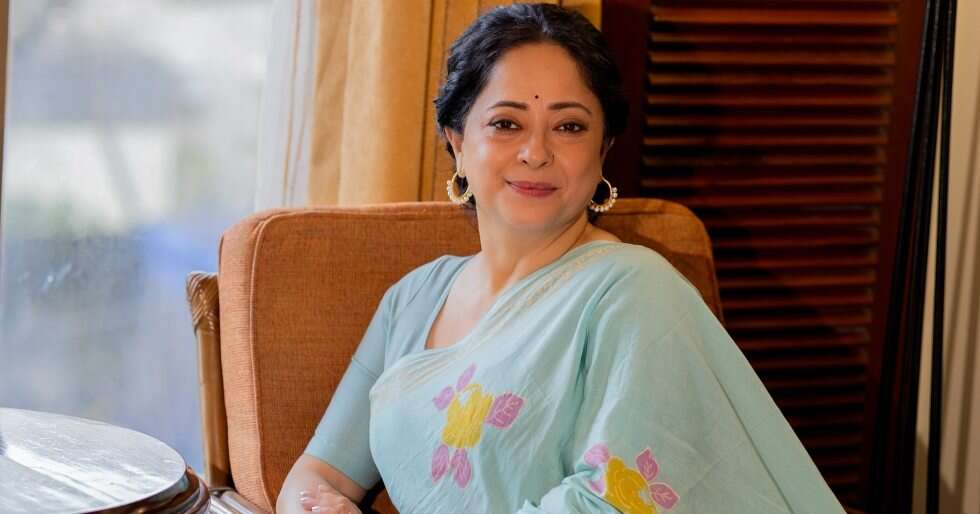
In Bakaiti Season 2, the everyday negotiations, conflicts and chaos of family life return to the screen, with Sheeba Chaddha reprising her role in the family drama alongside Rajesh Tailang. For Chaddha, the appeal of the show lies in its familiarity, with situations that audiences can recognise from their own homes. But while she enjoys returning to a character and a world she knows, the actor is also interested in exploring roles that take her beyond the parts she has often been offered, particularly those of mothers.
Speaking about returning for the second season, Chaddha says, “It’s a show I like, and I’m happy to be a part of. This season, my character is more proactive and goes out of her way to do things. The house is much more populated, and there are several situations to navigate where the ‘bakaiti’ happens. The experience of navigating everyday domestic situations is something we can all relate to. We all see little snippets of that in our homes.”
Returning to a Familiar World
The familiarity extends to the experience of working on the show. Although the set presented some practical challenges, Chaddha says the atmosphere among the cast and crew made the shoot enjoyable.
“I remember it being extremely hot this time. The house is very tiny, so shooting there can be a bit of a nightmare. It was a particularly hot spell in Bombay, and the entire unit was crammed into the house. Logistically, that was quite difficult. Other than that, we’re all so familiar with our characters, and we get along really well as a team. The actors and the entire crew work well together, so it was great to shoot.”
That ease also informs her working relationship with Rajesh Tailang, with whom she has collaborated on several projects, including Mirzapur and Bandish Bandits.
Years of working together have allowed them to anticipate each other’s choices without having to spell everything out. “There’s a good comfort level between us. When I know he’s there, it brings a lot of ease to the process. It’s true that when you’ve worked with someone for so long, you begin to anticipate and recognise certain things about them as co-actors. We understand what the other person might do in a scene, to some extent, and we make space for each other.”
Finding More to Explore Beyond Motherhood
Playing mothers has been a recurring part of Chaddha’s career, and she has spoken about how often such roles come her way. She acknowledges the typecasting but also recognises that evolving writing has created more room to explore different dimensions within these characters.
“I don’t think one turns down too many roles for that reason. The fact that a character is a mother is often the parameter by which you’re being cast, and that’s the typecasting in some sense. But within that framework, there’s a lot more room to play and explore now, partly because of the way stories are being written. When you get a role outside that framework, that’s lovely, too, because you think, ‘Okay, wow, a new world!’”
However, she points out that turning down a role is not always a question of whether she has played something similar before. “There can be many reasons for turning down a project. The dates might clash, the writing might be very poor, or you might simply not love the material. Sometimes the money might not be right.”
What matters most to her now is that a character has a meaningful place in the story. “The role needs to have some weight and space in the story. That’s a non-negotiable for me now. It can’t be just any random part. Hopefully, I’ll continue to be offered roles like that, and I’m very grateful for it.”
The Stories She Wants to Tell
As for what she would like to do next, Chaddha is less interested in naming a particular kind of character than in finding material that surprises her. Love stories are one possibility she is keen to explore. She has recently worked with Kusha Kapila on a micro-drama that looks at relationships alongside the experiences of women at different stages of life.
“I’ve often said that love stories would be exciting to explore. I’ve actually just done something with Kusha Kapila, a micro-drama. It’s a lovely concept, and it’s not just about a love story. That’s one of the parallel tracks. There’s also something about women of different ages awakening to new possibilities or finding their own sweet spot in life.”
She is equally interested in stories about women whose identities are not defined by their relationships with others.
“I’m also interested in exploring stories about great women spiritual figures. And then there are stories about women who aren’t mothers or wives, but who are they as individuals? Who are these women in today’s world?”
For Chaddha, the appeal lies in fresh perspectives rather than any one genre. “I’d love to read stories like that, written with a little more danger and a little more edge. By danger, I don’t mean a thriller. It could be the most ordinary story, but told through a new, fresh lens. It would be great to read material like that.”
Celebrating the Mirzapur Universe
Meanwhile, Mirzapur: The Movie has given Chaddha another reason to celebrate a creative world she has been part of for more than a decade. The film’s reception has been particularly gratifying for her, not least because of the team’s longstanding association.
“It’s been overwhelming to see the kind of success the film has received. It’s validating, too, and we’re all ecstatic. We’re especially happy for our director, Gurmmeet Singh. He’s someone we all love on set, almost like a loved one, so we’re very happy that this has happened for him, as well as for all of us. It’s wonderful to be part of that universe. We’ve known one another for over 10 years now, and it’s pretty much the same crew and the same actors. It’s just wonderful. We love being a part of it.”
Bakaiti Season 2 is streaming on ZEE5.
Also Read: Exclusive: Rajesh Tailang on Bakaiti 2, Changing Ideas of Fatherhood and More
