

Most time travel movies and shows collapse under their own flawed logic and rules. They start strong and introduce compelling sci-fi concepts and ideas. However, the more they progress, the more their plot crumbles due to increasing paradoxes and narrative loopholes. A rare sci-fi series on Netflix, however, completely defies the norm and even turns its paradoxes into plot devices.
The show in question, Dark, is still remembered as one of the greatest modern additions to the sci-fi genre. When Dark first landed on Netflix in 2017, it was not driven by a hefty budget or a massive production. As a non-English series, even its reach was meant to be limited as it competed with other mainstream sci-fi shows like Stranger Things.
Yet, through its sheer brilliance alone, the Netflix sci-fi show managed to leave a legacy that remains far stronger and more long-lasting than most others in Netflix’s catalog. From its background score to its immersive and atmospheric cinematography, a lot works in the time travel TV show‘s favor. However, its success can primarily be attributed to how meticulously it approaches time travel.
Netflix’s Dark Embraces Every Time Travel Paradox
Time travel is not a flowing river in Netflix’s Dark. The show does not merely adopt a one-dimensional cause-and-effect format where actions lead to rippling consequences. Instead, for two whole seasons, it sticks to strict determinism where time is a 4D block. The past, the present, and the future unfold all at once in Dark, with each dissolving into one another.
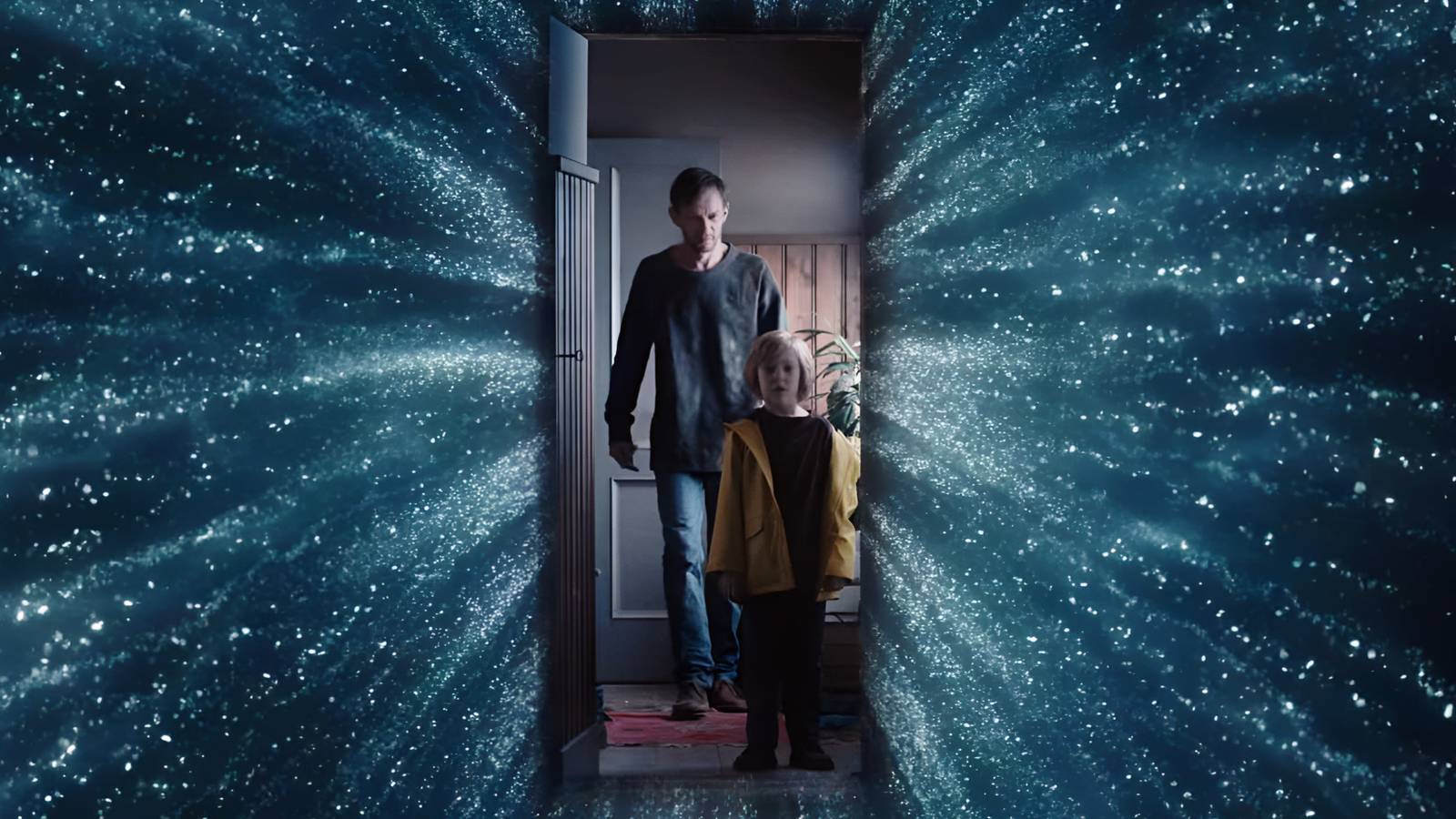
Owing to this, any attempt to change the past in the series is revealed to be a pre-existing part of history. The overarching timeline just cannot be altered because the mere attempt to intervene was already meant to happen. This is perfectly captured when Dark‘s main character, Jonas, attempts to save his late father by traveling to the past, but his very presence eventually triggers his father’s death.
With this deterministic approach towards time almost throughout its runtime, Dark establishes how objects and information exist without any origins. Most time travel stories reverse-engineer their narratives as they reveal the origin of specific objects or devices. This often creates a paradox because their origins become impossible to establish.
Dark embraces these paradoxes by showing how knowledge perpetually exists in its closed temporal loop.
For instance, a book in the show’s universe called A Journey Through Time by H.G. Tannhaus was never actually written by Tannhaus. A younger Tannhaus merely published and transcribed it after the main character’s older version gave it to him. The same published copy then ended up going back in time to be handed to him.
Even the show’s portrayal of family trees is intentionally loopy. There are no linear lineages. Instead of being pyramids that move from one generation to another, the family trees exist as webs where generations overlap and ancestors become their own descendants.
There Is Hidden Hope In Dark’s Existential Time Travel Dread

The Netflix sci-fi show features a compelling opening scene where a narrator makes viewers question their perception of time. “We trust that time is linear, that it proceeds eternally, uniformly, into infinity,” he says before revealing how yesterday, today, and tomorrow “are all connected in a never-ending circle.” These opening lines in Dark bring a spin on Albert Einstein’s most profound quote about time:
“The distinction between past, present and future is only a stubbornly persistent illusion.”
Albert Einstein penned the line in a letter he wrote to the family of his deceased friend, Michele Besso. He did not label time as a “stubbornly persistent illusion” to highlight humanity’s lack of free will. Instead, he wanted it to be a reminder that even the dead eternally exist all across time even though we cannot help but grieve them in the present.
A similar sense of hope can be found in Dark‘s existential portrayal of time travel. The Netflix show’s depiction of how the past cannot be altered and how the future is pre-determined can be incredibly harrowing. But there is some strange comfort in knowing that everything is already set in stone and one is exactly where one is meant to be.
By showing how even the most painful choices one makes perfectly tie into the grand scheme of things, Netflix‘s Dark captures how darkly beautiful time travel in sci-fi can be.
