

Excerpts:
People have loved Chumbak. What kind of compliments are you getting?
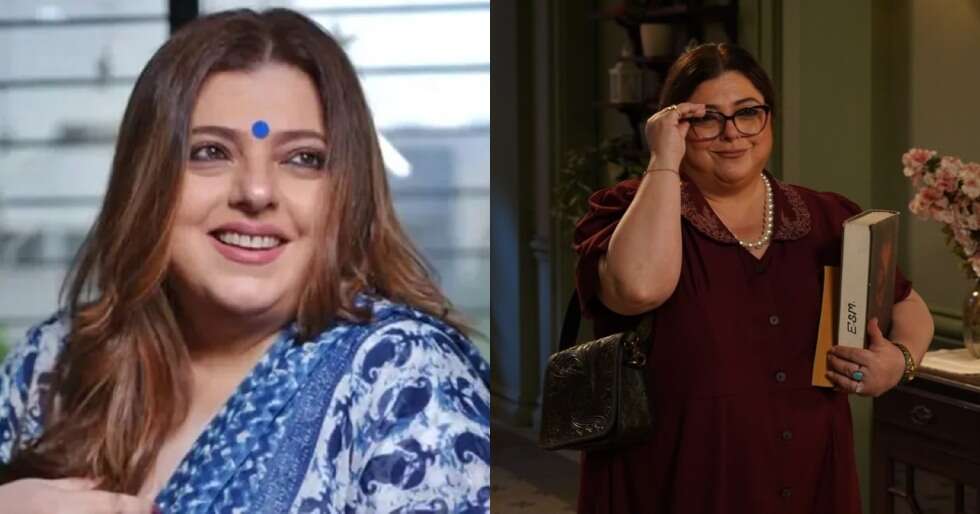
People have absolutely loved my character, Gulshan Taraporewala. Characters like these are few and far between. And I would like to pass on all the compliments I’m getting to Aatish Kapadia because he is the man behind every character in Chumbak. He has even guided all of us through the minutest things on set.
I played a Parsi character back in 2005 in Batliwala House No. 43, which was again JD and Aatish’s show. Now, I’m playing a Parsi character again with them after all these years.
JD, Aatish and I go back a long way. We all knew each other from our Gujarati theatre days, and our association goes back to the early and mid-90s. At Rupali Ganguly’s birthday about two and a half years ago, JD and Aatish just told me that they were writing something. It’s a big show and might be for Netflix. Aatish also said that he could only see me playing a particular part.
I rummaged through my entire cupboard and found one of those typically Parsi-looking dresses. I picked out something appropriate, took a scarf and went for the audition fully prepared. I even carried a prayer book and agarbattis. They loved it, and I was signed for the show.
Apart from what was written in the script, what nuances did you bring to Gulshan?
I drew a lot from my observations of real-life characters. I’ve picked up traits from several aunties around me, including my relatives and certain other people. There are people who behave in a particular way, speak in a particular manner or have a certain way of dressing. I’ve also observed mothers who tend to mollycoddle their children, much like Gulshan does. She’s extremely overprotective and overbearing at times, sometimes to the point of becoming irritating. But I wanted to retain a certain sweetness in her as well. I didn’t want her to come across as an entirely negative character. Of course, being a Parsi myself helped a great deal.
Absolutely! I was extremely nervous even during the audition. Comedy comes very naturally to me. People often tell me that I make it look effortless, and I consider that God’s grace. But, for some reason, I felt a certain nervousness while playing Gulshan. And I loved that feeling. You cannot become complacent in life. Even if comedy comes naturally to you, feeling those butterflies in your stomach before a performance is a good thing. It means you still have that energy and remain grounded.
When Aatish told me that he had written this part keeping me in mind and would really love for me to play it, I felt a lot of pressure. I was constantly praying and hoping that everything would work out.
After Sweetu in Kal Ho Naa Ho, I’ve done a whole lot of films. But Sweetu became so popular that even after 22-23 years, people continue to talk about that character. Sometimes, when they see me in Chumbak, they say, “Now we’ve seen you again!” They don’t necessarily remember everything I did in between. I feel happy that they think I’ve arrived again. And that’s perfectly fine with me. At the end of the day, we’re here because of our audience and the love we receive from them.
Tell me something: how many supporting actors in the film industry are remembered for years and years for one particular performance? When people talk about Kal Ho Naa Ho, they talk about the hero and the heroine, but they also mention me in the same breath.
At the same time, television offers a lot more security, better pay, and a certain consistency of work.
When you’re young, you have a lot of energy and want to do everything. But at this point in my life, my priorities have changed. The first thing I look at is who is making the show and who the people behind it are. The remuneration matters, but I might even be willing to take a little less if the overall experience is right.
I don’t want to work somewhere that makes me unhappy. I don’t want to be sad in life.
It comes from within you. If somebody enters my personal space and I’m uncomfortable with it, I’ll simply pull back. We’ve spent so much time pleasing people, both personally and professionally. I’ve done it repeatedly to keep things going and maintain a balance. But that phase is over for me now.
In your 20s, you’re building a career. You want your graph to keep going upwards; you want to explore different kinds of roles, and you want to prove yourself. I don’t want to prove anything to anybody anymore.
There’s a lovely film called Zindagi Phir Bhi Wahan Khoobsurat Hai. It also has a Parsi background and brings back the feel of those lovely Hrishikesh Mukherjee, Basu Chatterjee and Sai Paranjpye films. Kapil Sharma, Anil Sharma’s brother, is directing and producing it. The film is expected to release towards the end of the year. I’ve also started my own YouTube channel.
Also Read: Exclusive: Helly Shah on Growing Up on Television, Taking a Break & Breaking Her Image With Chumbak
