

The airport metro needs its own ticket. The red public bikes lining the sidewalks won’t unlock for visitors. And the regional train to Sitges runs on a different network from the city metro. None of this is obvious when you land in Barcelona, but a handful of Barcelona travel apps sort out most of it before you leave the arrivals hall.
This guide covers the ones that earn space on your phone: what each one is actually good for, where it falls short, and the latest changes that affect visitors, from the new 24-hour Hola Barcelona Travel Card to the end of private bike-sharing in the city. You don’t need all of them. Most travelers get by with the TMB App, one ticket app, one taxi app and an offline map.
Barcelona Travel Apps for Public Transport
Barcelona’s metro, buses, trams and commuter trains are run by different operators but share an integrated fare system, so one ticket can cover several of them. The apps below split the job: one plans the route, one holds the ticket, one tracks the trains.
TMB App: Route Planning for Metro and Bus
TMB runs Barcelona’s metro and city buses, and its app is the most useful one to install first. You can plan journeys across metro and bus, find the nearest station or stop, check real-time waiting times, and see service alerts when a line is disrupted. You can also buy tickets and register for T-mobilitat through it, which saves a trip to a station ticket machine.
T-mobilitat: Your Transport Tickets on Your Phone
T-mobilitat is the contactless ticket system that replaced Barcelona’s old magnetic cardboard tickets. If you don’t want to register for anything, buy the anonymous cardboard T-mobilitat card at any metro ticket machine for €1 and load a ticket onto it. It works with the T-casual (10 single-person journeys, €13) and the T-familiar (8 journeys for several people within 30 days, €11.50).
The T-mobilitat app lets you check how many journeys are left and buy new tickets. You can also store tickets on your phone and tap it at the gates, though phone validation needs an NFC-enabled device and a registered account.
Hola Barcelona: The Visitor Transport Pass
The official Hola Barcelona app, run by TMB, sells and stores the Hola Barcelona Travel Card: unlimited journeys on public transport for a set number of consecutive hours, starting from your first tap. In 2026 the card gained three useful changes. A new 24-hour option sits alongside the 48-, 72-, 96- and 120-hour versions. The metro to and from the airport is included. And the card now covers the NitBus night bus network.
It starts at €12.50 for 24 hours, and buying online through the Hola Barcelona app or website gives you a 10% discount. You receive a code by email and collect the card at any metro ticket machine, including the ones at the airport. Staying two to five days? You can also book the multi-day Hola Barcelona Travel Card before you travel. Planning to cover the city over five days? Our week-long Barcelona itinerary shows how far public transport can take you.
This section contains partner links. If you book through them, we may earn a commission at no extra cost to you. We only feature partners whose services we believe add genuine value for travelers.
Rodalies and Renfe: Trains for Day Trips
Commuter and regional trains in Catalonia run on the Rodalies de Catalunya network, which has its own app for timetables, platforms and service updates. Check it on the morning you travel, since delays and track changes on Rodalies lines are common. The Renfe app covers longer-distance and high-speed trains and is where you buy tickets for routes such as Barcelona to Girona on the AVE.
For routes, stations and what to see once you arrive, see our guide to five towns a single train ticket away from Barcelona, including Sitges, Girona, Tarragona and Montserrat.
Taxi and Ride-Hailing Apps
Barcelona is a walkable city, but a taxi app pays for itself when you’re carrying luggage, heading to the airport, or getting back to your accommodation late at night.
Freenow by Lyft: Licensed Taxis
Freenow connects you with Barcelona’s licensed black-and-yellow taxis, which run on regulated, metered fares. You can track the car’s arrival and pay in the app. Freenow was bought by Lyft in 2025 and now operates as Freenow by Lyft. Since September 30, 2026, travelers from the US and Canada can also book rides in Barcelona through their existing Lyft app, which started its European rollout here and in Hamburg.
Uber, Cabify and Bolt
Uber works in Barcelona, but differently from most cities: it connects you with licensed taxi drivers rather than its own private drivers. Cabify and Bolt mainly offer private-hire cars with the fare shown upfront, and both also list licensed taxis. Cabify added Barcelona taxis to its app in February 2026. With several apps on your phone, you can compare prices before a longer ride such as an airport transfer.
Getting Around by Bike in 2026 and 2027
Barcelona has a long seafront promenade and a growing network of protected bike lanes, but the bike-share picture for visitors is changing.
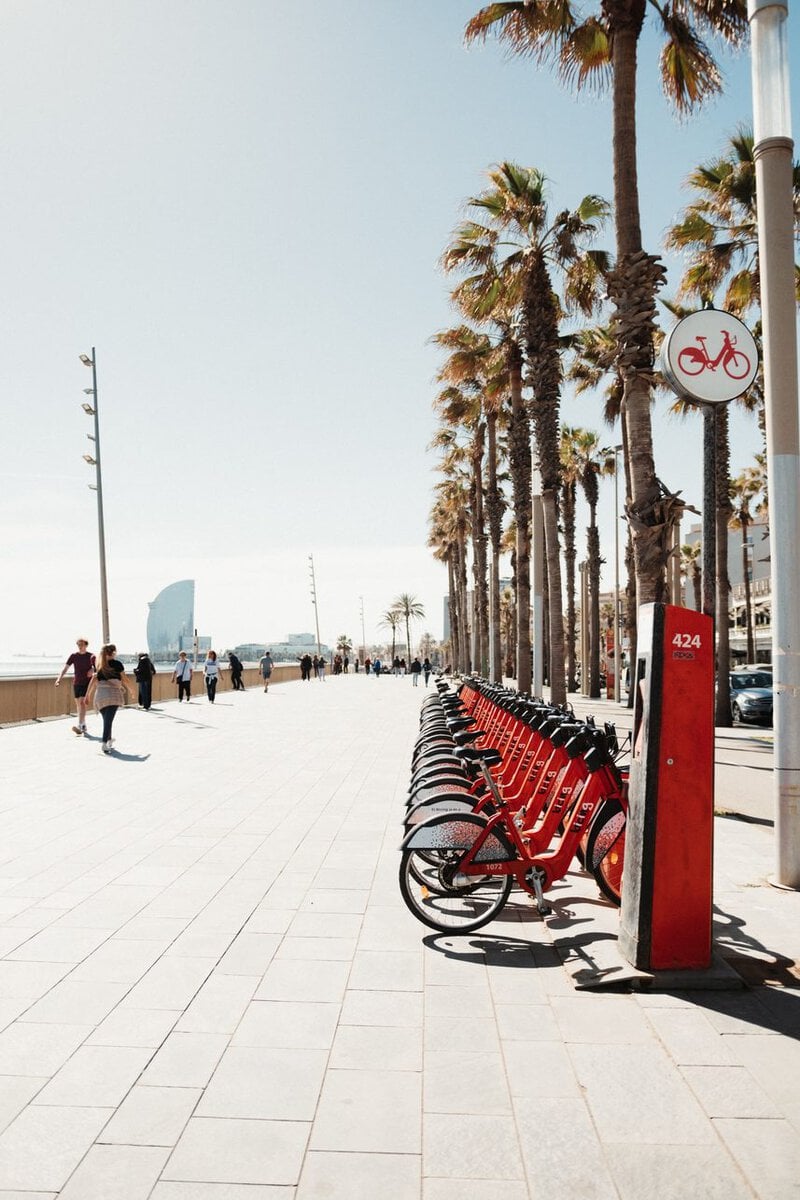
The city’s public Bicing system is for residents only and cannot be used by tourists. Until now, visitors relied on private app-based operators instead, such as Donkey Republic, Lime, Bolt and Voi. In June 2026, Barcelona’s mayor announced that the licenses held by all seven private bike-share operators would not be renewed when they expire on December 31, 2026. Unless that decision is reversed, these bikes will disappear from the city’s streets from January 1, 2027.
If you visit before the end of 2026, the operator apps still work. From 2027, the practical options are traditional bike rental shops and guided bike tours. Smou, the city council’s mobility app, brings Barcelona’s transport and mobility services together in one place and is worth checking for updates.
Restaurant Apps
TheFork: Search and Book a Table
TheFork is one of Europe’s most widely used restaurant booking platforms. You can filter Barcelona restaurants by neighborhood, cuisine, price range and availability, read reviews, view menus where restaurants have uploaded them, and reserve a table directly. Some restaurants offer discounts for bookings made through the app, often on weekday lunches or early dinner slots.
Guidavera: Curated Restaurant Picks
If you’d rather not scroll through hundreds of listings, Guidavera takes a curated approach. It works in your phone’s browser and also covers Madrid and Mallorca. Restaurants are grouped into recommendations and rankings by theme, neighborhood and type of cuisine, which is useful when you’re in an unfamiliar part of the city and want a short list rather than a long one. For more ideas on eating and exploring, see our Barcelona activity guide.

Maps and Navigation Apps
Much of Barcelona is best seen on foot, but the mix of narrow Gothic Quarter lanes, long Eixample avenues and several transport networks makes a good map app worth having. Our Barcelona travel guide covers the neighborhoods you’ll be walking through.
Google Maps: Everyday Navigation
Google Maps handles walking directions, public transport routes and opening hours, whether you’re heading to the Sagrada Familia or looking for the nearest supermarket. Download an offline map of Barcelona before you arrive so that you can still see the map and your location if you lose your connection in the metro or the narrow streets of the old town.
Citymapper: Comparing Transport Options
Citymapper is useful when you want to compare combinations of walking, metro, bus and train side by side, with clear step-by-step directions for changes between lines. If you haven’t chosen a neighborhood yet, our guide on where to stay in Barcelona can help you pick one with good transport links.
Money and Mobile Data Apps
Wise, Revolut and Monzo: Travel Money
If your home currency isn’t the euro, apps such as Wise, Revolut and Monzo let you hold euros, convert at close to the market rate, and track your spending. When a card terminal asks whether to pay in euros or your home currency, choose euros. The terminal’s own conversion rate is usually worse than your card’s.
Airalo: eSIM Data
If your mobile plan doesn’t include affordable roaming in Spain, an eSIM from a provider such as Airalo gives your phone mobile data without swapping a physical SIM card. Packages vary by data allowance and validity period, and your phone must support eSIMs. If you’re traveling from another EU country, check your existing plan first, since roaming within the EU is often included at no extra cost.
Practical Information
- Single metro or bus ticket: €2.90 (TMB, checked November 2026)
- T-casual (10 journeys, one person): €13. Not valid at the Aeroport T1 and T2 metro stations.
- T-familiar (8 journeys, several people, 30 days): €11.50
- T-dia (24 hours unlimited, includes one airport metro trip each way): €12
- Airport metro ticket (L9 Sud): €5.90
- Hola Barcelona Travel Card: from €12.50 for 24 hours; 10% discount online; includes airport metro and NitBus
- Anonymous T-mobilitat card: €1 from metro ticket machines
- Fares are set each January. 2026 fares took effect on January 15, 2026.
- Bike-share: Bicing is residents only. Private operators’ licenses expire December 31, 2026.
Frequently Asked Questions
Can I pay for the Barcelona metro with a contactless bank card?
Only for single tickets. On TMB buses you tap your card on the reader by the front door to buy and validate one journey, and some metro entrances have a special validator that does the same. For several journeys, a ticket loaded onto a T-mobilitat card, your phone or a Hola Barcelona Travel Card works out cheaper.
What ticket do I need for the metro from Barcelona airport?
The Aeroport T1 and T2 stations on line L9 Sud need a dedicated airport ticket (€5.90), and the T-casual isn’t valid there. The Hola Barcelona Travel Card, the T-dia and the monthly T-usual all include the airport stations, so if you’re buying one of those anyway, the airport journey costs nothing extra.
Can my family share one Barcelona transport ticket?
The T-casual is for one person only. The T-familiar allows 8 journeys within 30 days and can be used by several people traveling together, with one validation per person per journey. Children under 4 travel free on public transport.
Does Uber work in Barcelona?
Yes. In Barcelona the Uber app mainly books licensed city taxis, so most rides follow the regulated taxi rates. Freenow by Lyft offers the same type of service with a large taxi fleet, and travelers from the US and Canada can now use their Lyft app in the city.
Can tourists rent a bike in Barcelona in 2027?
Yes, but not through dockless app-based bike-share, which loses its licenses at the end of 2026. Bike rental shops and guided bike tours remain the main options, and many rent both regular and electric bikes by the hour or day. The public Bicing system stays reserved for residents.