
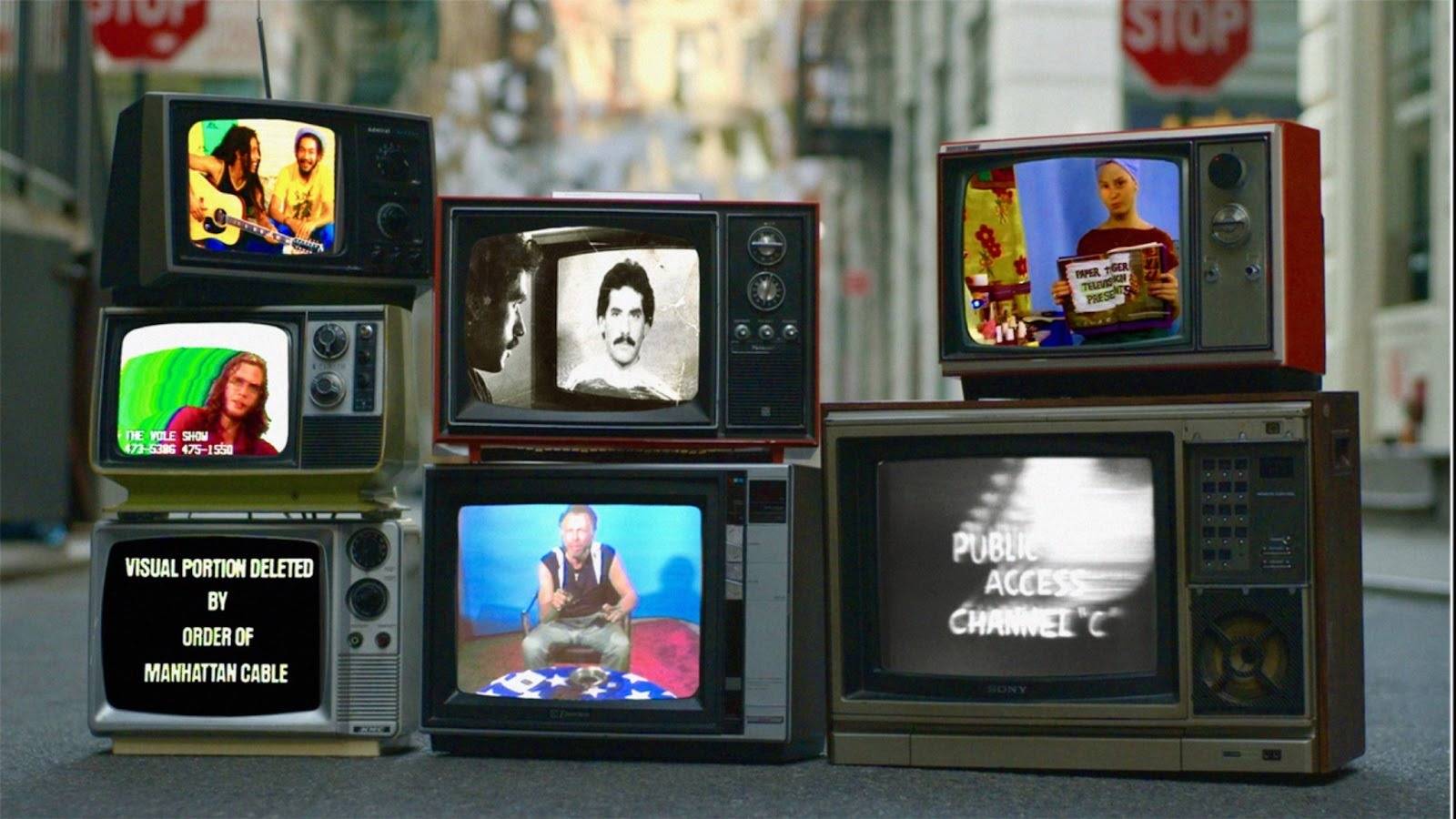
In 1971, a media experiment was born: public access television for New York City. If you had any idea whatsoever, your chances were pretty high to be slotted into the programming schedule with essentially zero quality standards applied. David Shadrack Smith’s kaleidoscopic and deeply moving documentary Public Access is a wildly impressive archival project that curates a wide breadth of footage from a period of public television that was especially radical in its application of free speech. Though the system still exists, it was in its nascent days that the staff of Cable Television Public Access Channel C and their hordes of creators revolutionized our understanding of how media is created and consumed.
It’s fairly impossible not to make the parallels between this period of time and today’s free-for-all with social media, especially with the early days of YouTube. Everything old is new again, so the saying goes, except in many ways, the early 1970s were far more anarchic than what is allowed on the highly policed likes of Instagram and TikTok. Public Access, which lists Steve Buscemi and Benny Safdie amongst its producers, mirrors the medium’s ethos of self-expression by providing us with relatively little in the way of expert talking heads or academic reflection. Instead, the footage is always the main event, with the creators, hosts and participants offering testimony solely in audio form.
In this way, the film takes on a similar feeling to a director’s commentary if paired with a YouTube supercut of wildly audacious archival footage. That isn’t always a winning recipe, but it’s mesmerizing when previously unseen footage is presented. See: Bob Marley on Rockers TV, a reggae show, open about his self-perception. See: artist Jean-Michel Basquiat fooling around with graphic design in real time. See: performer Bob Gruen live-recording his wife Nadya’s live birth in all its textured detail. See: The Spermathon, in which a woman aimed to set a Guinness record by sleeping with 75 men in the same evening, shot live. See: Jake Fogelnest becoming an overnight sensation as a child who poses ironic philosophical questions right from his bedroom.
Public Access reminds us that these fights are not new, and that members of the media still have a unique opportunity to steer the cultural and sociopolitical conversation.
The peak of public access television’s reach was reached in part because of activists who were bullish about presenting subjects assumed to be taboo. Smith, with a supreme editing job by Geoff Guetzmacher, cleanly contextualizes shows like Midnight Blue, which was sexually explicit at a time when nudity on television was unheard of, and The Emerald City and subsequent Gay Cable Network, both of which humanized homosexuality at the advent of the AIDS crisis. Paper Tiger audaciously broke down the nefarious incursion of capitalism in spaces meant for the innocence of youth.
Through shows like these, public access television inadvertently put itself at the forefront of the crusade for free speech, even when it meant letting morally suspect material make it to air. At a time when the first amendment seems more vulnerable than ever before, Public Access reminds us that these fights are not new, and that members of the media still have a unique opportunity to steer the cultural and sociopolitical conversation.
Public Access screened at the 2026 Sundance Film Festival.
- Release Date
-
January 23, 2026
- Runtime
-
107 minutes
- Producers
-
Wren Arthur
