

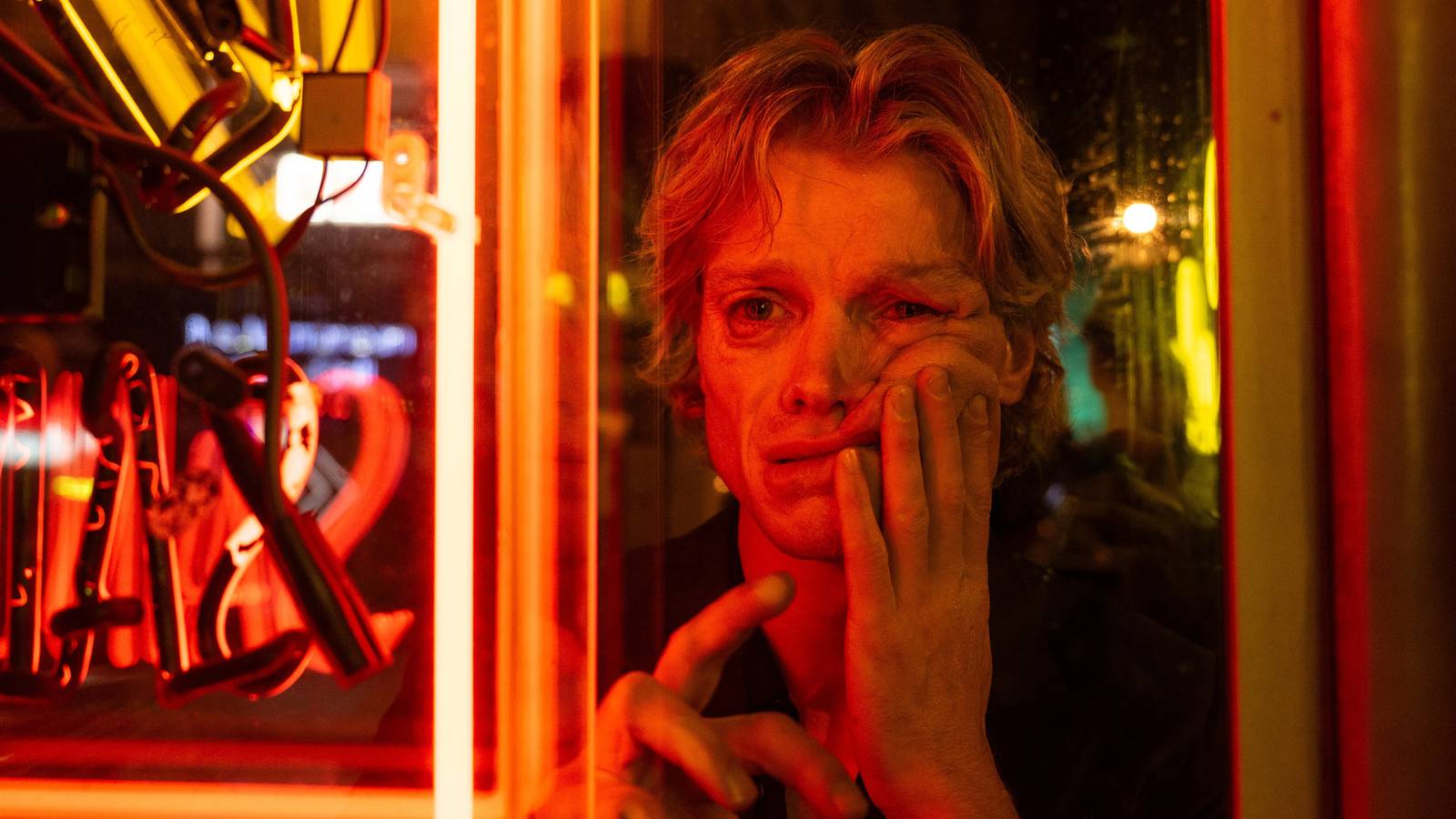
One of Batman’s strangest villains is about to be transformed into a full-blown horror movie, but for those who can’t wait, there are some other superhero horrors from DC, Marvel, and beyond, to watch first. The DCU’s Clayface depicts Matt Hagen, the tragic actor who becomes one of Gotham’s most grotesque villains after an experimental treatment turns him into living clay. This premise has been adapted into a chilling body horror narrative, pushing the superhero horror genre into thrilling new territory.
Starring Tom Rhys Harries as Hagen. Clayface releases in 2026, and is directed by James Watkins, the filmmaker behind modern horror classics Eden Lake and Speak No Evil. With a true horror master at the helm, Clayface is set to be a dramatic departure from the main superhero franchise fare and other installments in the DCU.
Fortunately, Clayface isn’t the first movie to discover that superheroes and horror make an excellent combination. These ten films approach that crossover from very different directions, including vampires, demons, mutants, monsters and gloriously excessive exploitation. If Clayface‘s combination of comic-book mythology and horror sounds appealing, these movies should make the wait considerably more entertaining.
Brightburn (2019)
Brightburn asks a deliciously nasty question: what if Superman had grown up to be a serial killer? Jackson A. Dunn plays Brandon Breyer, an extraterrestrial child raised by a Kansas couple who gradually discovers that he possesses superhuman strength, flight, invulnerability and heat vision. Rather than using those abilities to protect humanity, Brandon becomes increasingly violent toward the people around him.
Brightburn‘s most effective scenes treat familiar superhero powers as horror-movie weapons. Flight becomes an unnerving stalking ability, super-strength makes ordinary people completely helpless, and Brandon’s heat vision produces some memorably nasty injuries.
Brightburn isn’t particularly interested in explaining why Brandon becomes evil, and that can make the character feel more like a force of nature than a fully developed villain. But as a compact, R-rated superhero horror experiment, it knows exactly what its premise promises.
Constantine (2005)

Constantine plunges DC’s supernatural mythology directly into occult horror. Keanu Reeves plays John Constantine, an exorcist who fights demons while attempting to secure his own salvation. When Detective Angela Dodson, played by Rachel Weisz, asks him to investigate her twin sister’s apparent suicide, Constantine uncovers a supernatural conspiracy involving angels, demons and the Spear of Destiny.
Constantine‘s greatest strength is its atmosphere. Los Angeles becomes a grimy supernatural battleground, with demonic possession, exorcisms and half-breed angels lurking beneath the ordinary world. Peter Stormare’s Satan is particularly memorable, and Tilda Swinton’s Gabriel offers an appropriately unsettling take on celestial beings.
Reeves’s Constantine is compellingly unpleasant. He’s sarcastic, chain-smoking, cynical and painfully aware that he’s going to Hell. While it occasionally gets buried beneath its elaborate mythology, Constantine‘s mixture of comic-book spectacle and unapologetic occult horror is remarkably fun.
Darkman (1990)

Sam Raimi’s Darkman drops a superhero origin story into a mad-scientist movie. Liam Neeson plays scientist Peyton Westlake, whose laboratory is destroyed by criminals, leaving him horribly burned. An experimental treatment saves his life but alters his physical and emotional state, while his research into synthetic skin gives him the ability to create convincing disguises, which deteriorate after 99 minutes in light.
That ticking clock is Darkman‘s killer idea. Every disguise has an expiration date, meaning Westlake can become anyone but can never permanently escape his own ruined identity. Raimi turns the limitation into suspense, particularly when Westlake is forced to abandon a disguise before anyone realizes what is happening.
Neeson gives Darkman unexpected emotional weight, while Raimi fills the screen with comic-book compositions, grotesque imagery and wonderfully physical action. Darkman is simultaneously a monster movie, revenge thriller and superhero origin story.
The New Mutants (2020)

Josh Boone’s The New Mutants confines five young Marvel mutants to an isolated facility where Dr. Cecilia Reyes monitors their abilities. The teenagers soon discover that their powers are connected to their deepest fears and traumatic experiences. Dani Moonstar’s ability to manifest fear eventually unleashes the enormous Demon Bear, while Illyana Rasputin’s memories produce the grotesque Smiling Men.
The New Mutants’ best idea is that superpowers are not necessarily empowering. For these characters, extraordinary abilities are tangled up with guilt, grief and childhood trauma. The facility consequently does not feel like an X-Men training ground, but a supernatural prison.
The New Mutants‘ horror influences are obvious, but Boone gives the film some striking imagery. Illyana’s Limbo sequences, the Smiling Men and the enormous Demon Bear provide considerably more visual imagination than the film’s troubled production might suggest.
Hulk: Where Monsters Dwell (2016)

Hulk: Where Monsters Dwell sends Hulk and Doctor Strange into the Dream Dimension on Halloween, where they face Nightmare’s plan to invade the waking world and transform dreamers into monsters. The heroes are joined by a supernatural version of S.H.I.E.L.D.’s Howling Commandos as the boundaries between dreams and reality begin to collapse.
Hulk: Where Monsters Dwell is not intended as a true horror movie, but more a Halloween-themed Marvel adventure. However, Nightmare’s Dream Dimension does give the filmmakers permission to make the environments bizarre and constantly shifting.
Nevertheless, Where Monsters Dwell is full of fun monsters, plenty of smashing action, and a distinctive spooky tone. For younger viewers, it is an easy gateway into the superhero-horror crossover.
The Toxic Avenger (1984)

Troma’s The Toxic Avenger has perhaps the most gloriously ridiculous superhero origin story ever. Melvin Ferd is a bullied, socially awkward janitor at a health club in Tromaville, New Jersey. After a cruel prank sends him crashing into a drum of toxic waste, he is transformed into a grotesque mutant with superhuman strength. He subsequently becomes the Toxic Avenger and starts brutally targeting criminals.
Toxie looks like something that crawled out of a radioactive swamp, but he has an almost childlike commitment to justice. The Toxic Avenger then gleefully turns that contradiction into an excuse for spectacularly excessive violence.
Troma’s production values are unapologetically cheap, but that only strengthens the film’s anarchic personality. The gore is exaggerated, the comedy is filthy, and the villains are cartoonishly despicable. The Toxic Avenger is unrelentingly ridiculous, but truly iconic also.
Faust (2000)

Faust: Love of the Damned adapts the comic by Tim Vigil and David Quinn into an aggressively grotesque supernatural horror movie. John Jaspers has sold his soul to the mysterious M in exchange for the power to avenge his murdered girlfriend. The bargain gives him supernatural abilities and clawed metal gauntlets, but also makes him M’s servant.
Faust is superhero cinema stripped of almost every reassuring element. Power doesn’t make Jaspers noble or inspirational; it drags him deeper into violence and damnation. It delivers seemingly endless grotesque practical effects, mutilation and demonic imagery. Its visual excess can overwhelm the story, but that is almost beside the point.
Faust belongs to the nastier tradition of adult horror comics, where superheroes and monsters are separated by an extremely thin line. It is grimy, excessive and unapologetically weird.
Blade (1998)

Wesley Snipes’ Blade is one of the great examples of a superhero movie that understands its horror source material. Blade is a half-human, half-vampire “Daywalker” waging a one-man war against the undead. His latest enemy is Deacon Frost, an ambitious vampire attempting to overthrow the vampire elders and awaken the blood god La Magra.
Blade’s vampires are particularly effective because they aren’t presented as romantic gothic figures. They are nasty, ugly, and vicious. They have criminal networks and an entire hidden society operating alongside humanity. Frost’s ambition gives that society a particularly grim political dimension.
Then there is Snipes, who brings an almost absurd level of cool to the role. Blade barely needs to speak before the movie has established exactly who he is. Blade is slick, nasty and still enormously fun.
Terror Toons (2002)

Joe Castro’s Terror Toons starts with a wonderfully stupid horror premise: two murderous cartoon characters escape from an animated dimension and begin slaughtering people in the real world. Sisters Cindy and Candy become caught in the resulting bloodbath after Doctor Carnage and his grotesque sidekick Max Assassin emerge from a mysterious DVD.
Terror Toons was made for a reported $2,300, and that microscopic budget is impossible to miss. It is also, however, a major part of its charm. Terror Toons doesn’t pretend to be polished; it embraces crude effects, outrageous gore and the anarchic energy of a homemade horror movie.
One moment the movie is staging a slasher sequence; the next, it is operating according to the logic of an unhinged Saturday-morning cartoon. Terror Toons is messy, juvenile, frequently ridiculous, and endlessly entertaining.
Die You Zombie Bastards! (2005)

Die You Zombie Bastards! is an utterly deranged superhero comedy horror movie about Red Toole, a serial killer whose cannibal wife Violet is kidnapped by Baron Nefarious. Red dons a superhero costume made from human skin and sets off to rescue her before Nefarious turns her into a zombie.
The premise only gets stranger once the movie starts moving. It combines zombie horror, superhero parody, exploitation cinema, romance and absurdist comedy, with Red functioning like a deranged underground-comic character.
Die You Zombie Bastards is deliberately tasteless, but that is part of its appeal. Shot while director Caleb Emerson was still in film school, it has the rough, homemade quality of genuine cult cinema. Die You Zombie Bastards is emphatically not for everyone. For viewers with an appetite for extremely strange superhero horror, however, that’s rather the point.

- Release Date
-
October 23, 2026
- Runtime
-
108 Minutes
- Director
-
James Watkins
-

Tom Rhys Harries
Matt Hagen / Clayface
-

Naomi Ackie
Dr. Caitlin Bates
-

-