

Why Mallorca works for 7 days
Mallorca combines compact distances with very different landscapes: a historic capital, high mountain ridges, quiet coves, and long sandy bays. In one week, travelers can cover Palma, the Serra de Tramuntana, and both north and southeast coasts without rushing, especially with a car.
When to visit Mallorca
Spring (April–June) and autumn (September–October) usually bring pleasant temperatures, good hiking conditions, and lighter crowds than peak summer. July and August are the hottest and busiest months, with packed beaches and higher demand on roads and parking around hotspots like Cap de Formentor.
Winter is quieter, with cooler temperatures, some hotel and beach services reduced, but a calmer feel in Palma and the mountain villages. Shoulder seasons suit travelers who want to mix coastal time with walks in the Serra de Tramuntana without extreme heat.
How to get to Mallorca
Mallorca’s main gateway is Palma de Mallorca Airport (PMI), with frequent connections from many European cities. The island is also connected by ferry with mainland Spain, including Barcelona and Valencia.
For travelers starting on the Catalan coast, you can travel to the island from Barcelona via regular ferries that link the city with Palma and Alcúdia. These routes are served by several operators and include both daytime and overnight sailings.
Getting around the island
Renting a car gives the most flexibility, especially for reaching mountain roads, small coves, and viewpoints such as Cap de Formentor. Public buses connect Palma with main towns and some resorts, but services can be less frequent in rural areas and in the evenings.
Driving times between key points are relatively short: Palma to Sóller is roughly 30–40 minutes via the tunnel, and Palma to Alcúdia or Pollença is usually around one hour by motorway. Mountain drives like the Sa Calobra road or the Formentor peninsula take longer than the distance suggests because of narrow, winding sections.
Exact seasonal traffic regulations (such as bus-only or shuttle periods) for Cap de Formentor and access-controlled stretches can change; travelers should check current rules before driving.
Overview: 7-day Mallorca itinerary
A practical way to structure one week is:
- 2 days based in Palma de Mallorca
- 2–3 days in the Serra de Tramuntana (around Sóller or nearby villages)
- 2–3 days on the north coast (around Port de Pollença or Alcúdia) or the southeast coast
The outline below follows a west–north loop, ending with a beach-focused day before returning to Palma.
Day 1: Palma’s old town and waterfront
Palma works as a first base, with a walkable old town and easy onward connections around the island.
Morning: Gothic Palma and the waterfront
- Start near the seafront at La Seu, Palma’s Gothic cathedral, a major landmark overlooking the bay.
- Explore the surrounding old town streets with sandstone facades, inner courtyards, and small squares around the cathedral and Plaça Mayor.
Afternoon: Castles and neighborhoods
- Head up to Bellver Castle, a circular fortress on a wooded hill with wide views over Palma and its harbor.
- Wander back through districts such as Santa Catalina or La Lonja, where narrow streets and historic buildings sit close to the waterfront.
Evening: Stay in Palma
- Overnight in Palma makes it easy to collect a rental car the next morning and leave early towards the mountains.


Day 2: Palma to Sóller and Port de Sóller
This day links the capital with the Serra de Tramuntana, introducing mountain scenery and a small harbor town.
Morning: Travel to Sóller
- Drive or take public transport from Palma to Sóller; by road, the tunnel route is the faster option.
- Once in Sóller, explore the central square with its stone church and surrounding streets framed by mountains.
Afternoon: Port de Sóller and coastal feel
- Continue down to Port de Sóller, the coastal part of the town with a sheltered bay and promenade.
- The historic tram links Sóller and Port de Sóller, crossing orchards and providing wide views over the valley.
Evening: Base in Sóller area
- Many travelers choose to stay in or around Sóller as a base for exploring the Tramuntana, with access to trails, nearby villages, and coastal viewpoints.

Day 3: Valldemossa and Deià
Two of Mallorca’s most atmospheric mountain villages sit west of Sóller, perched above the sea.
Morning: Valldemossa
- Drive to Valldemossa, a stone village in the Tramuntana known for its cobbled lanes and hillside setting.
- Allow time to wander the narrow streets and viewpoints over the valley and terraced slopes.
Afternoon: Deià and the coast
- Continue to Deià, another small village built on a slope facing the sea and backed by steep mountains.
- From Deià, a path leads down to Cala Deià, a rocky cove with clear water and a rugged shoreline that appeals to strong swimmers and coastal walkers.
Evening: Return to Sóller area
- Drive back to Sóller or Port de Sóller for the night, keeping mountain driving to daylight hours where possible.


Day 4: Mountain roads and Sa Calobra
This day focuses on the dramatic interior roads of the Tramuntana and, if conditions and access allow, the descent towards Sa Calobra.
Morning: Scenic drive into the mountains
- Leave Sóller towards the higher interior, following mountain roads that pass viewpoints and reservoirs such as the areas around Gorg Blau and Cúber.
- There are parking spots and miradors along these routes where travelers can stop for short walks and photos over the ridges.
Afternoon: Sa Calobra and Torrent de Pareis
- A famous road drops in hairpin turns towards Sa Calobra on the northwest coast, with striking rock formations and viewpoints along the way.
- At the bottom, a short pedestrian route through tunnels leads to the mouth of Torrent de Pareis, where a rocky beach sits between high cliffs.
Access rules, parking capacity, and bus restrictions for Sa Calobra and the Torrent de Pareis area can change, and there may be crowding in high season; travelers should confirm current guidance locally before driving this section.
Evening: Continue towards the north
- After returning to the main mountain road, head east towards Pollença or Port de Pollença, which work well as bases for exploring the northern peninsula and beaches.


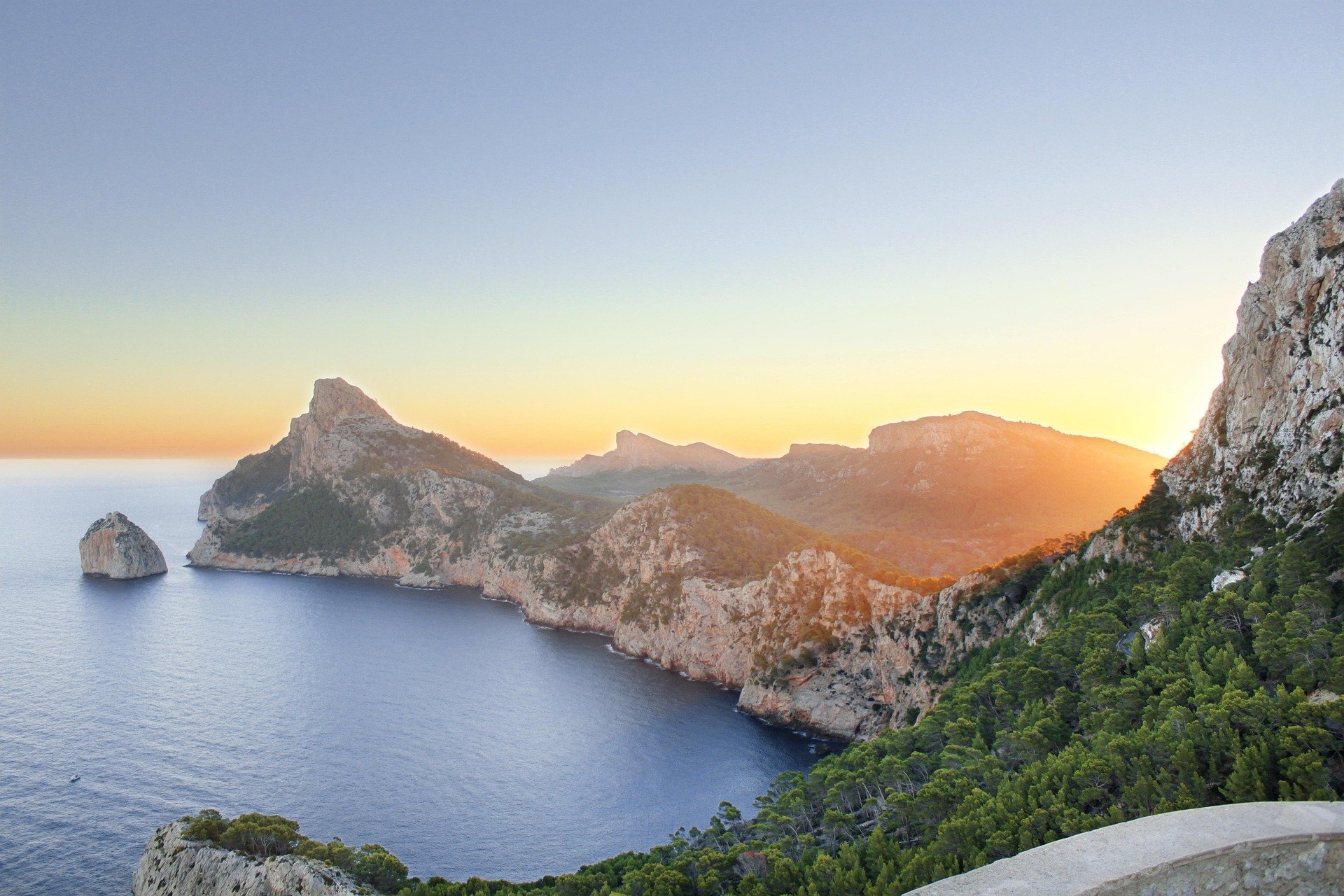
Day 5: Pollença and Cap de Formentor
The Formentor peninsula is one of Mallorca’s most photographed stretches of coastline, marked by cliffs and viewpoints.
Morning: Pollença town
- Start in Pollença, an inland town with stone houses, narrow streets, and a central square that functions as a local hub.
- Many visitors climb the steps of the Calvari hill for views over the town and surrounding countryside.
Afternoon: Formentor peninsula
- Travel towards Port de Pollença and follow the coastal road in the direction of Cap de Formentor, the northernmost point of the island.
- Along the way, viewpoints overlook steep cliffs and the deep blue of the Mediterranean, with the lighthouse at the tip marking the end of the road.
In busier months, access to Cap de Formentor for private vehicles is sometimes restricted to certain hours or replaced by shuttle/bus services; travelers should check current regulations before setting out.
Evening: Stay in Port de Pollença or Alcúdia
- Port de Pollença offers a bay-front setting with a long seafront walk, while Alcúdia combines nearby beaches with a walled old town inland.


Day 6: Northern beaches and coastal time
After several days in the mountains and on the road, the north coast offers easier, beach-focused time.
Morning and afternoon: Beach options
- Around the Formentor peninsula, Platja de Formentor is known for clear water and a pine-backed shoreline, although space and parking are limited in high season.
- On the Bay of Alcúdia side, long sandy stretches such as Playa de Muro provide shallower water and more space for longer walks along the shore.
Evening: Relaxed night on the coast
- Another night in Port de Pollença or Alcúdia allows time for a sunset walk along the waterfront and an early start the next day back towards Palma or the southeast.

Day 7: South or southeast coves, then back to Palma
The final day can lean towards quieter coves in the southeast before returning to Palma for departure.
Morning: Drive south or southeast
- From the north, drive towards the southeast coastal area, where low-lying pine forests and coves like those in the Mondragó Natural Park offer a different landscape to the Tramuntana.
- Cala Mondragó and nearby coves are known for clear water and protected surroundings, with marked paths connecting different beaches within the park.
Afternoon: Last swim and return
- Spend the early afternoon swimming or walking short coastal trails between coves in the area, then begin the drive back to Palma, allowing time for traffic and rental car return.
- Depending on flight or ferry times, travelers may choose to spend this night in Palma again or head directly to the port or airport.
If you are adding a city trip to Barcelona, read our Barcelona travel tips here.

Read as well:
Practical tips for this 7-day route
- Car hire and roads: Mountain and peninsula roads are narrow and winding in places; starting early in the day reduces heat and helps avoid the heaviest traffic.
- Parking: Popular spots such as Sóller, Deià, Formentor, and Sa Calobra can see parking fill up quickly in peak months, so arriving earlier in the day gives more options.
- Weather and packing: A light layer is useful even in warmer months for higher elevations in the Tramuntana, where temperatures can feel cooler than on the coast.
- Booking ahead: For peak summer, securing car rentals and accommodation in Palma, Sóller area, and the north coast well in advance helps keep options open, especially for small properties.
This itinerary gives first-time visitors a structured way to combine Palma, the Tramuntana mountains, and Mallorca’s northern and southeastern shores in a week without turning each day into a race across the island.

