

Step off the metro and the stadium rises over the rooftops. Then ordinary life takes over. Trams rattle past, residents stop for coffee, and tree-lined roads lead away toward quieter residential blocks.
Most visitors know San Siro Milan only as a stadium, and they leave straight after the match or concert. I work in the neighborhood, and I’d argue that’s the wrong way round. On a day with no game, San Siro shows you a Milan that runs on markets, parks, a Liberty-era racecourse and a church first recorded in 885. Here is how to spend that day.
A Thermal Afternoon in the Old De Montel Stables
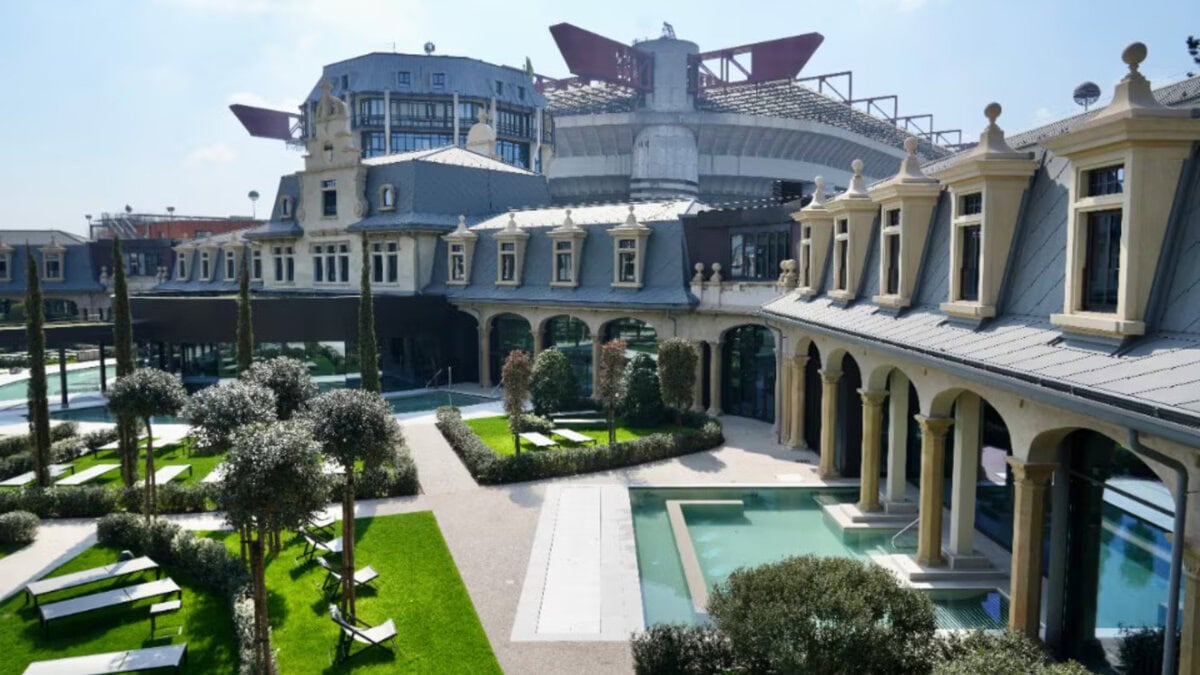
The former De Montel stables now house Terme De Montel, a thermal spa in the same neighborhood. The Wellness Break gives you five hours across indoor and outdoor thermal pools, whirlpools, saunas and a steam room, an easy way to slow an ordinary San Siro day down even further.
Good to know
Duration: 5 hours
Price: from €79 online, €89 standard rate (checked November 2026)
Included: Access to all wellness areas and a spa kit with bathrobe, towel, slippers and a tote bag
Start times: Afternoon slots from 1:30 pm to 6:30 pm on the day we checked
Keep in mind: Entry is for ages 16 and up, so it doesn’t work for families with younger children. On match days the Via Achille car park closes and the area fills up, so book a non-event day.
Book the Wellness Break at Terme De Montel
This section contains partner links. If you book through them, we may earn a commission at no extra cost to you. We only feature partners whose services we believe add genuine value for travelers.
A Neighborhood That Doesn’t Switch Off After the Final Whistle
On a match night, up to about 75,000 people pour into the stadium and out again within hours. The next morning the same streets belong to people buying bread, walking dogs and arguing over the newspaper at the bar.
The best approach is to arrive without a match-day agenda and give yourself time to walk. Plan a rough route, then leave room to break it. The visitors I see enjoy San Siro most are the ones who take their stadium photo and then keep walking instead of heading straight back to the metro.
How San Siro Grew
The district takes its name from San Siro alla Vepra, the small church at its historic core. It grew as Milan expanded through the twentieth century. The racecourse opened in 1920, the stadium in 1926, and the public housing blocks went up largely between the 1930s and 1950s.
Over the decades, people from across Italy and from many other countries have made this area home. You can read it in the shop signs, the food on sale and the languages at the bus stop. San Siro is first a place where people live and work, and its character comes from the lives around the stadium as much as from the stadium itself.
Walking San Siro
Green Spaces and Tree-Lined Streets
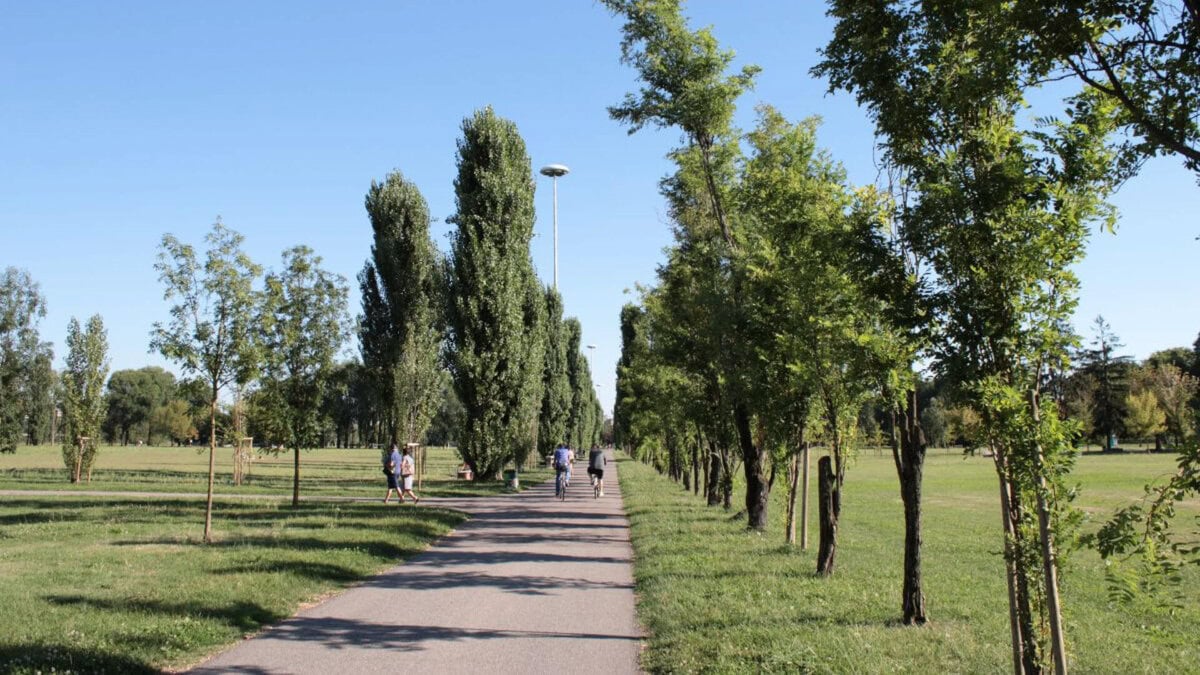
The green is part of what makes San Siro worth walking. Residential avenues are lined with trees, and the racecourse grounds open up long views between the buildings.
One change to know about: Parco dei Capitani, the 52,000-square-meter park beside the stadium dedicated to captains Giacinto Facchetti and Cesare Maldini, has been fenced off since June 2026 pending soil cleanup. No reopening date has been announced, and the land is the planned site of the new stadium. For a longer walk, head instead to Parco di Trenno, a larger green space further west of the stadium area.
Distances here are longer than they look on a map, so I won’t hand you a rigid route. Leonardo’s Horse, for example, is about seven minutes on foot from San Siro Ippodromo metro station and around 15 minutes from Lotto. In summer, walk in the morning or late afternoon and take your breaks in the shade.
Older Buildings Worth Noticing
The stadium is the obvious landmark, but the district carries just as much history in its smaller buildings.
The De Montel stables. Built in the early twentieth century, the restored Liberty-style complex on Via Achille, directly opposite the stadium, now houses Terme De Montel, a thermal spa. You don’t need to go inside to appreciate the architecture; from the street it shows a side of Milan shaped by horses before football took over.
San Siro alla Vepra. This church on Via Masaccio is documented as far back as 885, centuries before the stadium became the area’s defining feature. Most of what survives is Romanesque and Gothic, with frescoes in the apse. It is a quiet counterpoint to everything else in the district.
Leonardo’s Horse. At the racecourse entrance on Piazzale dello Sport stands a 7.3-meter bronze horse by sculptor Nina Akamu, unveiled in 1999. It is based on Leonardo da Vinci’s designs for an equestrian monument to Francesco Sforza, a statue Leonardo never got to cast. Entry is free. Read more about Leonardo da Vinci’s Milan.
The public housing blocks. Less decorated than the stables, these 1930s–1950s blocks explain who built this part of the city and why. Walk through them respectfully: they are homes, not a museum.
Where the Neighborhood Shops, Eats and Stops for Coffee
The Via Osoppo Street Market
If you only have time for one everyday ritual, make it the market on Via Osoppo. It runs Thursdays from 7:30 am to 2 pm and Saturdays from 7:30 am to 6 pm. On Thursdays the stalls are mostly food, more than 100 of them, set out along the tree-lined traffic islands.
Come mid-morning and walk slowly. You’ll see residents doing their weekly shop, comparing tomatoes and stopping to talk. It is a Milan that doesn’t appear on postcards.
Coffee, Restaurants and the Salamella Sandwich
For a named stop near the stadium, Baretto 1957, by Gate 1 on Piazza Angelo Moratti, is a long-established bar where you can stop for a coffee, a sandwich or a quick bite. Its location makes it a familiar meeting point for football supporters, particularly on match days, but it is also a useful reference for visitors exploring the area.
For a meal in a distinctive setting, consider Canter 1920, a restaurant inside the San Siro Galoppo racecourse. Housed in a Liberty-style building, it has an outdoor garden and interiors that recall the area’s equestrian heritage. It offers a different perspective on San Siro, connecting its sporting past with Milan’s dining culture. Check opening times before visiting, particularly if you’re planning to go on a non-event day.
For a more casual taste of the neighborhood, explore the local bakeries, cafés and pizzerias along the residential streets. These everyday businesses are part of the district’s character, and stopping at one along your walk is an easy way to take a break without planning every detail in advance.
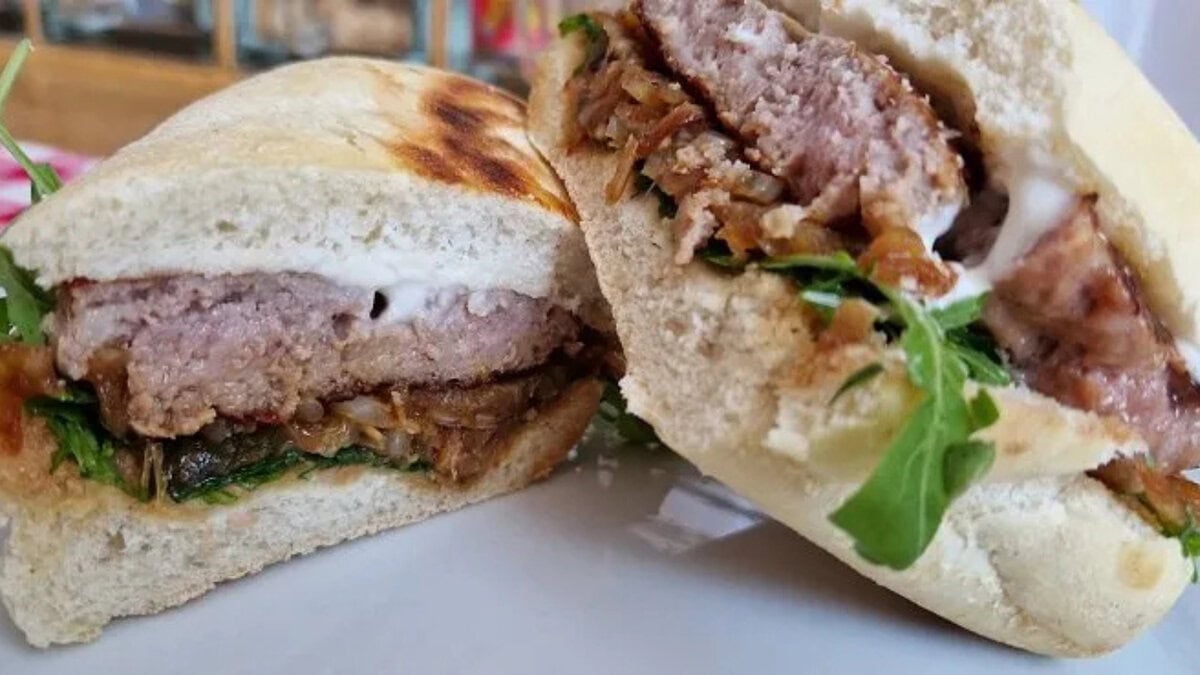
The one food tradition tied closely to the stadium is the panino con la salamella, a grilled pork sausage sandwich sold at food stalls around the stadium on match days. The sausage is juicy and savory, with a smoky flavor from the grill, and it may come with sautéed onions and peppers in a soft roll. Ask for un panino con la salamella. It’s informal and filling, and it tastes best outdoors in the noise of the crowd, so it’s a good reason to visit on a match day.
When to Go
Spring and early autumn are the easiest seasons for San Siro on foot. Winter is quieter, though rain and short days cut your time outdoors.
The day matters as much as the season. Pick a non-match day to see the district at its everyday pace. Pick a game day if you want the streets full of supporters and the salamella vans out. Check the football and concert calendar first: major events change public transport, close nearby streets and fill every bar within 500 meters of the stadium.
There is a time element too. AC Milan and Inter bought the stadium in November 2025 and plan to build a new 71,500-seat ground next door, targeting 2031. The current stadium stays in use until then, after which most of it is due to be demolished. If you want to see the old San Siro in its neighborhood, the next few years are the window.
Practical Information
Getting there. From the Duomo, take the M1 (red line) to Lotto, then the M5 (lilac line) to San Siro Stadio. For the racecourse and Leonardo’s Horse, get off one stop earlier at San Siro Ippodromo. Tram 16 runs to San Siro Stadio from the center: slower, but you see Milan at street level.
Cost. A standard ATM ticket costs €2.20 and covers 90 minutes on metro, tram and bus (checked November 2026). Paper tickets were withdrawn in January 2026, so tap a contactless card at the gates or use a RicaricaMi card. Children under 14 travel free.
What to bring. Comfortable walking shoes, a reusable water bottle in warmer months and a light rain jacket in spring and autumn. Above all, check the stadium calendar. For the most everyday version of San Siro, choose a Thursday or Saturday morning with no event and leave room for an unplanned café stop.
Frequently Asked Questions
Is San Siro Milan worth visiting if there’s no match on?
Yes, and a non-event day is when you see the district at its everyday pace. The residential streets, the Thursday and Saturday market and the local cafés are all part of the neighborhood’s regular rhythm. Plan it as a walk rather than a quick stadium photo stop.
Is San Siro stadium being demolished?
Not yet. The clubs bought the stadium and surrounding land in November 2025, and construction of a new stadium next door is expected to start in the second half of 2027. Matches continue at the current ground until the new one opens, targeted for 2031, after which most of the old stadium is due to be demolished.
How do I get to San Siro from Linate Airport?
Take the M4 (blue line) to San Babila, then the M1 to Lotto, and change to the M5 for San Siro Stadio. It involves three lines, so check ATM’s updates on event days.
How do I get to San Siro from Malpensa or Orio al Serio?
From Malpensa, take the Malpensa Express to Cadorna or Garibaldi and continue by metro. From Orio al Serio, airport buses run to Milano Centrale, where you can connect to the metro.
Which days is the Via Osoppo market open?
It runs on Thursdays and Saturdays, and the hours differ between the two days. Morning is when it’s busiest and most lively, so aim for then.
When can I try the panino con la salamella?
Match days are the best time, when food stalls around the stadium sell it to supporters. On quieter days, the neighborhood’s trattorias and pizzerias are the better bet for a meal.
What’s the best season for a walk around San Siro?
Spring and early autumn, when mild weather makes it easy to combine streets, cafés and parks. In summer, stick to mornings or late afternoons.
Staying longer in Milan? Read about Milan’s thermal baths and Leonardo da Vinci’s Milan, or browse our Northern Italy travel guides.

