

You hear kottu roti before you see it. A fast, rhythmic clang of metal on metal rings out from a street corner, and then the smell of roasting spices reaches you. That sound is the best introduction I know to how Colombo eats.
I’m a local, and this is what I’d tell a friend who wants to eat beyond the hotel buffet: the dishes worth ordering first, how to order them at the griddle without fuss, and the daily rhythm of meals that shapes the city. Colombo’s food is simpler and more social than most guidebooks suggest, and most of it happens on the street.
Pettah’s Food Streets by Tuk Tuk
Colombo City Tuk Tuk, the author’s company, runs a private four-hour ride with a local driver through Pettah’s market streets, the seafront and the temples in between. You set the pace, so there is time to stop for short eats or a plate of kottu when the clanging starts.
Good to know
Duration: 4 hours, private
Price: €17.86 for one person or €35.72 for two, checked for November 2026
Included: Hotel pickup within Colombo 1 to 15, bottled water and a fresh king coconut
Not included: The food you buy on the way, Gangaramaya Temple (US$2) and Lotus Tower (US$20) entry
Keep in mind: Not wheelchair or stroller accessible
Check dates for the Colombo tuk tuk tour
This section contains partner links. If you book through them, we may earn a commission at no extra cost to you. We only feature partners whose services we believe add genuine value for travelers.
Kottu Roti: The Sound of a Colombo Evening
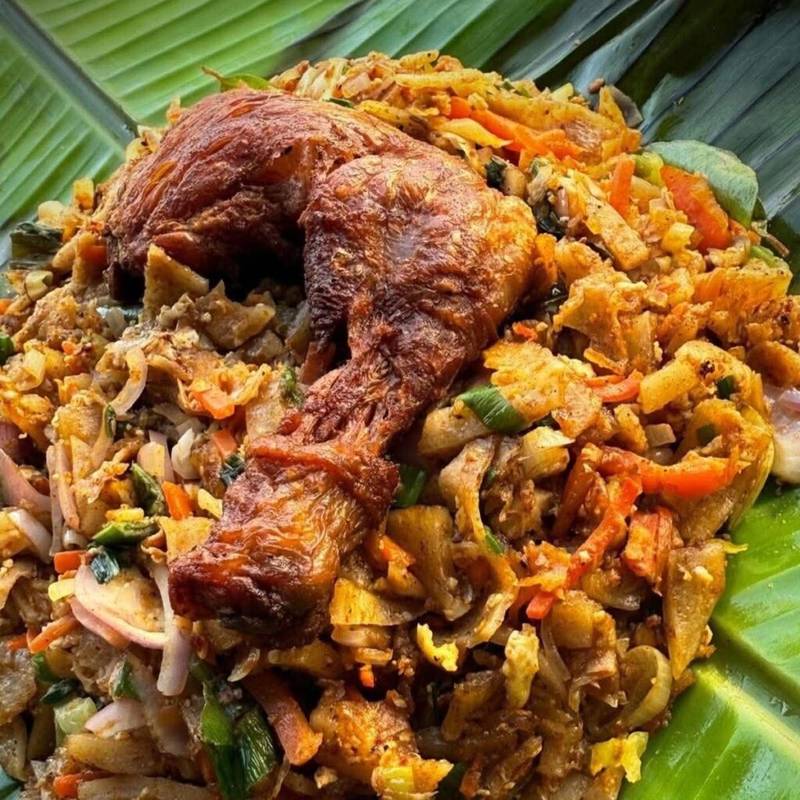
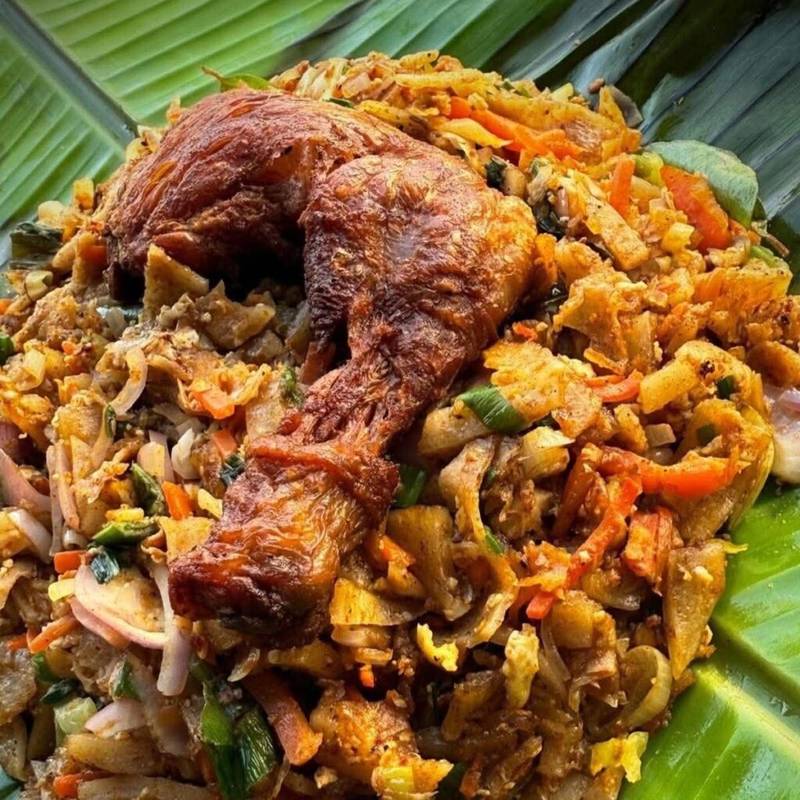
Kottu roti is the plate I’d put in front of you first. It arrives hot and still sizzling, spicy and savory, with soft strips of roti that turn chewy at the edges where they’ve caught the griddle.
Where Kottu Comes From
Kottu wasn’t invented in Colombo, though you’d never guess it from how the city eats it now. It’s generally traced to the east coast towns of Batticaloa and Trincomalee in the 1960s and 1970s, where it started as a cheap way to give leftover godhamba roti a second life. The name comes from the Tamil for “chopped.”
The method hasn’t changed. The cook chops the flatbread on a flat griddle with two metal blades, working in minced meat, egg, vegetables and spices as he goes. For me, the rhythm of those blades is the sound of Sri Lankan street food.
How to Order and Eat It
Kottu is mostly an evening dish, and the chopping picks up after dark. Walk up and order at the griddle. There’s rarely a printed menu at a small stall, so point at what you want: vegetable, egg, chicken or beef.
Then stand and watch. The cook keeps a steady beat with the blades, and that’s half the pleasure. Eat it steaming hot, straight from the paper. Small stalls often don’t put out cutlery, so most people eat with their right hand, but nobody minds if you ask for a spoon.
Hoppers and Pol Sambol
Hoppers are bowl-shaped pancakes made from fermented rice flour and coconut milk, cooked in small curved pans. The edges are crisp and lacy, and the center stays soft. Order an egg hopper and the cook cracks an egg into the hollow while it sets.
Pol sambol is what you eat them with. It’s grated coconut pounded with chili, lime juice and Maldive fish, and it adds a sharp, salty kick to anything it touches. It’s also the quickest way to taste how coconut works in our cooking.
What Most Articles Get Wrong About Colombo Street Food
Travel writing often assumes that all Sri Lankan food is fiercely spicy or simply Indian-style. The reality is a balance of layered spices and coconut milk. Coconut softens the heat in a hopper, and the lime in a sambol lifts it. Come expecting nuance and you’ll taste it.
Where Locals Eat
Most of us eat at street stalls and small roadside kiosks, and Pettah is where I’d send you first. If you’d like a local driver to link the stalls with the rest of the city, see Colombo by tuk tuk.
Pettah Market on Weekday Mornings
Go to Pettah Market on a weekday morning. It’s the best time to buy fresh fruit, street snacks and whole spices, before the midday heat sets in. Even if you buy nothing, walking the stalls shows you what the city cooks with.
Galle Face Green at Sunset
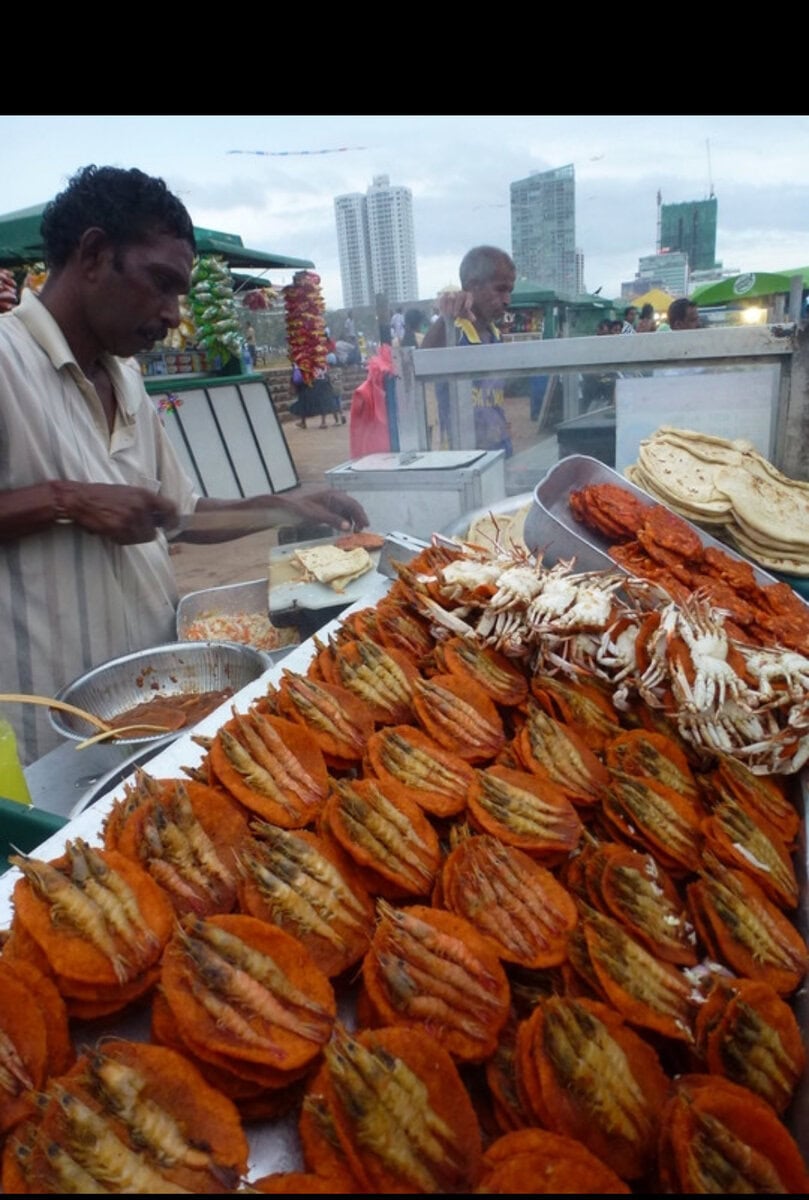
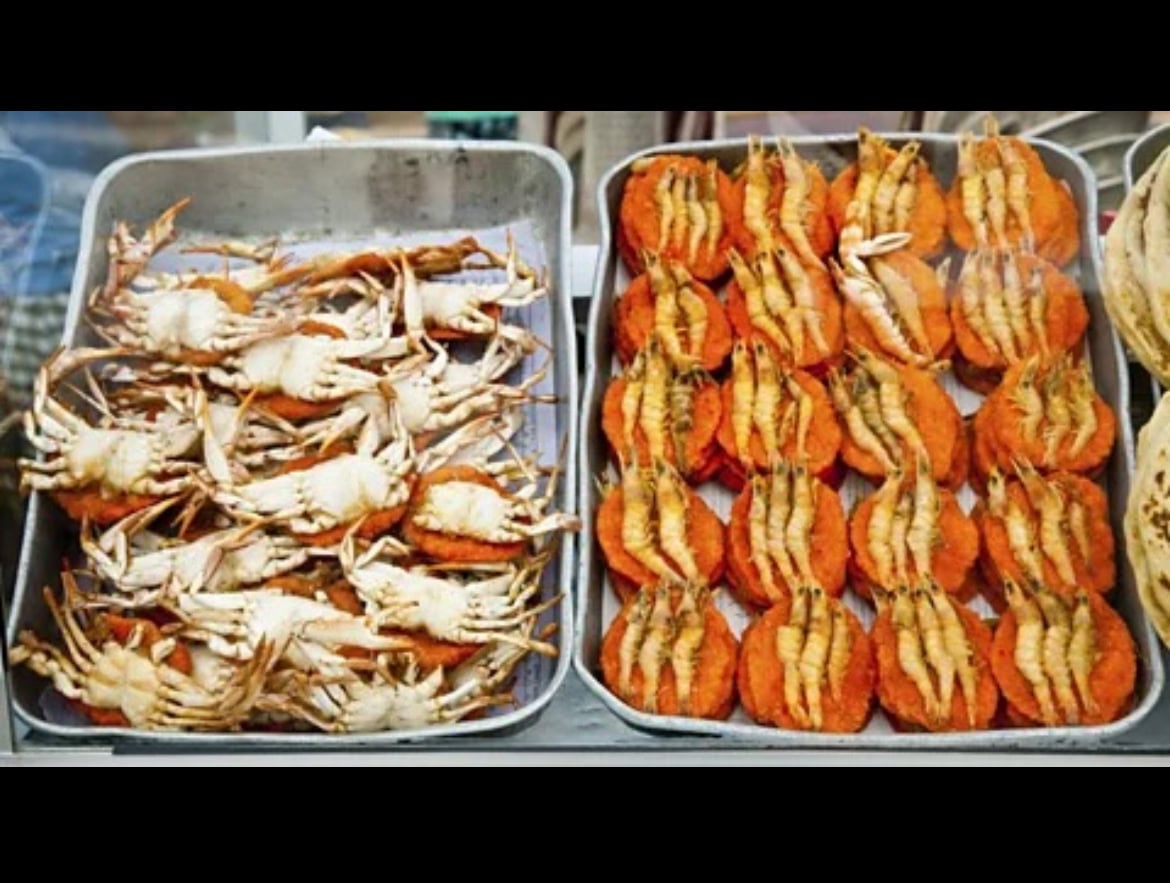
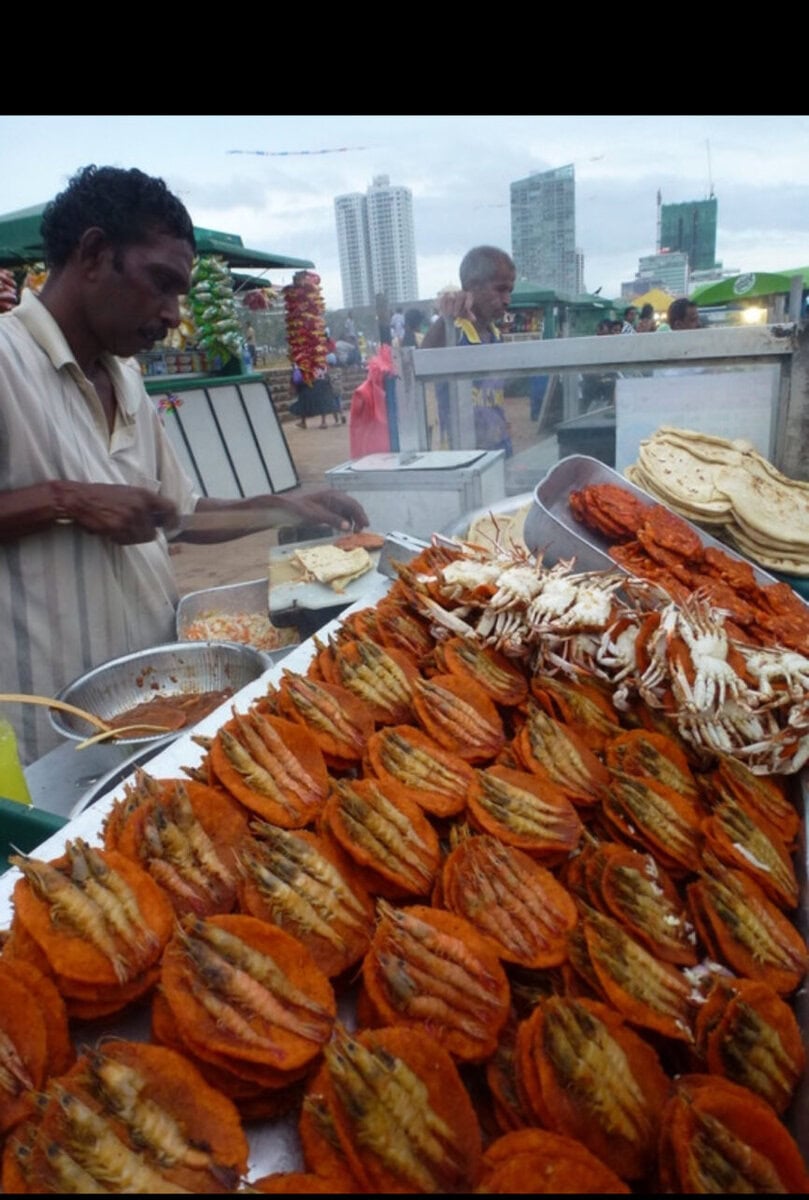
For an evening snack, the seafront promenade at Galle Face Green fills with food carts and families from about 5pm. Look for isso vadai (lentil fritters topped with prawns) and king coconut cut open to drink while the sun drops into the Indian Ocean.
The Rhythm of a Colombo Day
Meals here are shared. Breakfast starts early with hoppers or string hoppers. Lunch is a full rice and curry, usually several small curries around one mound of rice. As evening comes, the kottu griddles start up, and people gather over snacks, conversation and cups of Ceylon tea.
Plan your day around that pattern and you’ll eat where and when the city does. It’s the easiest way to see that food in Colombo is less about a single famous dish and more about who you eat it with.
Practical Information
When to go: Colombo’s street food runs year-round, and most of it doesn’t change with the season. The exception is mid-April, when homes and shops prepare sweets for the Sinhala and Tamil New Year.
Getting to Pettah: Pettah sits right beside Colombo Fort railway station, so it’s easy to reach by train or a short tuk tuk ride from most central hotels.
Rough costs (expectation-setting only, checked November 2026):
- Kottu at a street stall: about 400–700 LKR
- Street snacks such as vadai or short eats: a few hundred rupees
- Sit-down meal for one: around 3,000 LKR
- Café coffee: about 1,000 LKR
What to bring: Cash in small notes, as stalls rarely take cards. Hand wipes help if you plan to eat with your fingers.
Frequently Asked Questions
Is street food safe to eat in Colombo?
Choose busy stalls where food is cooked to order in front of you, which is how kottu and hoppers are made anyway. Food that comes straight off a hot griddle is the safer bet. Stick to bottled water if you’re unsure about the tap.
Can vegetarians eat street food in Colombo?
Yes. Vegetable and egg kottu are on almost every griddle, and plain hoppers and lentil vadai are meat-free. Check the sambol, because pol sambol usually contains Maldive fish.
What Sinhala words help when ordering food?
Kæma means food, and mēka denna means “give me this one,” which pairs well with pointing. Finish with istuti (thank you). In Tamil-speaking areas of Pettah, many stall owners also speak English.
Where can I eat kottu late at night in Colombo?
Kottu is at its best after dark, and some Colombo kottu restaurants, such as the Pilawoos chain, are known for staying open around the clock. Expect to pay more at a tourist-facing restaurant than at a street stall.
What sweets are made for the Sinhala and Tamil New Year?
The New Year falls in mid-April, and families make sweets such as kavum (oil cakes) and kokis (crisp, lace-patterned rings). You’ll find the widest choice in the weeks around the festival, when shops and homes make them in quantity.
How much time should I set aside for eating in Pettah?
A weekday morning walk through Pettah Market takes a couple of hours if you stop to taste as you go. Pair it with an evening at Galle Face Green to cover both the market and the seafront in one day.
