

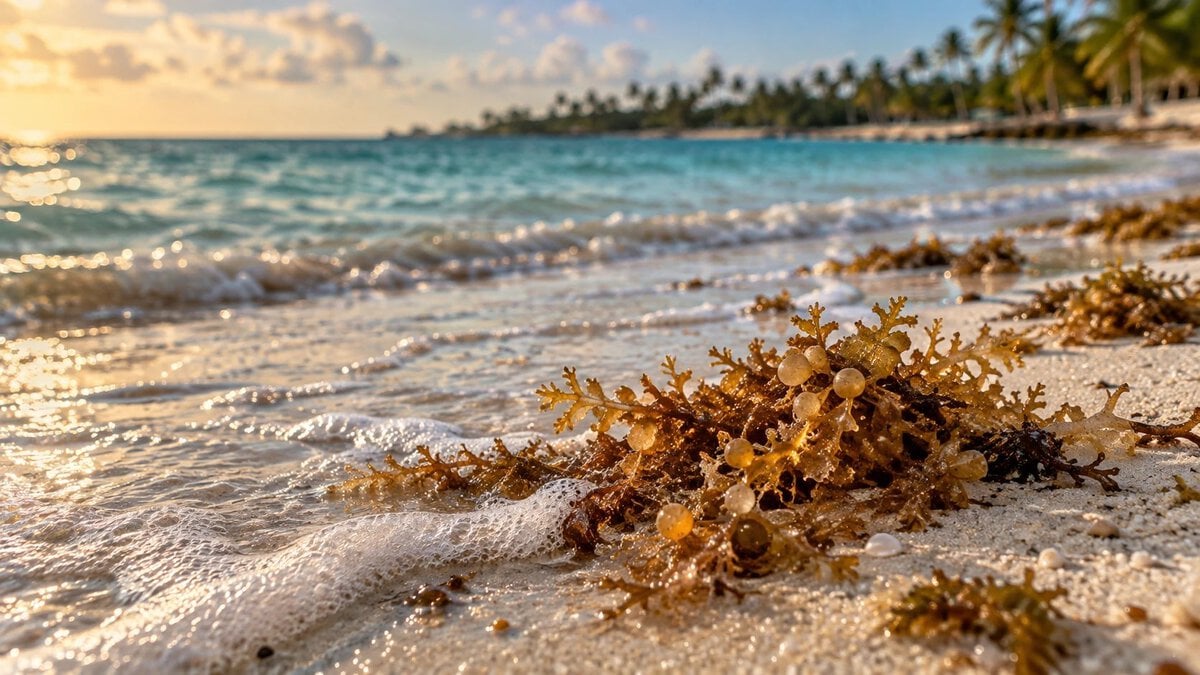
Arrive in Bávaro in July after a heavy week and you may see a brown line of seaweed along the tide mark, with more floating offshore. Arrive in January and the same beach is usually the postcard: white sand, turquoise water. Drive an hour south-west to Bayahibe in July and the water is often calm and clear.
That gap is the whole story of sargassum in Punta Cana. The east-facing Atlantic beaches catch it in a fairly predictable season, while the Caribbean-side beaches of Bayahibe and La Romana, about an hour away, usually get a fraction of it. So the seaweed question is really a which-beach, which-month question. Here’s how we at Transekur answer it for the guests we drive between both coasts.
From the Airport to the Clearer Coast
A hotel on a calmer stretch of coast often means a longer ride from the airport. Transekur’s private transfers cover Punta Cana, Santo Domingo and La Romana airports and run to Bayahibe, La Romana and Cap Cana as well as Bávaro, with your chauffeur waiting at arrivals.
Good to know
Coverage: Every major Dominican airport and resort area
Price: Fixed quote for your route and party size, confirmed before you pay (checked October 2026)
Included: Flight tracking, up to 2 hours of free waiting after landing, cold water, soft drinks, Wi-Fi and USB charging on board
Suits: Travelers who pick the beach first and the airport second
Keep in mind: Cancellations inside 48 hours of pickup are not refunded
Plan your transfer with Transekur
This section contains partner links. If you book through them, we may earn a commission at no extra cost to you. We only feature partners whose services we believe add genuine value for travelers.
What Sargassum Is, and Why 2026 Matters
Sargassum is a floating brown seaweed. Offshore, it’s natural habitat for fish and turtles. The trouble is scale. Since 2011, a “Great Atlantic Sargassum Belt” has formed almost every summer, and 2026 has been one of the largest years on record.
Punta Cana has responded with offshore barriers, collection and pumping systems, daily removal, and research into reuse. In August 2026, a delegation from Grenada came to Punta Cana specifically to study how it manages sargassum. That work makes managed beaches better. It doesn’t change the coast’s natural exposure, and a beach facing the open Atlantic will always catch more than one that doesn’t.
Month by Month on the East Coast
These patterns come from our planning model for a typical year in Punta Cana and Bávaro. Treat them as typical, because any given year can break them, and 2026 has been unusually heavy across the Atlantic.
December to February: Usually the Clearest
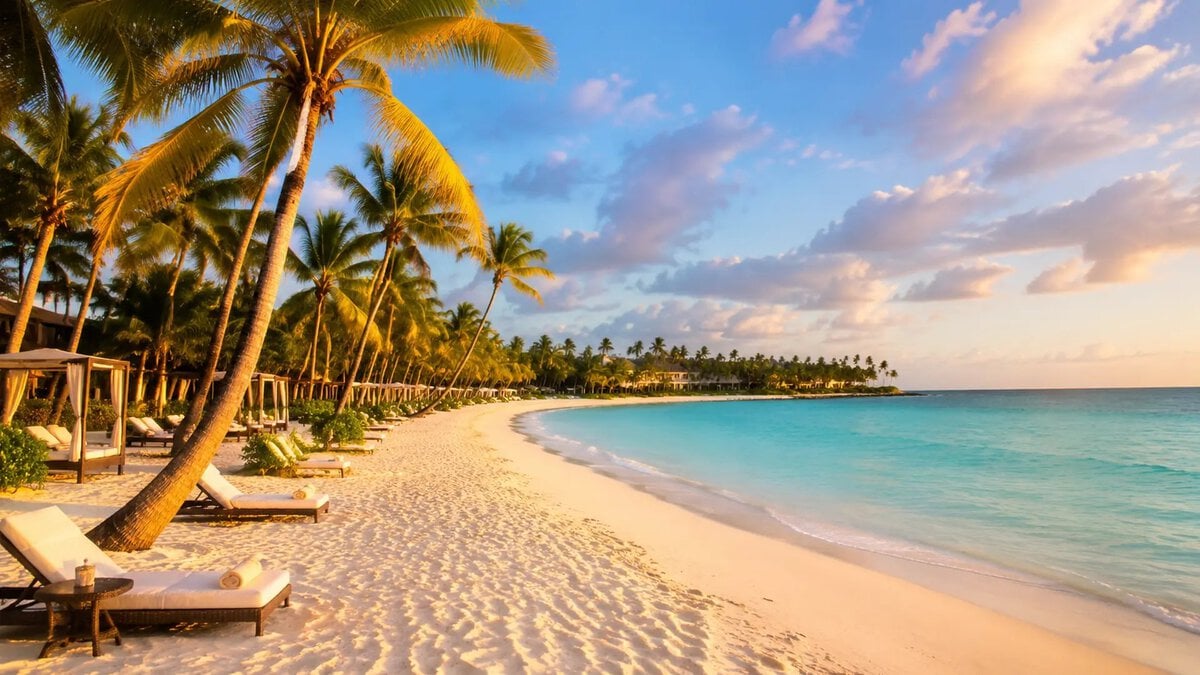
If seaweed worries you, book these months. The beach in front of a Bávaro resort is most likely to look the way the brochure shows it.
March and April: Moderate, Then Elevated
March is moderate. By April the levels are elevated, so you’ll want to start checking your specific beach before you go.
May to September: The Main Season
June and July are the typical peak, and August is still heavy. In our planning index, Bávaro peaks at 96 out of 100 in July. Bayahibe, by comparison, peaks at around 42.
If your dates fall in this window, plan for the chance of a bad beach day rather than hoping to avoid one.
October and November: Easing
October is still elevated but easing. November is moderate, and the coast is heading back toward the clear months.
Which Beaches Get Hit Hardest
People who live here check the exact beach. Two beaches a few kilometers apart can look completely different on the same morning, because of shoreline orientation, reefs, headlands, wind, and how often the hotel cleans.
Bávaro, Macao, and Uvero Alto
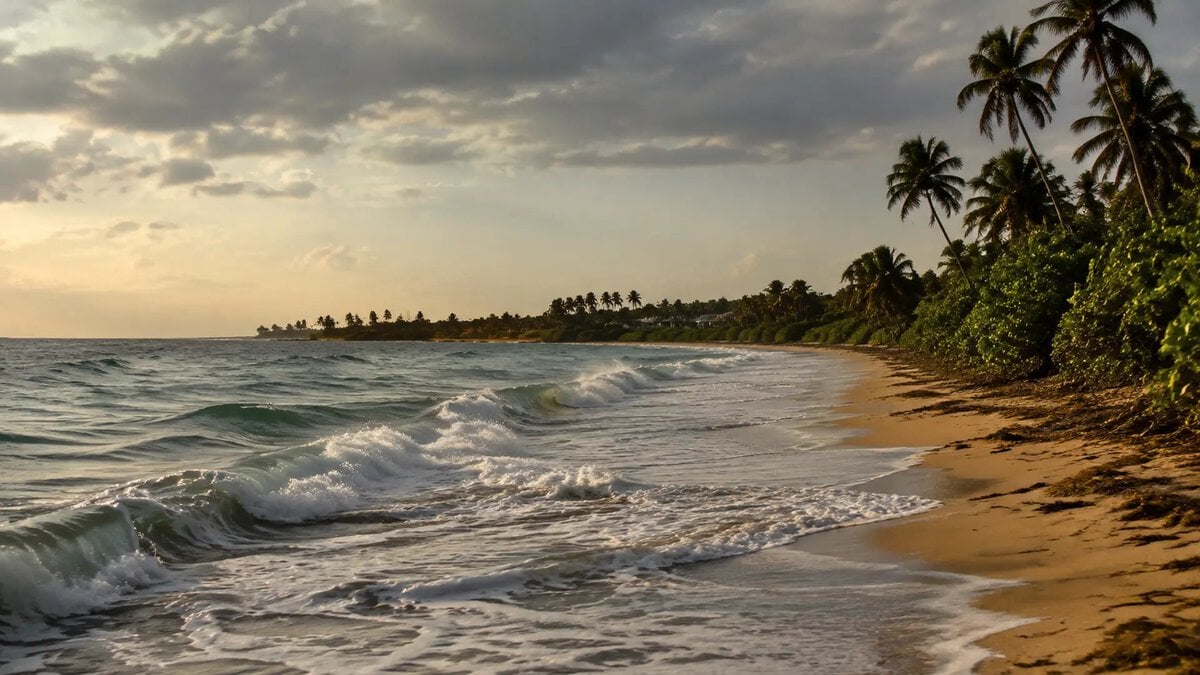
These are the beaches to watch in season. They’re open, east-facing Atlantic stretches, and they tend to get hit hardest. Bávaro has the highest baseline in our model.
Cap Cana
Cap Cana sits somewhat lower, thanks to its orientation and some sheltered sections. It isn’t immune. In a heavy week, it can still see seaweed, just usually less of it than the Bávaro strip.
Where Stays Clearer
Bayahibe and Dominicus
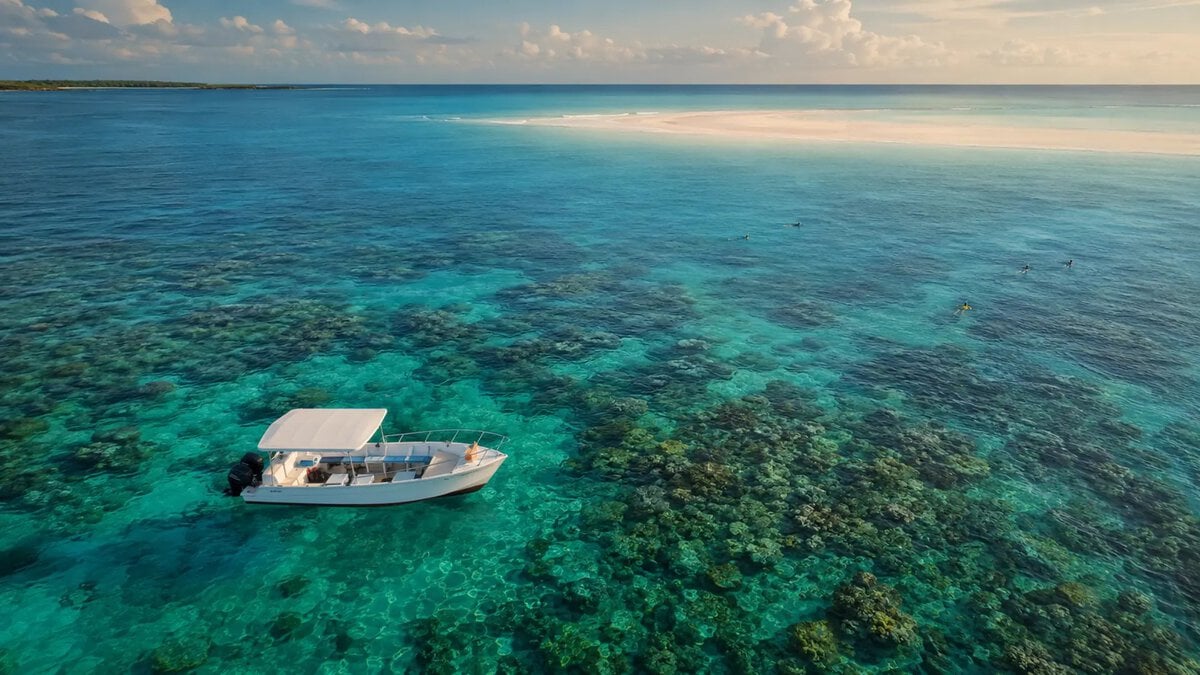
On the Caribbean side, Bayahibe and Dominicus are the clearer bet. Even in July, conditions there are usually moderate.
Casa de Campo and La Romana

Casa de Campo and La Romana come in close behind. If you’re building a trip around the heavy months and want a beach week with the fewest surprises, this side of the island is where we point people.
The Bad Beach Day, and What to Do About It
Picture the morning itself. Hotel crews with rakes and small tractors are out at dawn, and some resorts have floating barriers anchored past the swimming area. Even so, piles left in the sun start to smell within a day or two.
Sargassum can also arrive overnight and be gone by the next afternoon. A beach that’s covered at 8 a.m. may be fine by dinner.
A Day That Went Differently
One pattern repeats often enough that we can describe it. A couple on their honeymoon, staying at a Bávaro resort in July, woke up on day two to a beach covered in seaweed. Rather than spend the week at the pool, they asked for a flexible day.
We drove them to Bayahibe. The water was clear and calm, and they ate fried fish at the village beach. They went back twice more that week, and they told us the bad beach day became their favorite memory of the trip.
Eating in Bayahibe
The fishing boats come in to the small beach in Bayahibe village, and the restaurants serve pescado frito (whole fried fish) with tostones and a lime. Order a coco frío with it: a chilled green coconut, opened with a machete in front of you. It’s the most Dominican beach lunch we know.
Your Options When the Beach Is Covered
Keep one day free and decide that morning. You have three good choices:
- Drive to Bayahibe for the beach.
- Take a boat trip from there if conditions allow.
- Spend the day in Santo Domingo.
From the Bávaro strip, Bayahibe is roughly an hour-plus each way on the Autopista del Coral toll highway. That’s easy with a private driver, and you can make the call the morning you see your beach.
How to Check Conditions Before You Go
Check in layers, getting more specific as your trip gets closer.
- When booking: Look at the month-by-month pattern for your exact area. Our free sargassum planner covers 30 areas and includes a daily NOAA offshore reading.
- One or two weeks before: Read the regional outlook, such as USF’s monthly sargassum bulletin.
- In the last 48 to 72 hours: Ask the hotel for a photo taken today of the exact beach section you’ll use. Ask whether a floating barrier is installed there and how often crews clear it.
Don’t trust a single photo or a months-old review. Both go stale fast.
Practical Information
Getting There
Punta Cana airport (PUJ) is about 14 minutes from Cap Cana and the Bávaro/Verón side, and 40 to 50 minutes from Macao and Uvero Alto. Bayahibe is about 45 minutes from PUJ, and Casa de Campo about an hour. La Romana airport (LRM) is 11 to 16 minutes from both Bayahibe and Casa de Campo, which matters if you plan to stay on the Caribbean side.
Timing
For the lowest seaweed risk on the east coast, aim for December through February. If you’re traveling May through September, consider a base on the Caribbean side, or keep a flexible day built into the plan.
What to Bring
Book a hotel with a good pool, so a covered beach doesn’t flatten the day. If the beach is covered, don’t swim through heavy or decaying piles. Bring a hat and sunscreen for the Bayahibe day too, since you may end up there on short notice.
Frequently Asked Questions
Does sargassum affect the whole Dominican Republic?
No. The east-facing Atlantic coast takes the brunt of it, while the Caribbean side around Bayahibe and La Romana usually gets a fraction. Shoreline orientation, reefs, headlands, and wind all change the picture from one beach to the next.
Is January a guaranteed seaweed-free month in Punta Cana?
No guarantee exists, but December to February is usually the clearest stretch on the east coast. A heavy Atlantic year can still push seaweed ashore, so ask your hotel for a current photo in the final days before you travel.
Can the seaweed really disappear in one day?
Yes. Sargassum can arrive overnight and be gone by the next afternoon, depending on wind, currents, and cleanup. That’s why a photo from last month, or a review from last season, tells you very little about tomorrow.
Is it safe to swim when there’s sargassum?
Avoid swimming through heavy or decaying piles. Seaweed left in the sun starts to smell within a day or two, so a freshly raked beach with a barrier offshore is a very different experience from one that hasn’t been cleared.
Do hotel barriers and cleanup solve the problem?
They help a great deal on managed beaches. Offshore barriers, collection systems, and daily removal are all in use in Punta Cana. They don’t change the coast’s natural exposure, so ask how often crews clear the exact section you’ll be on.
Which airport is best if I want the clearer beaches?
La Romana (LRM) is 11 to 16 minutes from Bayahibe and Casa de Campo. Punta Cana (PUJ) is about 45 minutes from Bayahibe and an hour from Casa de Campo, so it works too if you’re mixing both coasts.
If the seaweed sends you looking for clearer water, see our guides to the best snorkeling spots in the Dominican Republic and Saona Island, or browse all our Dominican Republic travel guides.

