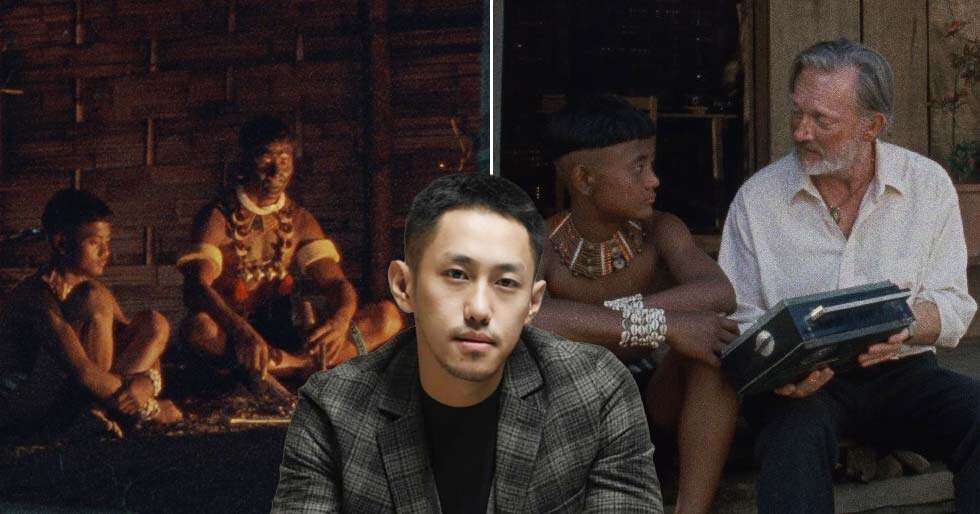
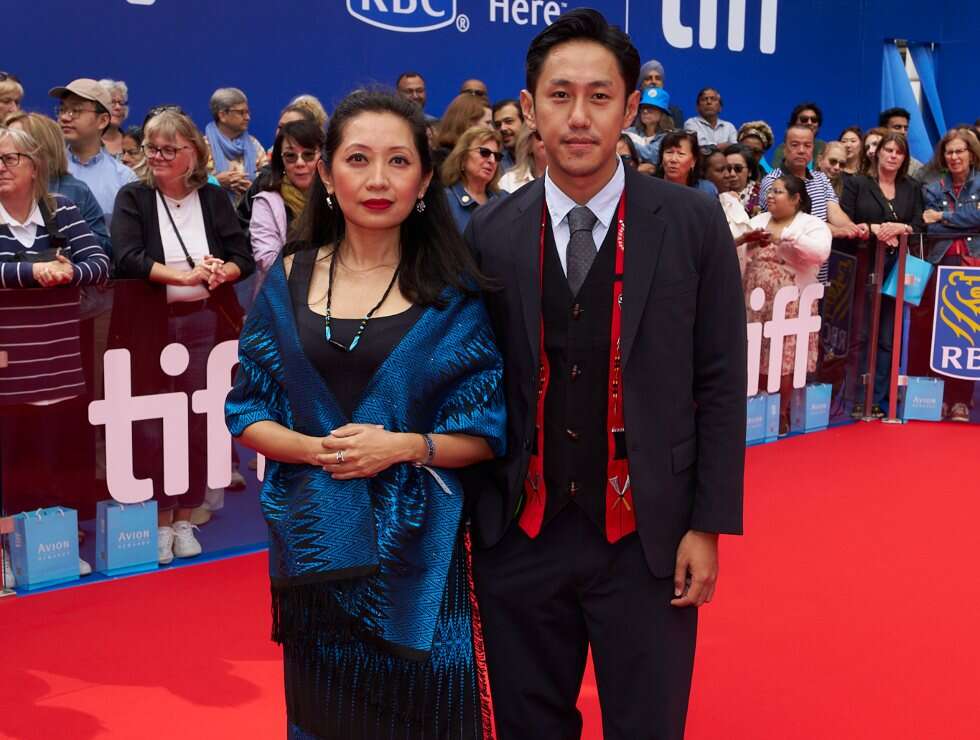
Theja Rio’s Angh, set in 1963 Nagaland and centred on an ageing Konyak village chief and his son, has travelled a long way from the filmmaker’s first attempt to tell the story. What began as a short film eventually grew into Rio’s feature directorial debut, and won the Platform Prize at the 2026 Toronto International Film Festival. The win also made Angh eligible for consideration in the International Feature Film category at the 2027 Academy Awards, along with the Marathi film Gondhal.
For the filmmaker, the journey to this point began much before Angh, in Kohima, where he grew up with an interest in storytelling but little access to a local film industry.
On Growing Up in Nagaland
In a free-wheeling chat with us, he says, “I was born and raised in Kohima, Nagaland, and have always been interested in storytelling. One of the first art forms I fell in love with was music, particularly rap. I also loved movies, but there was no film industry or cinemas where we came from. A lot of what we watched was on Star Movies or HBO.”
He continues, “My first big film memory was watching The Lord of the Rings: The Return of the King (2003) with my mom and cousins in Delhi. That left a mark. I was about 15. I started writing songs and raps, and also wrote a few short stories. Eventually, I transitioned to writing screenplays. Once I started writing screenplays, I didn’t want someone else to make my films. That’s when I decided to become a director.”
His Association With Producer Nancy Nisa Beso
One of the people who helped him find his way into filmmaking was Nancy Nisa Beso, whom Rio had known since childhood and who would later become one of the producers of Angh. “I’ve known Nancy since I was eight or nine. She was already working in the film industry, but I had no idea what filmmaking was or what a director did. Nancy was one of the first people I reached out to when I was trying to find my way into filmmaking. In 2015, she introduced me to a film workshop in Sicily. I was supposed to write a script and send it to them. Fortunately, I was selected and went to Italy. It was my first time being on a set with professional filmmakers. It was a wonderful experience that helped me understand world cinema and how films were made. I’ve never looked back since.”
The Journey of Angh
Angh was first made as a short film, but Rio knew the story had more to it. “Even while making the short, I knew the story extended far beyond what could be contained within that format. The short introduced the world, the characters and some of the ideas I wanted to explore. But there were so many layers that remained untouched. As the short travelled to film festivals and connected with audiences, it reinforced my belief that there was scope to expand it into a feature.”
That prompted him to start writing the feature version. “The feature allowed me to spend much more time with the father-son dynamic, which is the heart of the film, while also immersing audiences in the Konyak community and its traditions. It gave us the space to broaden the narrative, introduce new characters and engage with the historical context surrounding the story. Although the film is fictional, missionaries had a profound influence on Nagaland during that era, and still do. Incorporating that part of the history was a meaningful way to enrich the film.”
With limited infrastructure and resources, the locals and Rio’s National Film and Television School friends helped him bring his vision to life. “I was able to bring in collaborators from film school, including my cinematographer, production designer, co-writer and producers. Having all these people come together was a great experience. And then to win the Platform Prize at TIFF has been surreal.”
Representing Nagaland’s History With Accuracy
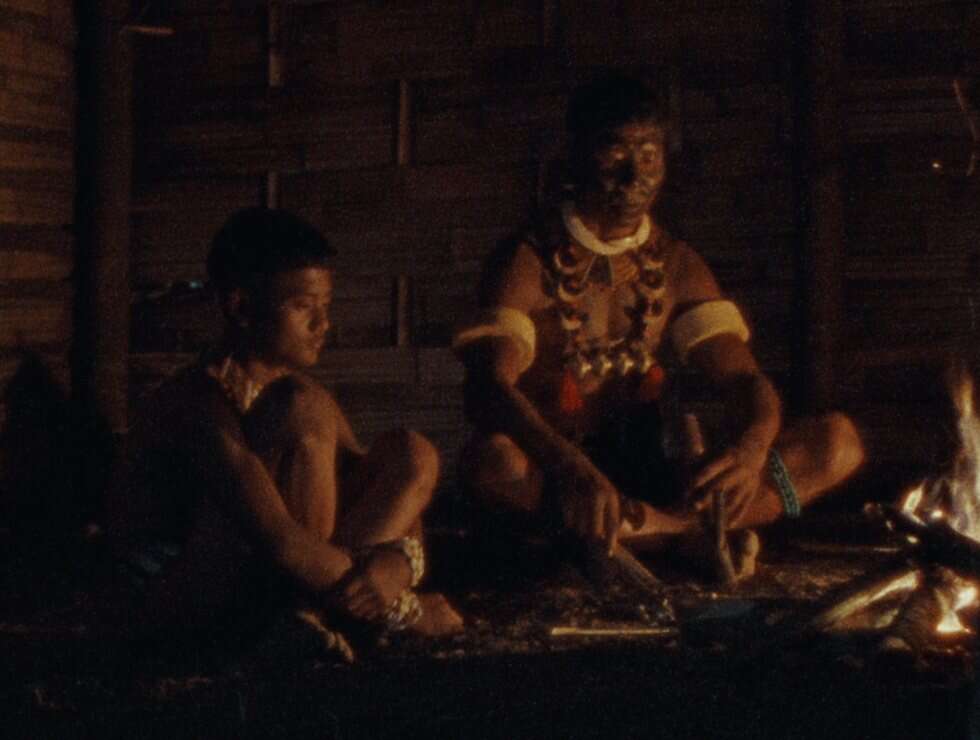
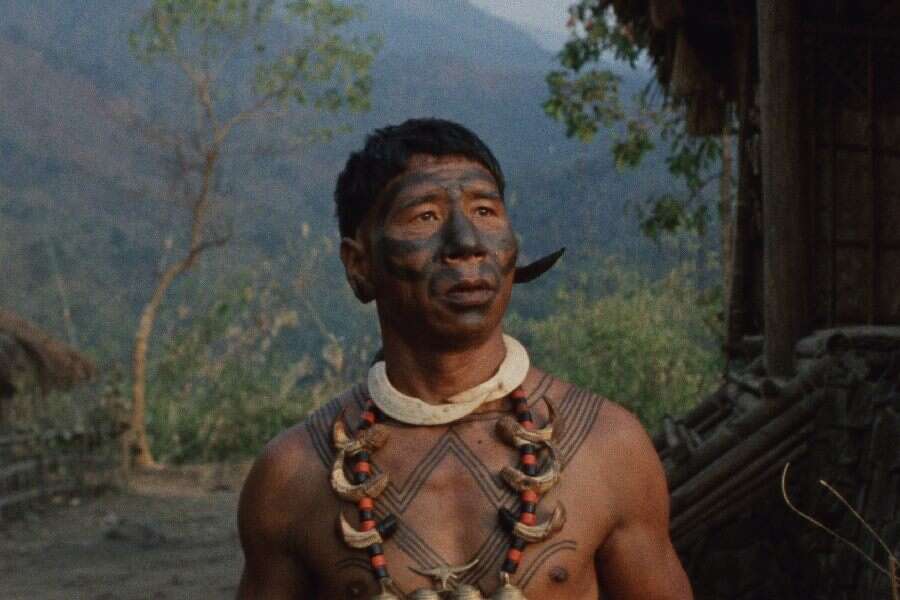
At the centre of Angh is a Konyak village in the early 1960s, where Christianity is beginning to reshape a community that has followed its ancestral faith for generations. Anghba, the village chief, and his son Amao are among the last to hold on to that faith as other villagers leave for a new settlement built around an American Baptist mission. For Rio, the story is rooted in a transition Nagaland has continued to live with, even if its most dramatic changes happened decades ago.
Asked how relevant the issues shown in the film are today, he explains, “Not as drastically as they once were, but we are still dealing with the hangovers, to a certain extent. The whole world is constantly dealing with change, but when you come from a place like Nagaland, where that change happened so rapidly and drastically, the contrast can feel much greater. We are a very Christian state that has also become very modern in the way we dress, the music we listen to, the films we watch, the media we consume and the way we live. Our lifestyles and houses have changed quite significantly from how they were traditionally.”
Rio adds, “At the same time, we are a culture that is very different and unique, and we are very proud of our identity. I wouldn’t necessarily call it a conflict, but this attempt to balance these two things is always present in our everyday lives. Finding a way for the two to coexist is still something we are trying to do.”
Rio was recreating a Konyak world from a period he had never personally experienced, but he had the Konyak community involved throughout the process. “The Konyak Literature Board and the Konyak community really held our hand through the entire process. They included language experts, people who had written books and those who had done extensive historical research. I’ve also spent a considerable amount of time in Mon, where I worked closely with people from the region. I made a short documentary there. It wasn’t just about research. I was there to discover the complexities of the culture and the people.”
“That extended to every aspect of production. When we were building the sets, members of the Konyak community came and built the villages themselves. With the costumes too, we had cultural experts guiding us on what should be worn and when. We tried to be as meticulous as possible,” he says.
The community’s involvement extended to the people on screen as well. Rio conducted workshops with the local actors before filming, because many of them were not professional actors. “We had multiple workshops with these actors because we knew we were going to be shooting a film together.”
Shooting on 16mm
The decision to shoot Angh on 16mm was also connected to the film’s relationship with memory and the visual record of Nagaland. Much of the region’s surviving visual history from that period comes through photographs and footage made by missionaries and people from outside the region. “A lot of Angh’s aesthetic comes from trying to emulate the early images and photographs taken by missionaries who were in the region around that time. There is also archival footage available online involving different tribes that really inspired the film’s look. We wanted to capture that texture, the grain, the atmosphere and the sense of mystery in those images. There is something distant about 16mm, but at the same time, it feels familiar. It has a certain magical texture, which is why choosing to shoot on film was one of the earliest decisions we made.”
For Rio, the format also suited a story about a past he had inherited through memory rather than personal experience. “I wasn’t born in the 1960s, but we wanted to capture something that felt nostalgic. It’s interesting how we live in a digital world, but when we think about memory, we often associate it with film. Angh is about the memory of our traditions and our people, so that nostalgia and sense of the past made the format feel right for the story.”
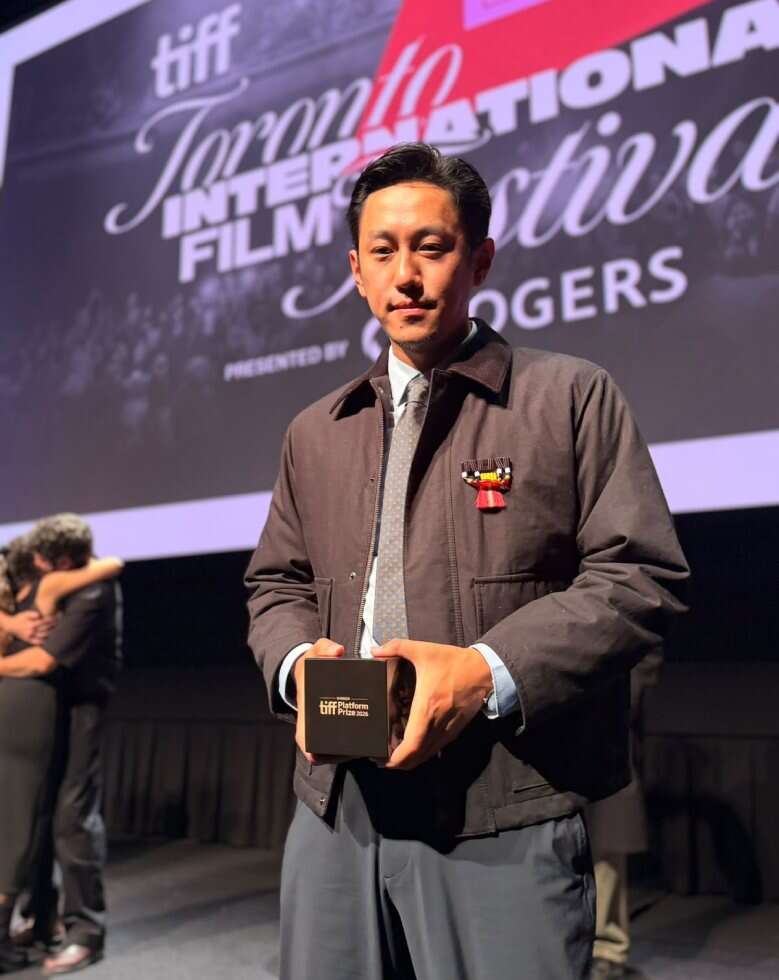
The film’s journey from Nagaland to TIFF has also brought attention to the larger question of how films from the Northeast reach audiences across India. Rio says Angh was made without the resources of an established film industry, but with the support of people around him. “We’ve been able to make this film despite a lack of resources because we had an industry of love and support around us. It was the people who came together for the film and supported us. And now, the national media has also embraced us. Having all of you support the film, give us a platform to speak and put it out there on social media has given us great visibility. I’m a little sick of seeing myself every time I scroll through my social media feed (laughs), but it’s been wonderful for the film.”
The TIFF win has now put Angh on the Oscar eligibility pathway, bringing a new stage of the film’s journey into view. “I’m very grateful to everyone who has taken an interest in a film that is spoken in a tribal language and comes from an Indigenous region. It’s going to be an uphill battle. Getting an Oscar nomination is incredibly difficult. I’m aware of how difficult the process is,” he concludes.