

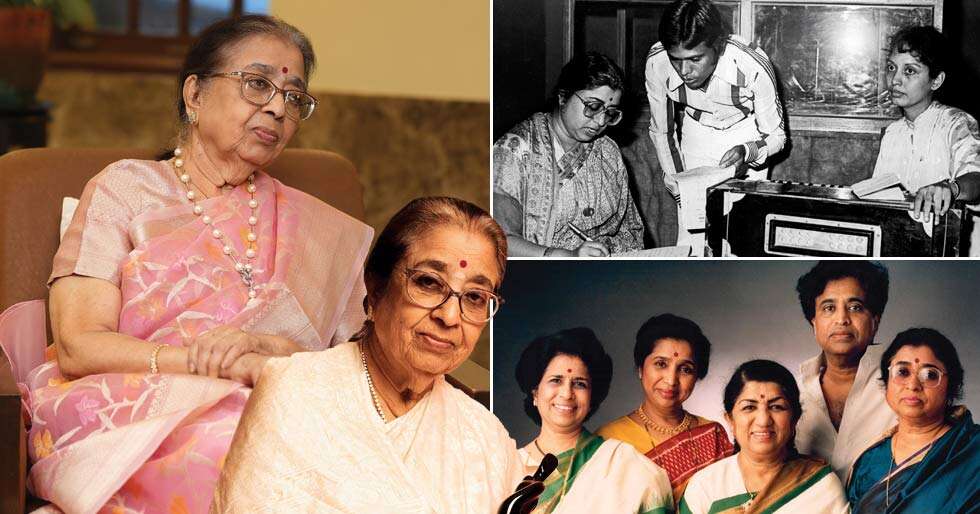
Often overshadowed by the towering legacy of her illustrious family, Usha Mangeshkar quietly carved a remarkable identity of her own. With a voice steeped in warmth and simplicity, she became one of Marathi music’s most cherished singers, lending soul to everything from spirited lavanis and tender children’s songs to deeply moving devotional melodies. While Hindi audiences embraced her through Jai Santoshi Maa and the evergreen Mungda, she has won over Gujarati, Bhojpuri and Bengali audiences as well through her velvety voice. Rooted in tradition yet effortlessly versatile, Usha Mangeshkar has remained a comforting presence across generations, leaving behind a legacy that continues to resonate. Excerpts from an engaging interview with the veteran.
Do you remember your first day in the studio? Was it a one-take song? Were you nervous?
I have never been afraid of singing, nor have I been afraid of people. However, I was intimidated by two musicians: Ali Akbar Khan, because he insisted on classical compositions that made me shiver, and Jaidevji. When I heard the songs they composed, I would often get confused. Conversely, I was never afraid to sing with Didi (Lata Mangeshkar) because we sang together every day. We could suggest changes to her; we trusted her judgment completely and always believed she would sing the song three times better than anyone else.
You have sung 73 duets with Lata Mangeshkar. It is said that music directors would often debate which lines were hers and which were yours.
When I sang Aplam chaplam, I was under a little pressure to sing the higher line with Didi. I asked her, “How will I sing this?” Didi said, “You sing the higher line; I will sing the lower line. Don’t you worry, I will take care of everything.” That was the beauty of it, there was no fear, only support. Aplam chaplam is a wonderful rhythm song, just like Tumko piya dil diya.
You sang the song O pagle der na hogi with Mohammed Rafi under Jaidev’s music. How do you remember that recording session?
Jaidevji’s process was very specific; I had to sing my lines after Rafi saab, never before him. Rafi saab was very soft-spoken; he simply said “Namaste” and left. After he and the musicians left, it was 10:00 PM in Dadar, and I was stranded without a car. I was quite worried until I received a phone call. It was Ashaji’s husband. He had known me since childhood and was very protective of me. He told me not to go home alone or trust the producer, and he insisted on coming to pick me up himself. He made sure I reached home safely.
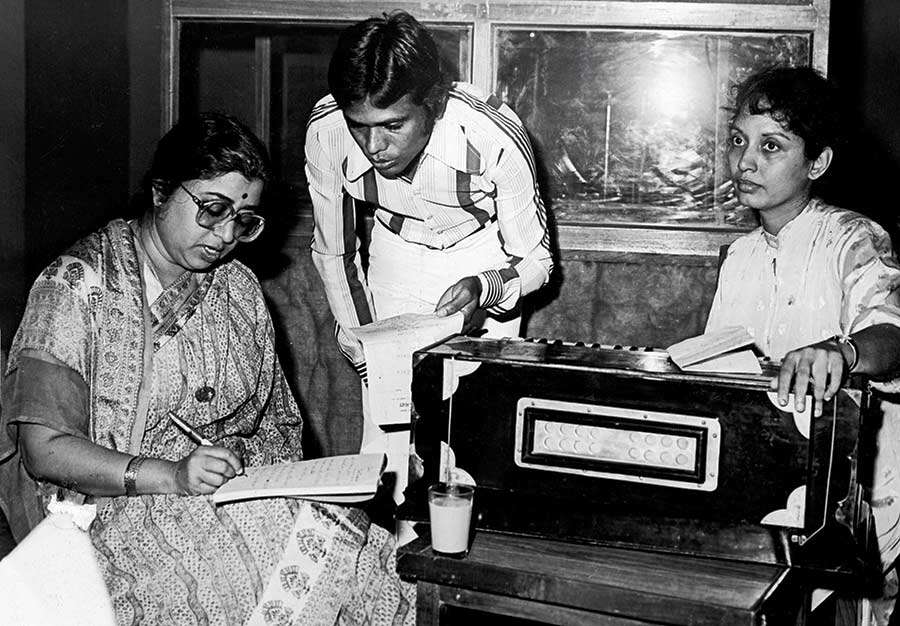
Moving on to your duets with Asha Bhosle. You’ve recorded almost 190 of them. How did that experience differ?
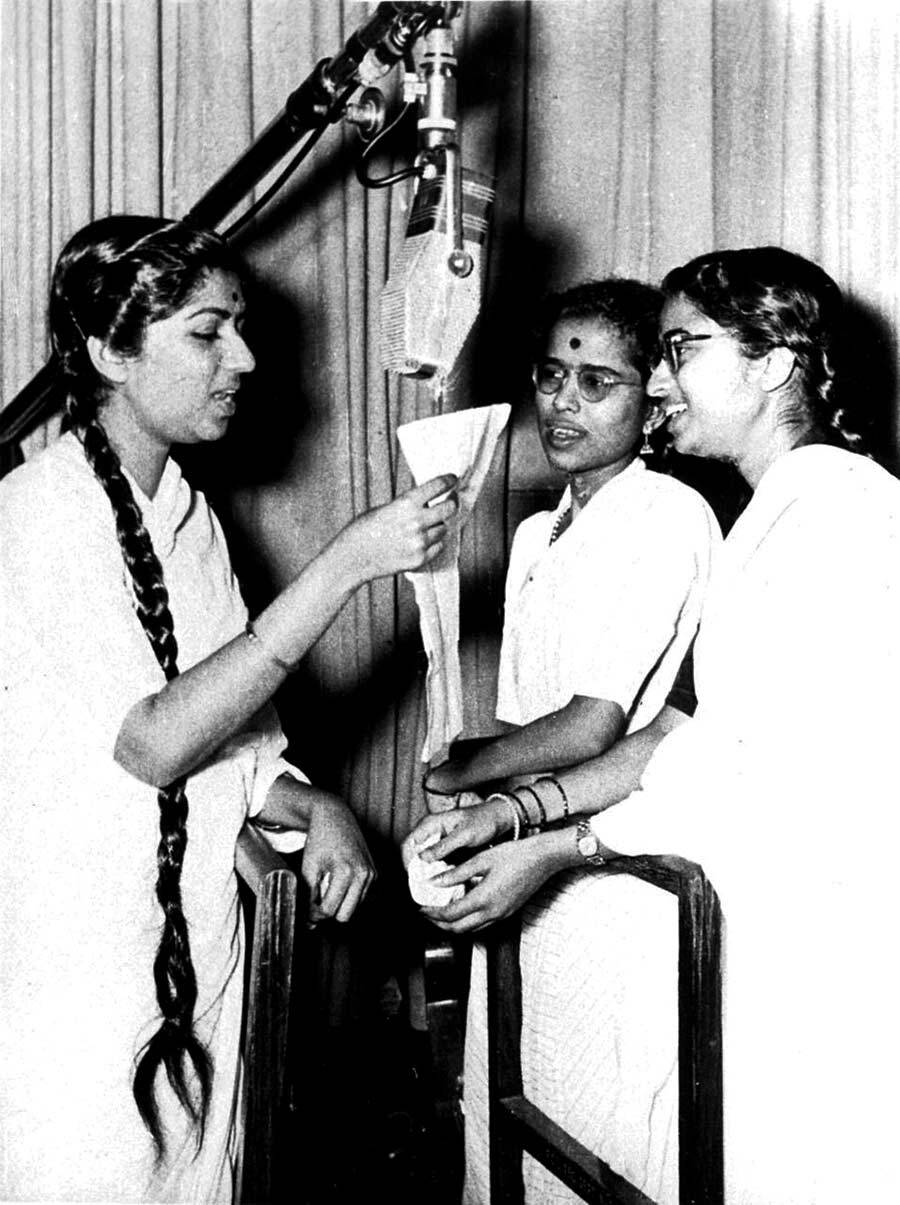
I became comfortable with Ashaji later, but I remember the first time I sang with her after she had been married for some time. I hadn’t seen her in eight or nine years. When we finally met, she had matured; she was wearing a sari and a watch. Initially, I felt formal and under pressure because she had never heard me sing, and I hadn’t heard her. I didn’t even know how to stand correctly at the microphone. However, she helped me adjust to wearing saris and taught me about the industry, which eventually eased my tension.
Tell us about working with music directors like SD Burman and Chitragupt.
With Dada Burman, we were just kids and were intimidated by classical music. We recorded Albele panchi, where I had to sing both Paro’s and Devdas’s parts. Burman da used to walk comfortably in a dhoti, like a prince, and he always praised my work. Chitraguptji was like family to us. He taught me so much about the nuances of Bhojpuri singing, how to shape my mouth for certain sounds and how to understand the emotional depth of the lyrics. I sang almost 70 songs for him. When Hey ganga maiya became popular, it was strictly through radio airplay, as there was no television back then.
You became a very successful singer in Gujarati and Marathi cinema. How did you handle recording multiple songs a day?
I remember recording five songs in a single day with Ashaji. We would hop from one studio to another. My pickup was very fast; I could memorize a song instantly. For my first Gujarati song, Saathiya purao dware, I was surprised to receive a State Award. After that, Abhinash Bhai helped clear the way for many Gujarati films, and I ended up singing almost 300 songs, mostly garbas.
How was your experience working with the famously strict V Shantaram in Pinjara?
Shantaramji was extremely strict about singing. If I had a cough, we wouldn’t record; he wanted total perfection. He would bring props into the recording room to create specific sound effects. I was amazed that at his age, he would climb four floors just to ensure the song was being performed correctly. I never thought Pinjara would become such a massive hit or that the songs would become iconic.
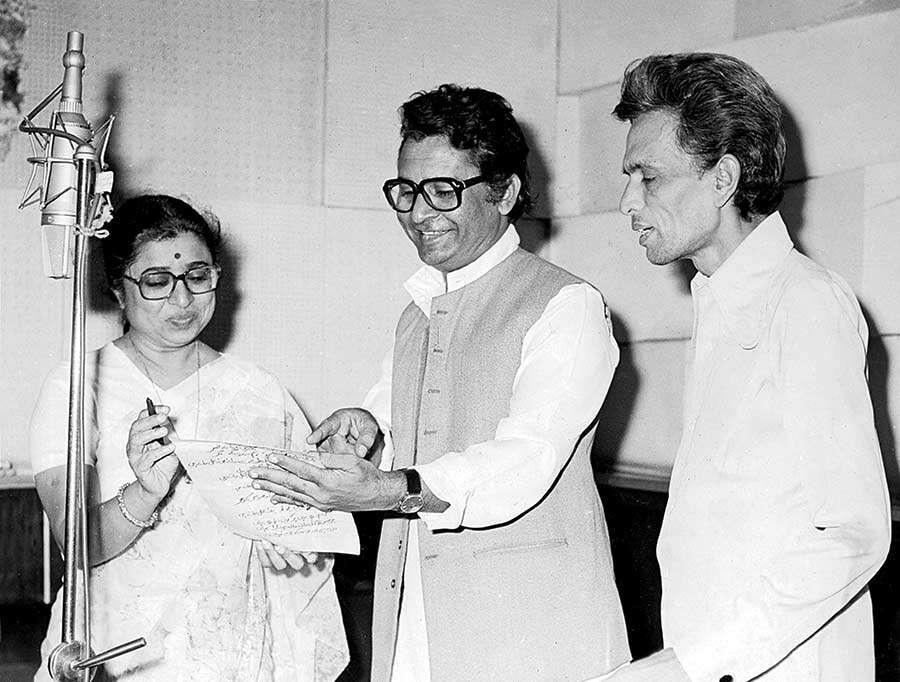
There is a famous story about a conflict with Dada Kondke over the lyrics of a song during the war/blackout period.
Yes, it was during the India-Pakistan war. The blackout was strict, and Dada Kondke kept calling me to record a song that I felt had inappropriate, double-meaning lyrics. I refused. I was very short-tempered, and people were genuinely afraid of my anger. Eventually, Didi told me to just go and do it. I went to the studio at night and recorded the song without any musicians or backing tracks. I sang it while watching the film to get the timing right, ensuring I delivered the specific vocal “jolts” he wanted, which I had learned while living in Kolhapur.
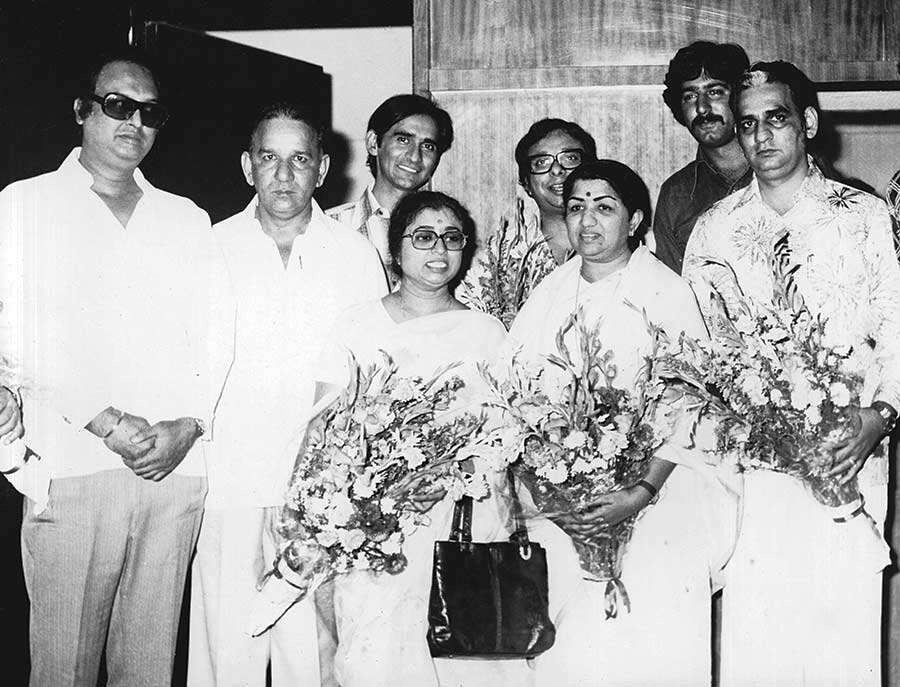
You sang many quartet songs with legends like Kishore Kumar, Mohammed Rafi, Asha Bhosle and Lata Mangeshkar. What was the environment like during those recording sessions?
Recording environments improved significantly by the time of The Burning Train. We were provided with headphones and four separate microphones. On one mic, Rafi saab and I would sing the chorus. On another, I sang while Shamshad Begumji stood behind me because her voice was incredibly powerful. It was so loud that you could hear it no matter how far away she stood. I remember singing a qawwali with her for a film where Shammi Kapoor had donned a woman’s disguise; Shamshadji sang for him. Her voice was truly unmatched.
Shamshad Begum, Geeta Dutt, and Suman Kalyanpur. How was your association with them?
Suman Kalyanpur was my close friend; I actually brought her into the industry. We sang our very first film duet together for a movie called Mungu. At that time, we didn’t have modern microphones or headphones, just a small speaker with a wire hanging from it. Unfortunately, the music director was changed, and that song was never used in the film. As for Geeta Dutt, she was such a sweet, beautiful, and happy woman. She had these stunning, expressive eyes like a Bengali heroine, and she carried herself with such grace.
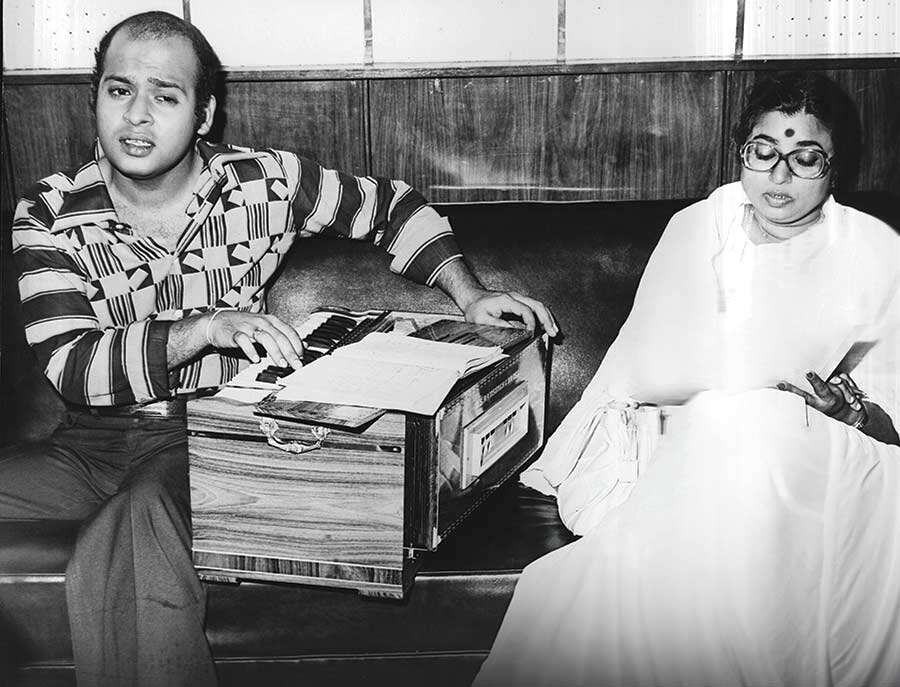
You worked with the music duo Laxmikant-Pyarelal early on. How was your association with them?
Laxmikant was very young when he started coming to our house; Lata didi used to treat him like a son and helped him find work. He was a brilliant mandolin player. They were part of our music group, the Surya Baal Kala Kendra, which consisted of young children. Meena tai was the only elder one who sang big songs, while I sang to fill the time. My mother used to travel with us to small villages for shows, and the atmosphere back then was very different, very family-oriented.
People say you had a knack for predicting which songs would become hits, like Lag ja gale. Is that true?
It wasn’t a prediction, really. Sometimes, a song would just hit me in a way that felt special, it felt better than the others. At home, when Lata Didi would discuss the songs she had recorded, we would all give our input on which ones were better. When Lag ja gale came out, she felt it was a very strong song. It had a specific quality, the idea that a girl might not be classically beautiful, but there is something in her that makes her a heroine. It was a simple song, but even today, no one has sung it like my sister did.
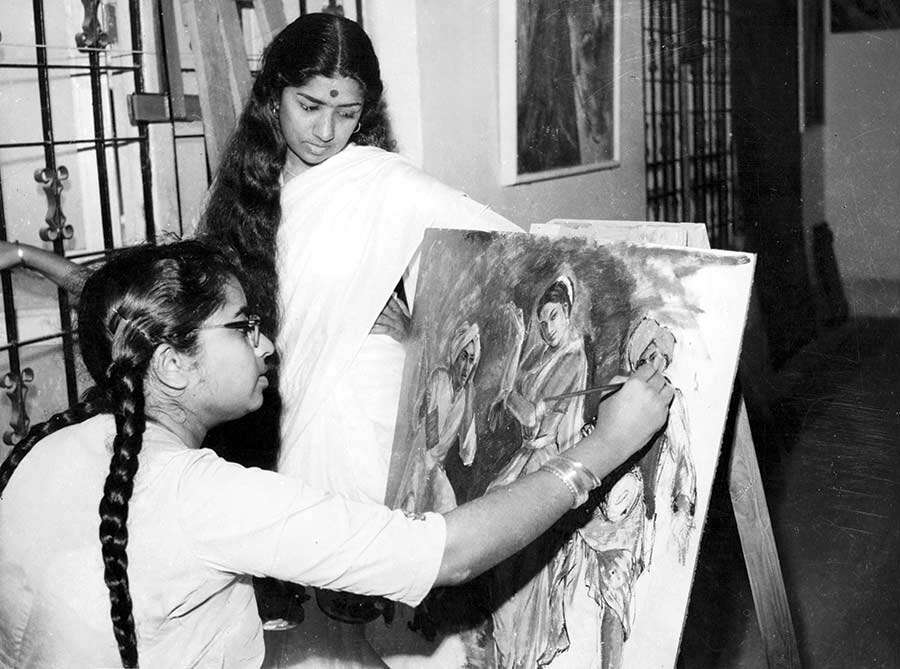
Do you ever feel that if you didn’t have the “Mangeshkar” surname, you might have been treated differently or achieved success on different terms?
I think I would have been respected regardless. However, there were many talented girls like me who came into the industry, but people would constantly say, “A lookalike of Lata has come.” That caused those girls a lot of loss; they were never given the chance to establish their own identity. I always told people, “Don’t copy Didi. Listen to her, but sing in your own style so you can discover your own range and capability.” I never tried to copy my sisters, even though I could sing close to their style if needed.
Tell us about your interaction with the music director Ram Kadam.
I initially told Ram Kadamji I couldn’t sing with the “hiccup” (hichki) effect because my voice was too soft, like a deer’s. But he insisted. I practiced the hiccup, nailed it, and the song became iconic.
Has anyone ever played politics with you, perhaps by having you rehearse a song only to give it to someone else?
Yes, it has happened. Once, a music director insisted I sing a song for a small production.
I agreed to do it for a low fee, but when I arrived for the recording, I found out someone else had already sung it. It was frustrating, but I’ve always been focused on the work.
Let’s talk about Mungda. It is said that you suggested the word “Mungda” to Majrooh Sultanpuri. Is that true?
Majrooh saab asked me to write a song. Rajesh Roshan, the composer, gave me the tune. I was humming it, and I asked, “What do you call a small red ant?” We call it mungi in Marathi, and a big black ant is mungda. That’s how the word came to be. The song became a massive hit, though I heard Didi didn’t particularly care for it. I once ended up singing it four times at a show with 12,000 people.
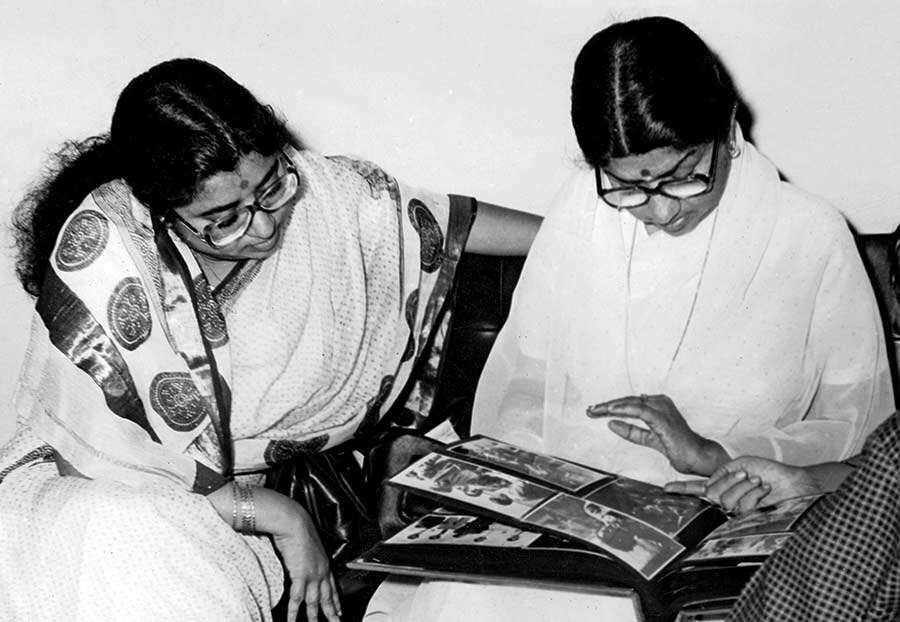
Asha Bhosle and Lata Mangeshkar are no longer with us. What memories do you hold closest to your heart? And is it true that Didi used to pamper you and call you ‘Rani Ma’?
Yes, she pampered me a lot. During the COVID-19 pandemic, things were very difficult. Our cook got stuck in his village and couldn’t return, so I took over the kitchen. I made sure Didi had everything she needed, and I looked after the nurses and everyone else in the house with great joy. I even stayed safe from the virus while caring for everyone else; I truly believe it was God’s grace that protected me so I could continue to serve my sister.
Do you have any specific childhood memories of Didi and Asha?
When we were very young in Kolhapur, Asha was quite a fighter. There was a story about her at school. She was only seven or eight years old, but she was very brave. She once got into a scrap with a teacher and even beat her bicycle in frustration. She was a fiery little girl, very different from the calm person she became later in life. We didn’t have much, and we had to be tough. I remember we were all scared of water, but she was the one who encouraged us to learn to swim. She was very protective.
You had a fascinating experience with a professor from Aligarh University regarding a song you sang for a
Raj Kapoor film. Could you share that?
I was asked to sing a difficult Urdu couplet for a film, and I was terrified because I didn’t know Urdu, especially the formal, old-fashioned style. I was panicking. Didi helped me by coaching me, reminding me of the words and the inflection. I sang it sitting on the floor of the orchestra. Later, I received a letter from a professor at Aligarh University who had heard the song. He praised my Urdu pronunciation, saying I had sung it beautifully. I was so happy; it felt like a blessing.
You composed the beautiful bhajan Shri Ram Chandra krupalu bhajaman for Lata. Why didn’t you compose more?
I had a Guruji who was like a father to me and very spiritual. He asked me to compose a bhajan, so I worked on it and sang it at a college in London. I also composed for a Marathi film of mine, but it wasn’t my primary calling. I preferred to focus on singing. My brother, Hridayanath, is a true genius at composition. I’ve never seen a musician like him; he can turn a single thought into a complete melody.
How was the rapport between you and your brother, Hridayanath, when you worked together on films like Jait Re Jait?
We were very close. When he was working on music, he would always ask me to listen to his tunes and share my thoughts. He is incredibly meticulous, if he wanted to sing a Meera bhajan, he wouldn’t just compose the music; he would study Meera’s character, ask questions about every little detail, and immerse himself in the emotion of the text until it was perfect. That dedication is what makes him a unique musician. No one had ever created a tune out of it, and no one had ever created a Pasayadaan out of it before. You have to find out which tune is good. He made a story out of Meera’s songs.
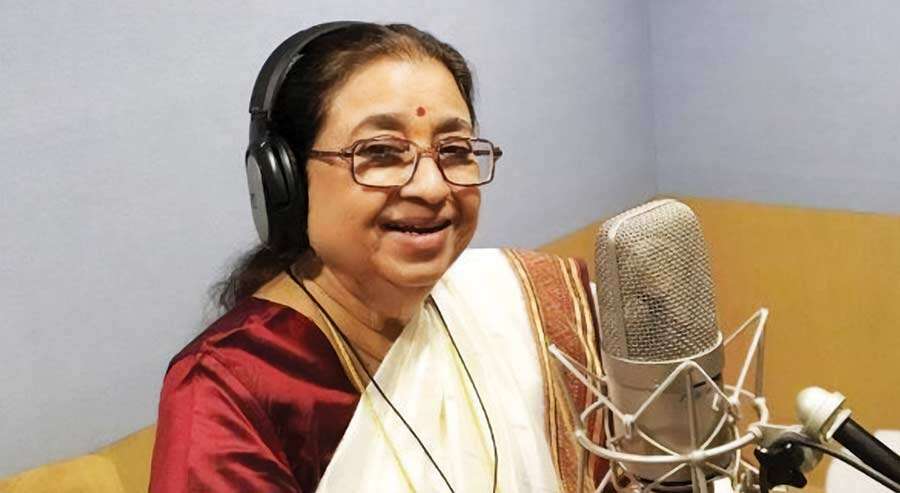
Regarding the film Jait Re Jait, do you remember any incidents during the recording? You were the producer
of the film.
I do not enjoy being a producer in our industry. It is such a painful experience. We start by budgeting four rupees for something, and before we know it, we have spent eight.
The film featured Smita Patil, and she gave such a beautiful performance. Do you have any specific memories of her?
Yes, Jawahar Patil told me that the women who live in those areas could not afford a saree like hers, but she had purchased them. I remember sending her five or six sarees. I went to a shop in Dadar and I bought beautiful sarees and sent them to her.
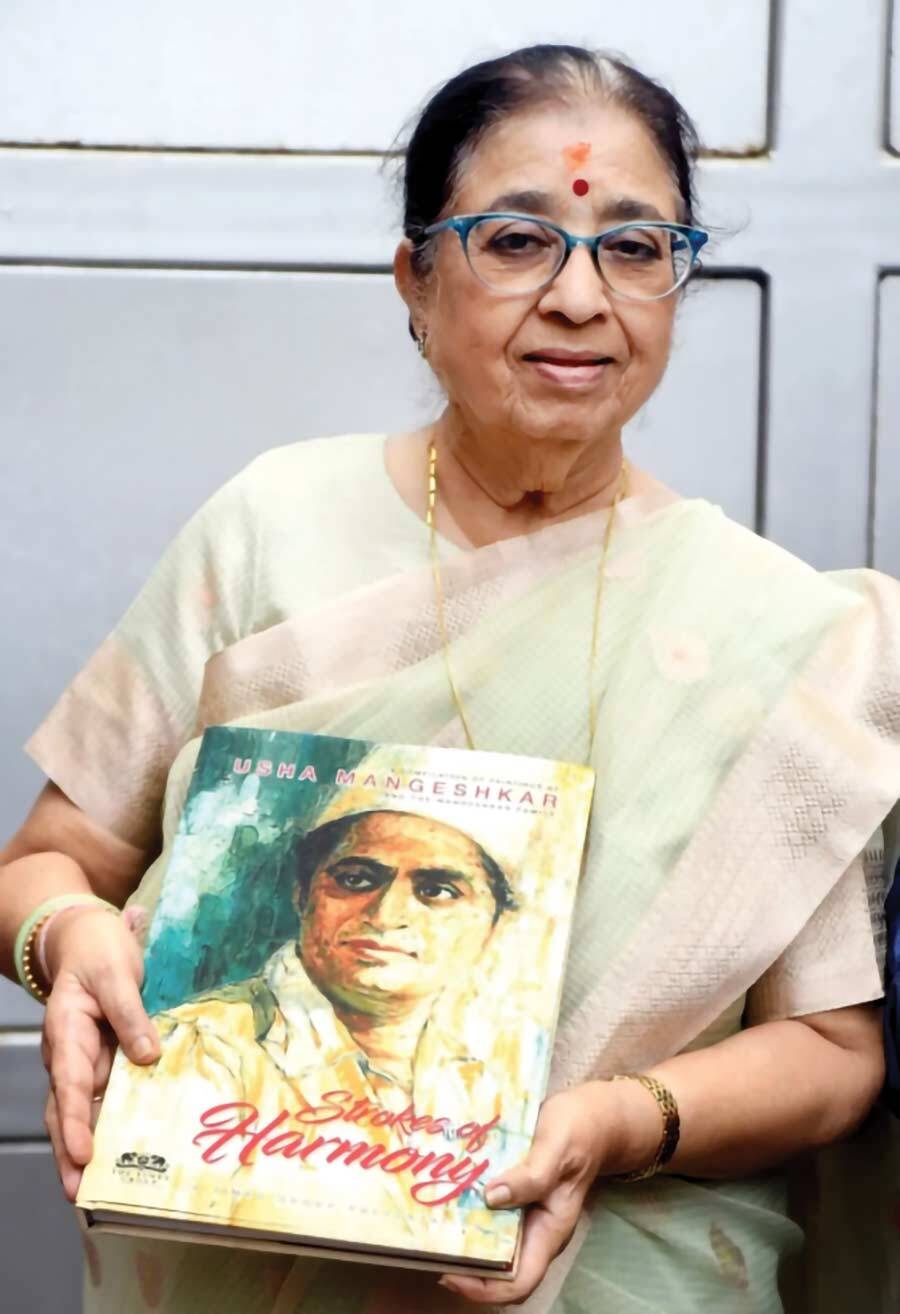
She played her character so convincingly. What was she like on set?
Smita Patil was born to become an actress; she was truly phenomenal. She was a very good actress and dedicated herself completely to her character. She took all the sarees I sent, opened them, and rubbed them into the soil with her own hands. Then, she put them in water, added a little more soil, crushed them, washed them, and dried them. Only after doing that did she wear the saree. In that moment, she truly became her character.
I have heard that you are writing a book about the Mangeshkar family titled Hum Paanch?
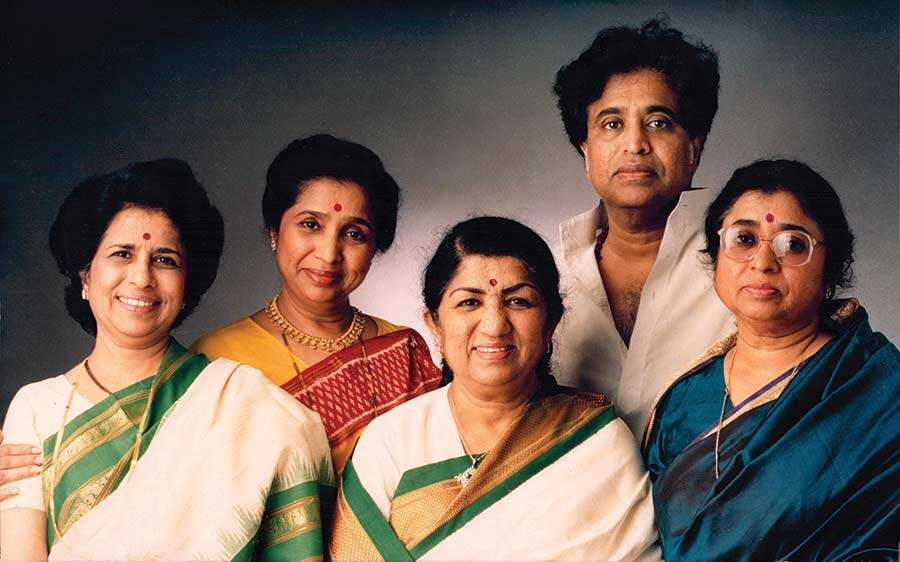
Not the entire family, just about the five of us siblings. We five are the family.
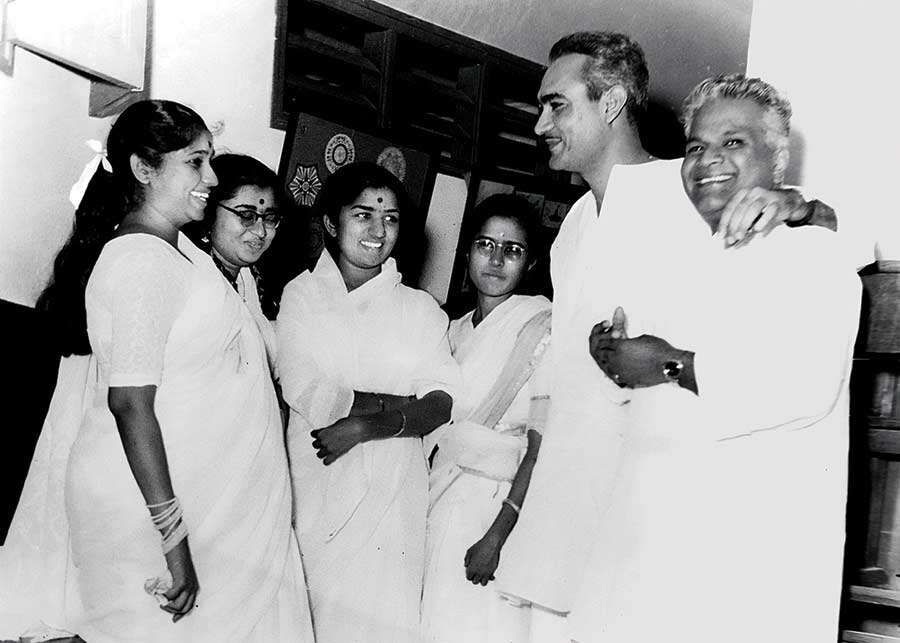
You have worked quite a lot with Salil Chowdhury on non-film music. How was the experience of working with him?
Regarding the non-film songs I have sung, I have sung four songs in Bengali. Because I don’t know the language well, I don’t always remember them. Lata didi used to write and sing Bengali extremely well. I have sung many Bengali songs for Manas Mukherjee, though.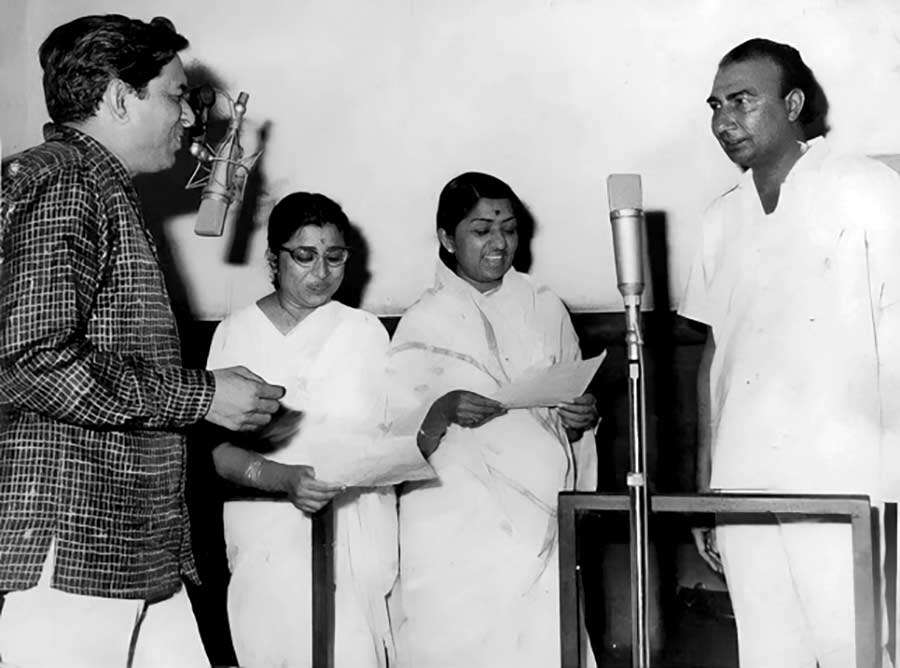
You have also sung many songs for Bappi Lahiri.
Bappi Lahiri’s father, you know, was an expert in numerology. He used numerology and told Bappi, “Whenever you compose music, make sure you get Usha to sing. She is very lucky for you. Your work will continue to flourish.”
You have been working for almost eight decades, from 1943 to 2026. You recently did a show too. In your opinion, what is essential for a singer to sustain such a long career?
Lagan (dedication). You must have true dedication. You have to be very honest with your craft. One should not engage in competition or constant comparison, thinking, “I will sing better than such-and-such singer.” You must respect your contemporaries.
Also Read: Usha Mangeshkar: The Music, The Years, and The Legend
