

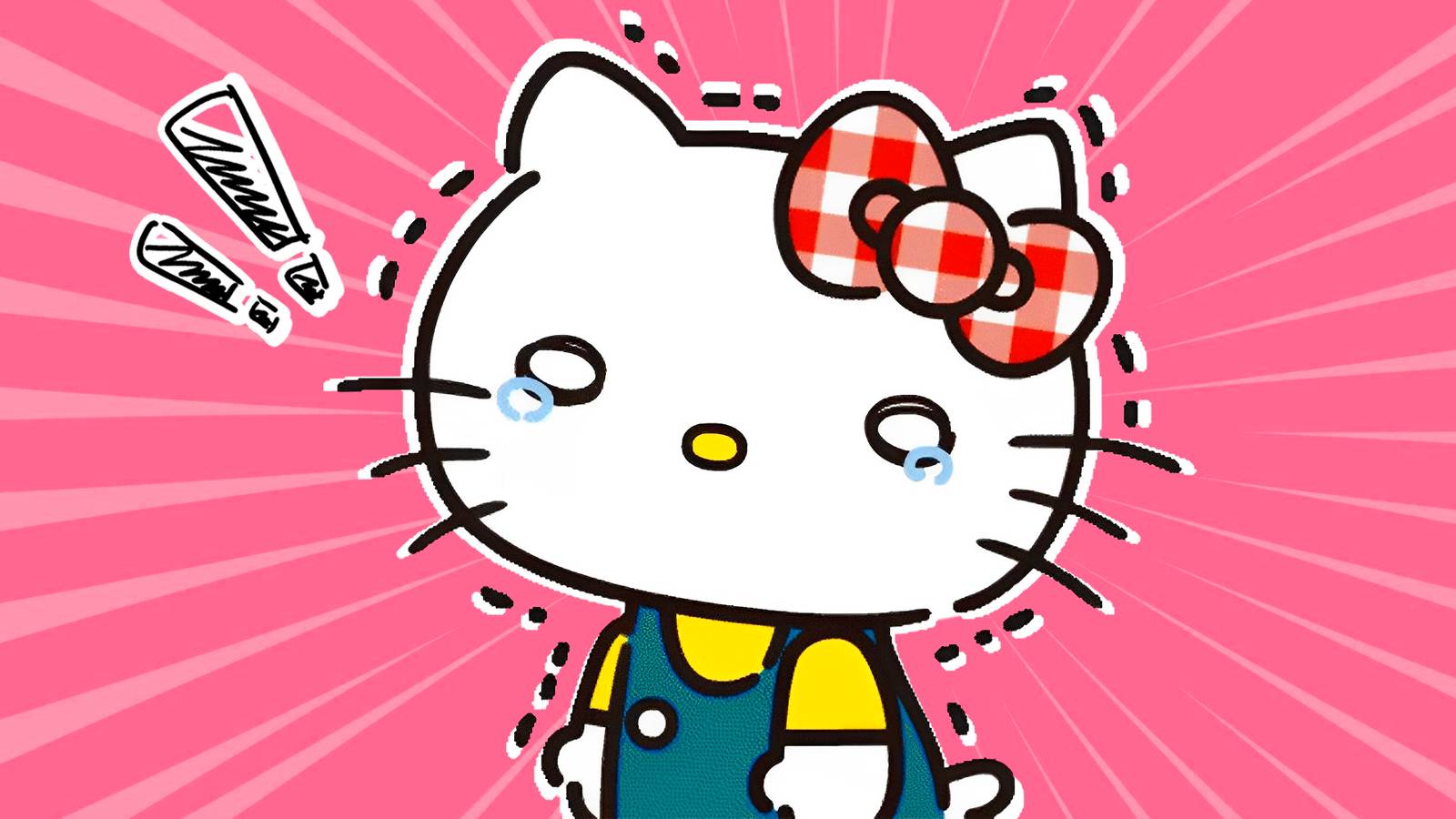
For decades, Hello Kitty has been known as one of the most recognizable symbols of kawaii culture, appearing on everything from school supplies to luxury fashion collaborations. Her simple design and cheerful expression helped transform her into a global ambassador of friendship, kindness, and comfort, connecting with fans across generations and cultures in ways few fictional characters ever achieve.
Yet Hello Kitty’s rise to worldwide fame was far from guaranteed, according to an interview via Hobonichi. Behind the character’s bright image was a difficult period when sales struggled and Sanrio questioned her future. In the early 1980s, longtime designer Yuko Yamaguchi inherited a version of Kitty that many customers overlooked, forcing her to rebuild the character’s identity through experimentation, fan feedback, and years of persistence.
How Hello Kitty Became a Global Superstar of Cuteness
Yuko Yamaguchi graduated from Joshibi University of Art and Design and joined Sanrio soon after. When she became Hello Kitty’s third designer in 1980, she was honest about her feelings. “I was not even a fan,” she recalled. Yet she accepted the challenge of making Kitty the company’s best-selling character, saying, “That was my biggest goal from the very beginning.”
At the time, Sanrio had many popular characters competing for attention. Little Twin Stars topped the charts, while My Melody also drew strong sales. “Compared to them, Kitty was so plain,” Yamaguchi said. “People would ask, ‘Who is that cat?’ even though she was not really a cat.” Kitty was constantly overshadowed, leaving Yamaguchi with an uphill battle.
Trying to Save Hello Kitty, a Character That Nobody Wanted

Despite these challenges, Yamaguchi improvised ways to hear fan voices directly. Without a marketing department, she stood in front of Sanrio shops, drawing Kitty illustrations by hand and handing them out. “Please support Kitty,” she would say to passing customers. She hoped the sketches would spark conversations. At first, people ignored her, but over time, she gained valuable insights.
Those conversations produced feedback that was often blunt. “Her clothes are not cute,” people told Yamaguchi. “She is not fashionable. The ribbon is always the same.” Yamaguchi admitted, “If I had been Kitty’s creator, I could not have listened to such painful words. But as a designer, I thought, ‘They are right.’ So I fixed everything I could.”
Hello Kitty’s Concept Needed Refinement

In 1983, Japan was swept by a teddy bear craze. Sensing an opportunity, Yamaguchi designed Kitty holding a stuffed bear. The reaction was modest, but it hinted at potential. She later understood why it had not succeeded fully: the bear looked generic. The concept needed refinement, something that could make Kitty’s companion more distinct and meaningful to her story.
In 1984, Sanrio opened a design office in San Francisco, and Yamaguchi was sent there. Removed from Tokyo headquarters, she had long stretches of time to focus only on Kitty. She called it her “1000 batting practice” period. During this year, she sharpened her design sense and realized that Kitty’s bear should not be an object but a true companion.
Tiny Chum the Bear Became Kitty’s Best Friend

From that realization came Tiny Chum, Kitty’s teddy bear friend. By giving the bear a name and identity, Yamaguchi transformed it into a true companion. “When Tiny Chum appeared, Kitty finally came alive,” she said. The character was a hit across Japan, Asia, and the United States. “For the first time, I felt Kitty answering me back with happiness.”
Hello Kitty Isn’t a Cat: It’s Time You Met Kitty White, Sanrio’s Secret Kawaii Icon
Hello Kitty may look just like a cat, but according to Sanrio itself, that assumption about the character could not be further from the truth.
Kitty’s rise inspired more experiments. At a fan signing, a high school girl suggested, “Kitty would be cute as a bee.” The idea sounded strange, but it stuck. Yamaguchi sketched Kitty in a yellow bee costume. At the time, yellow was considered an unpopular color. Yet when the design appeared on a Kitty-brand book cover, fans flooded Sanrio with requests.
Why Some Hello Kitty Products Will Never Exist Anywhere

That moment launched the transformation series. Kitty appeared as a bee, then later as bold versions reflecting youth culture. These playful variations kept her image fresh. Yamaguchi said she welcomed experiments but drew firm boundaries: “I do not want Kitty to do things people hate,” she explained.
“She should never make anyone feel bad. That is my promise to fans.” Kitty must always make people feel good and never engage in themes that upset or harm. Yamaguchi explained that certain items would always remain forbidden. “We will never make lighters, condoms, or hard liquor,” she said firmly.
For her, Kitty represented innocence and kindness. Products harmful to children or embarrassing for parents to show their families had no place in Sanrio’s lineup. Protecting Kitty’s image was essential, and preventing controversies would build long-term trust with fans everywhere.
The Early Failures Were Essential to Kitty’s Fame

Through the 1990s and beyond, Hello Kitty continued to evolve in step with trends. When fashion leaders pushed pink as the color of the moment, Kitty embraced it. Later, black and white designs appealed to older teens influenced by high fashion. Yamaguchi always listened to what youth culture was saying, ensuring that Kitty never felt old-fashioned or left behind.
Looking back now, the crisis of Kitty’s early failures was essential. Without those difficult years, she might have faded away. Instead, Yamaguchi turned setbacks into opportunities. By listening to fans and adapting designs, Kitty grew from obscurity into one of the most recognizable icons on the planet. The character’s resilience proved that kindness and patience always matter.
“I do not want Kitty to do things people hate. She should never make anyone feel bad. That is my promise to fans.”
– Yuko Yamaguchi
Yuko Yamaguchi’s journey from reluctant designer to cultural architect is remarkable. She guided Kitty through ups and downs until the character became a global star, appearing on products, in amusement parks, and even as a goodwill ambassador. Today in 2025, Hello Kitty stands as proof that with vision, humility, and fan connection, even a struggling icon can rise to lasting greatness.
- Created by
-
Yuko Shimizu
- First Film
-
Hello Kitty: Cinderella (1989)
- Latest Film
-
Hello Kitty in The Sleeping Princess (1991)
- Upcoming Films
-
Hello Kitty
