

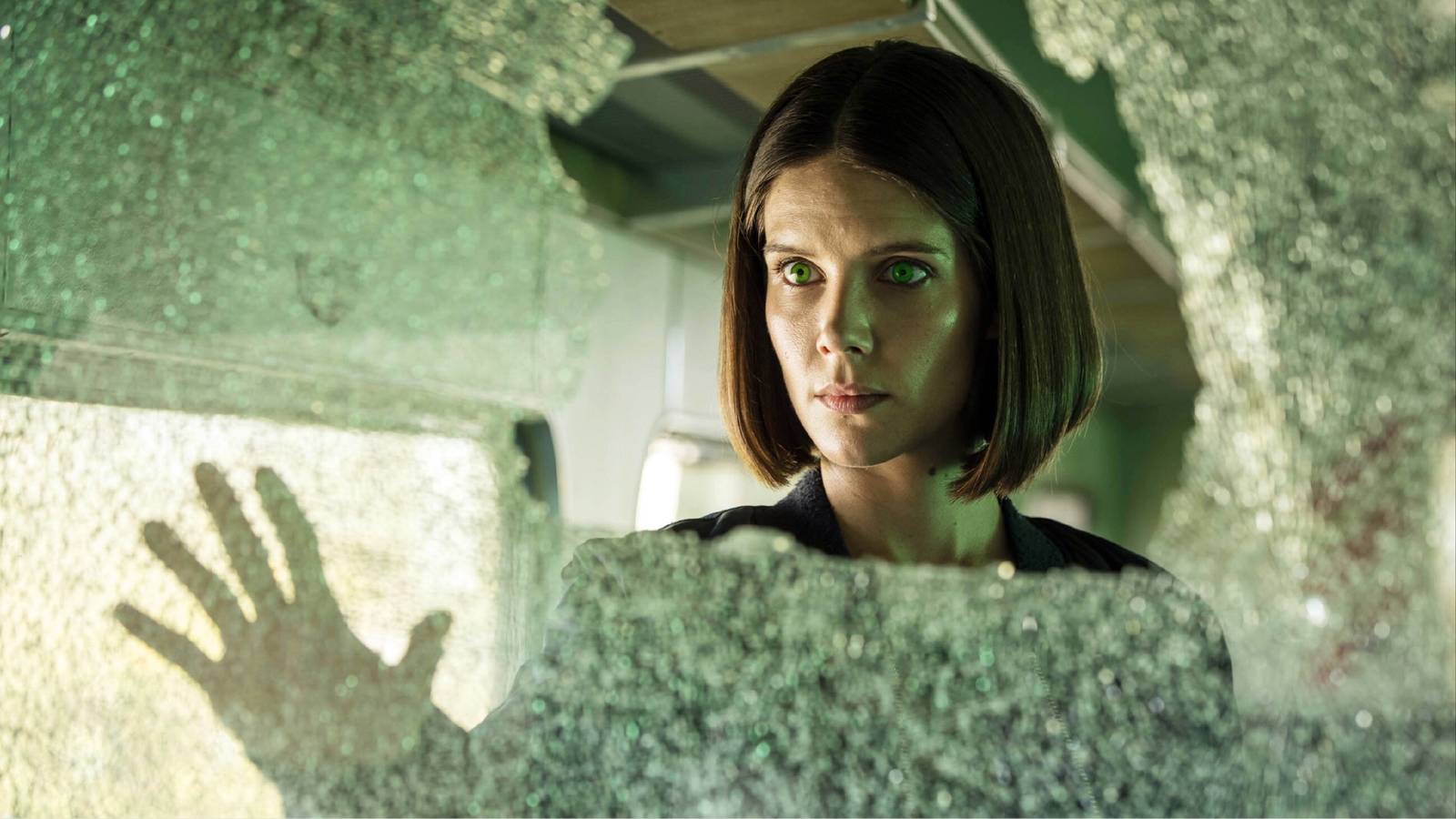
While Asimov’s laws of robotics influenced a lot of shows and movies that arrived in the wake of the iconic sci-fi writer’s work, one 2015 series from Channel 4 was particularly prescient in its conception of a world dealing with AI’s increasing prevalence. While Netflix’s iconic anthology Love, Death, & Robots has been known to humanize its fictional robots from time to time, the self-contained nature of the show’s episodes means the series rarely gets to explore the ethics of robotic servitude in depth.
In contrast, there are plenty of shows and movies that make the ethical quandaries of robotic workers central to their thematic and narrative preoccupations. All the movies and shows in the Blade Runner franchise, much like author Philip K. Dick’s original cyberpunk novel Do Androids Dream of Electric Sheep, tackle the thorny question of whether Replicants are just as human as humans, and deserve the same rights and freedoms.
Similarly, Apple TV’s ambitious Isaac Asimov adaptation Foundation bases its entire multi-generation saga on questions of free will, predetermination, artificial intelligence, faith, and servitude. Ironically, however, the first show to truly tackle Asimov’s ruminations on the potential ethical future of robotics wasn’t even a direct adaption of the writer’s work. Instead, it was 2015’s British sci-fi drama Humans.
Humans’ Themes Are Becoming More Relevant As Technology Advances
Although 2026’s charming BBC sci-fi sitcom Ann Droid would go on to offer a comedic spin on the same premise a little over a decade later, Humans was a much more grounded and self-serious sci-fi series. Based on author Lars Lundström’s 2012 book Real Humans, Humans focused on humanoid robots known as “Synths” and their human owners. Despite a starry cast including Emily Berrington, Pixie Davis, Sope Dirisu, and Katherine Parkinson, the breakout star of Humans was Gemma Chan as the synth Anita.
Initially introduced as a subservient, unthinking domestic assistant, Anita is gradually revealed to be more conscious than she seems. While it would have been easy for Humans to depict Anita as a straightforward, unfeeling villain, a la M3GAN’s title character or the Terminator franchise’s robots, the Synth is instead depicted as a complex character with layered motivations and an arc of her own, as well as a figure who can use her role in family life to her advantage.
Throughout the series, Humans hints at the idea of Synths taking advantage of the power that they wield over their human owners, who hand over a shocking amount of trust to the humanoid machines. However, the show also constantly highlights how poorly these human owners treat the machines, and, in doing so, forces the viewer to contend with the question of whether the humans who own the Synths are more morally questionable than the supposedly inhuman robots.
Humans Is One Of The More Realistic Depictions Of Synthetic Life

As Humans, appropriately enough, humanizes its Synth characters more with each episode, the show also illustrates new, morally murky sides of its human characters. Like a longer episode of Black Mirror or a predecessor to Netflix’s complex extraterrestrial series 3 Body Problem, Humans uses familiar sci-fi tropes to make viewers think more deeply about contemporary society and culture as they exist today.
By forcing viewers to contend with the ways that society currently mishandles the bodies of human workers and allows humans to mistreat each other, Humans understandably wonders whether adding another potential avenue for exploitation with synthetic humans is a good idea. Notably enough, most of the Synths on the show are stuck doing unglamorous jobs few humans would seek out voluntarily.
That said, not every human character is irredeemable, and the Synths aren’t straightforwardly heroic, unproblematic characters solely designed to highlight the moral failings of humanity. Thus, Humans manages to explore Asimov’s ideas about the ethics of robotics without simplifying the author’s outlook in its twisty, morally knotty story.

- Release Date
-
2015 – 2018-00-00
- Network
-
Channel 4
- Directors
-
Lewis Arnold, Daniel Nettheim, Francesca Gregorini, Jill Robertson, Mark Brozel, Al Mackay, China Moo-Young, Sam Donovan, Ben A. Williams, Carl Tibbetts, Richard Senior
-

Emily Berrington
Dr. Aveling
-
