

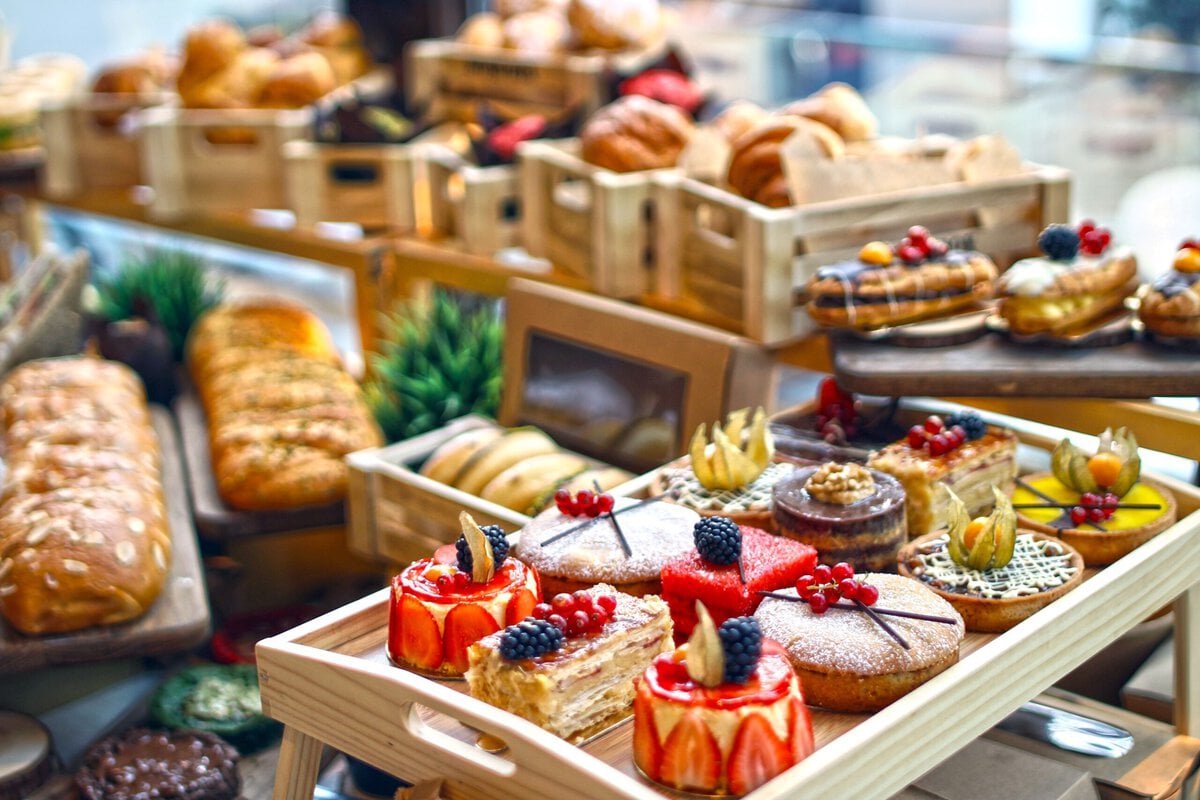
The oldest pastry shops in Barcelona have been feeding the city for two centuries. La Estrella opened in 1825, and the youngest shop on this list, Mauri, began selling pastries in 1929. Several are still run by the families who founded them, a few by the fourth generation. Others passed to new owners who kept the recipes and the old counters.
Some of these shops stick closely to the sweets their founders made. Escribà built its name on invention. The seven entries below run in order of founding date, and each covers the shop’s history, what it’s known for, and what to see nearby, so you can plan a visit around a coffee and something sweet.
Related read: Things To Do in Barcelona When it Rains
Traditional Bakeries in Barcelona
1. La Colmena
The name is a small joke that has lasted more than 150 years. The shop began as Ca l’Abella, “the bee’s house,” and became La Colmena, “the beehive.”
La Colmena dates back to the 19th century. In 1849, Rosendo Abella ran a confectionery in the city center under the Ca l’Abella name. In 1868 the Costa family bought the business, renamed it La Colmena, and moved it to its current location. Ownership changed several more times until 1927, when the Roig family took over. They still run it today.
The shop keeps making traditional sweets and handmade candies. Its best-known product is the bolado, a hard-boiled sweet made to a century-old recipe in flavors such as fennel, pomegranate, toffee, and honey.
La Colmena sits on Plaça de l’Àngel, on the edge of the Gothic Quarter. Barcelona Cathedral is a short walk away, and from the cathedral square Portal de l’Àngel, one of the city’s busiest shopping streets, runs up toward Plaça de Catalunya.
Address: Plaça de l’Àngel, 12, Ciutat Vella, 08002 Barcelona
Source: Instagram (@pastisserialacolmena)
2. Foix
Inside Foix, a bronze bust of the poet J. V. Foix stands among the cakes, usually with a fresh red rose beside it.
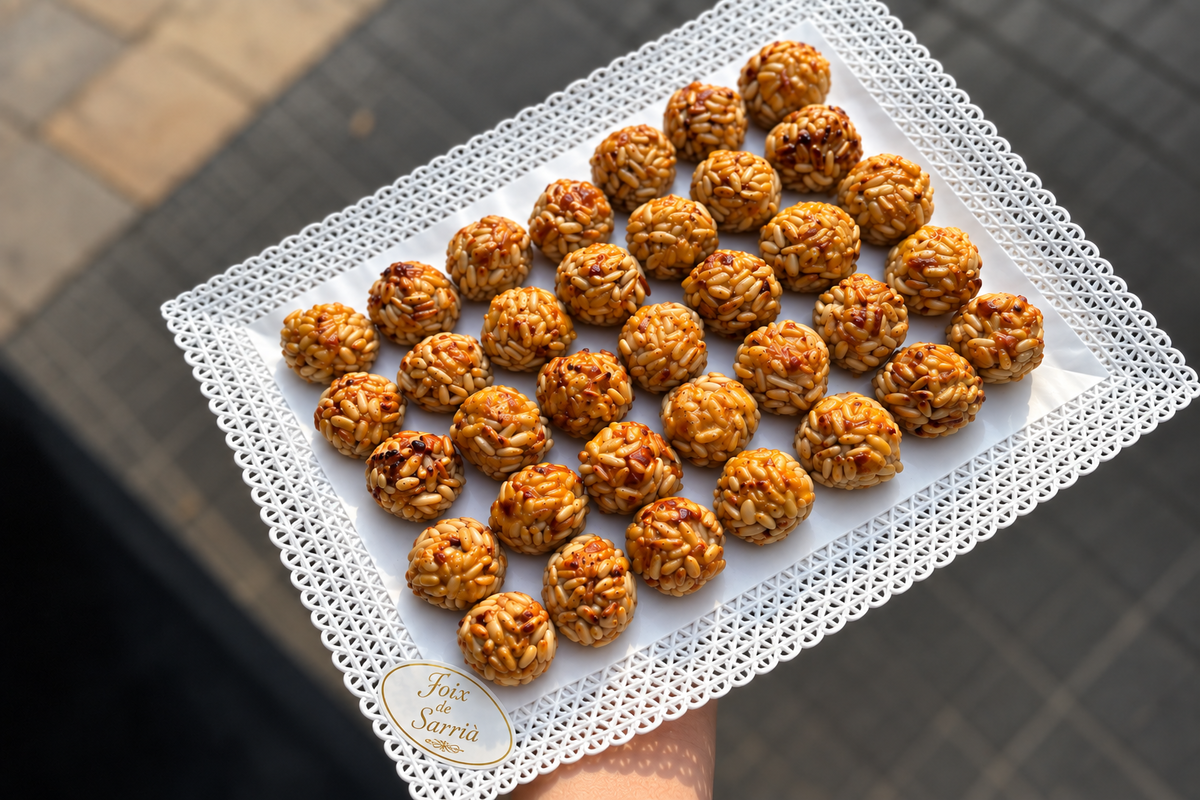
Foix brings together pastry, literature, and neighborhood life. Josep Foix Ribera and his wife, both pastry chefs, founded it in 1886 in Sarrià, then still a separate village from Barcelona. They sold traditional cakes and baked goods from the beginning, and the shop still does. The literary link comes from their son, J. V. Foix, who became one of the major Catalan poets of the 20th century and worked in the family business for many years. The family’s original shop was in his birthplace on Carrer Major de Sarrià.
The main shop faces the Church of Sant Vicenç de Sarrià on the neighborhood’s best-known square. After visiting the church, walk along Carrer Major de Sarrià, the main street, where local shops sell products you won’t find in the city center.
Address: Plaça de Sarrià, 12, Sarrià-Sant Gervasi, 08017 Barcelona
Source: Instagram (@foixdesarria)
3. Escribà
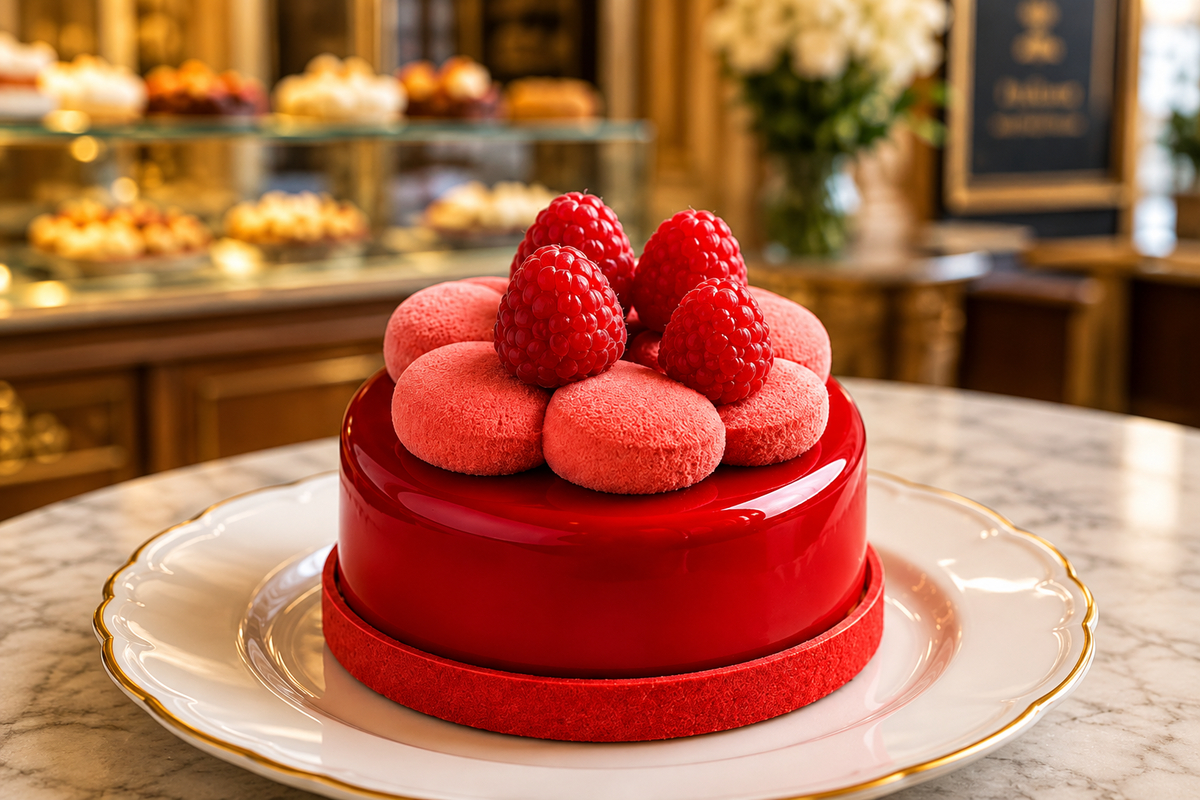
Antoni Escribà was known in Barcelona as the “magician of chocolate,” and his cakes still aim to surprise.
Escribà is one of the most important pastry shops in the city. Its story began in 1906 as Forn Serra, on the same stretch of Gran Via where the shop stands today, and the family gradually shaped it into what it is now. It became a benchmark in Barcelona for combining tradition with creativity.
Antoni Escribà is the key figure. He is considered one of the great innovators of modern Spanish pastry, and today Escribà is known as much for its inventive cakes and chocolate creations as for its classic products. The company also runs a second shop on La Rambla, in the modernist Antiga Casa Figueras building.
Plaça Universitat, with the historic building of the University of Barcelona, is a few blocks east of the Gran Via shop. Plaça de Catalunya and its shops lie beyond it.
Address: Gran Via de les Corts Catalanes, 546, Eixample, 08011 Barcelona
Source: Instagram (@escriba1906)
4. Mauri
Mauri still works as a café as much as a pastry shop, and a table here puts you on one of the Eixample’s most pleasant streets.
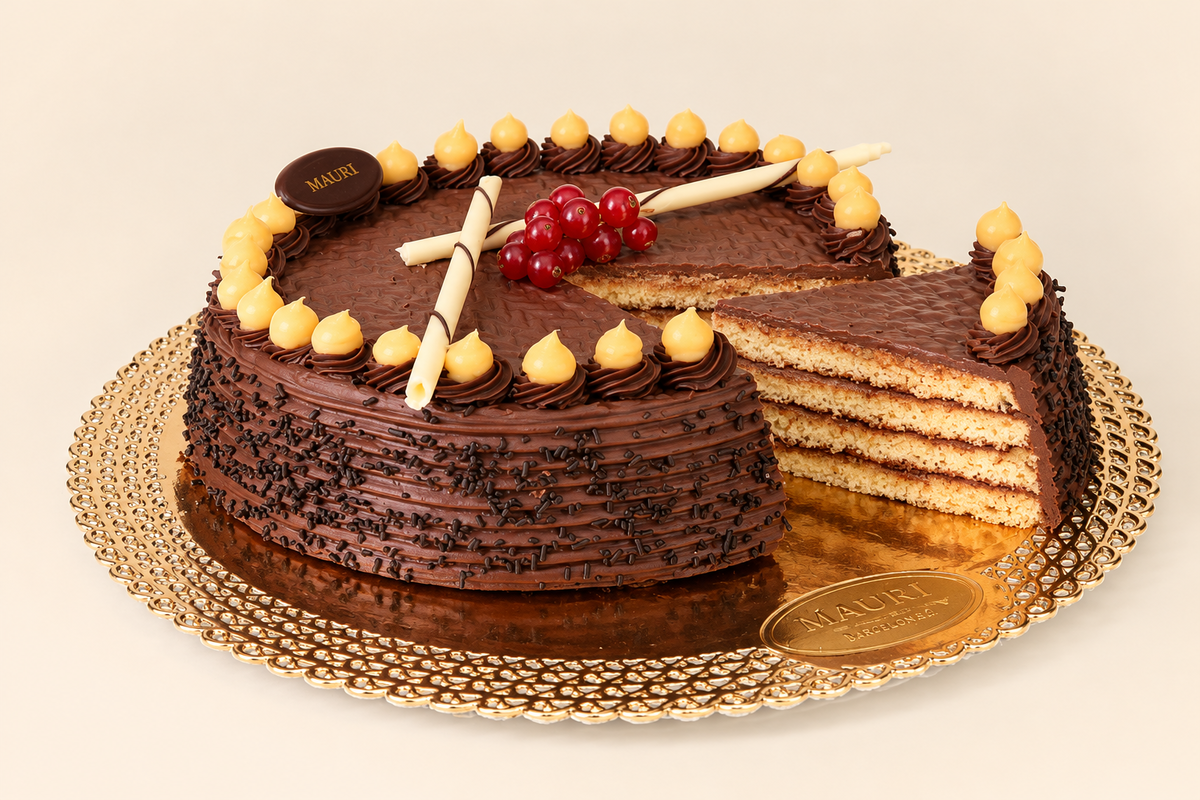
Mauri began in 1929, when pastry chef Francesc Mauri bought an old grocery store on the corner of Rambla de Catalunya and Carrer de Provença. At first it was a mixed grocery and delicatessen, which was common at the time. Pastries, baked goods, and coffee came in slowly, and the grocery gradually became a well-known pastry shop. Francesc ran it with his wife, Ramona Cañellas, and the family added a café and tasting room in 1969.
Mauri has kept its identity as a traditional Catalan pastry shop, with chocolates, fine pastries, and baked goods, and it’s still a place where people meet over coffee.
Rambla de Catalunya is a walking street lined with fashion stores, restaurants, and independent local shops.
Address: Rambla de Catalunya, 102, Eixample, 08008 Barcelona
Source: Instagram (@pastisseriamauri)
5. La Estrella
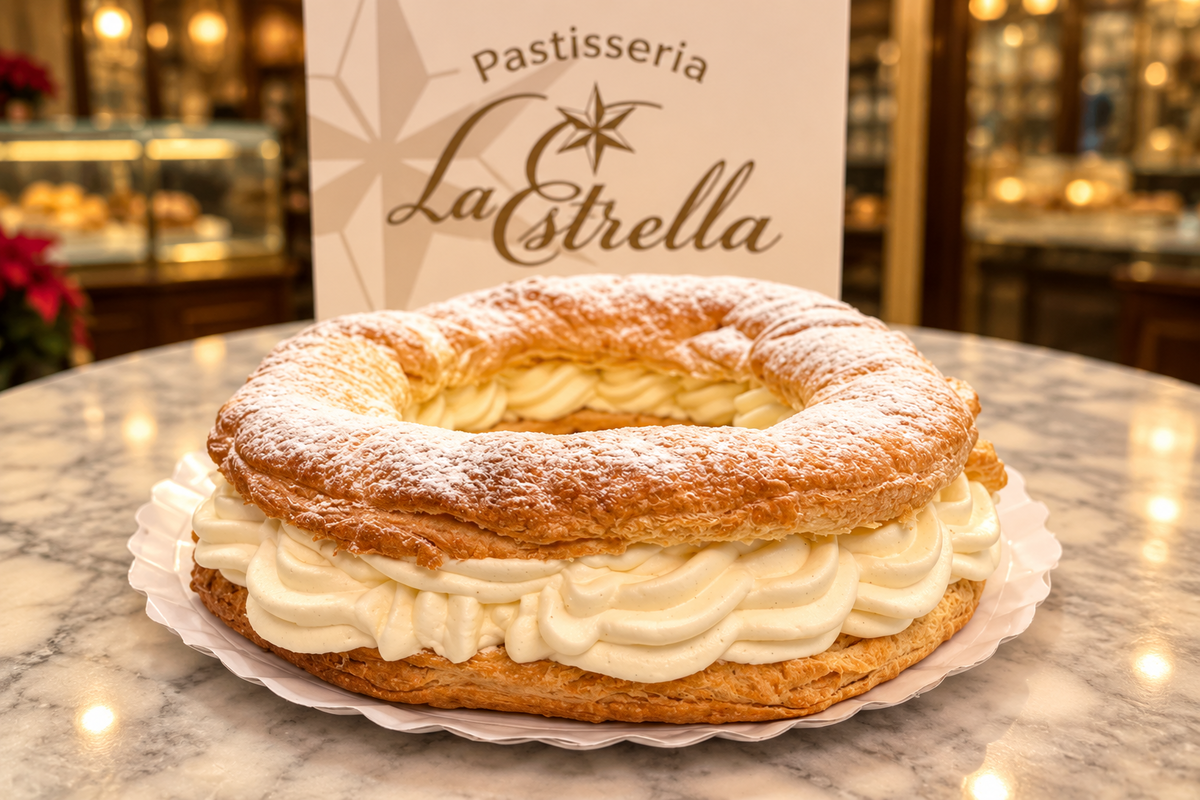
Walk into La Estrella and the room looks as if someone stopped the clock decades ago.
Founded in 1825, La Estrella is the oldest pastry shop still operating in Barcelona. From the start it has been tied to the handmade production of traditional sweets and to the commercial life of the old town, especially the Raval and Ciutat Vella. The interior was renovated in the 1950s, but the renovation kept its classic look, and that preserved, frozen-in-time feel is what most visitors remember.
The shop reached its 200th year in 2025. Two young owners, Anna Campos and Judit Servent, took it over and kept it going, and the pastries still come out of the same oven.
The street outside belongs to the Raval, with its old-city rhythm of small shops and neighbors talking in doorways. The Gran Teatre del Liceu is a five-minute walk away.
Address: Carrer Nou de la Rambla, 32, Ciutat Vella, 08001 Barcelona
Source: Instagram (@laestrella1825)
6. Casa Vives
At Casa Vives, the craft has passed from parent to child for four generations.
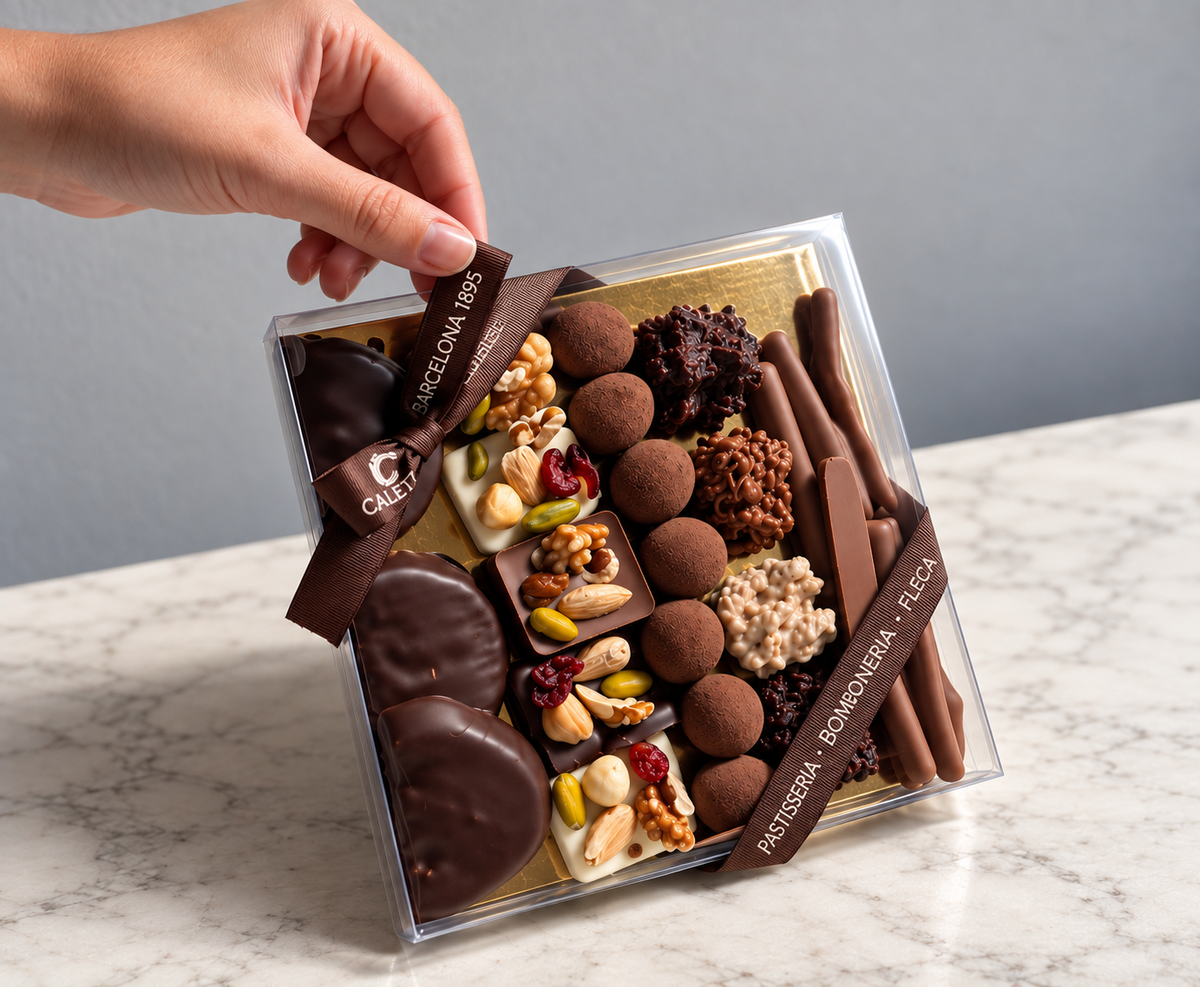
Casa Vives was founded in 1895 in the Sants neighborhood. It grew out of a family line of pastry chefs and bakers, a pattern common to Barcelona’s traditional pastry houses. Over time the Vives family turned it into a professional business while keeping the idea of a traditional workshop, and they widened the range to pastries, classic cakes, chocolates, and celebration items.
It is still entirely family-run, now led by the fourth generation under Miquel Vives, which is why locals count it among the city’s lifelong establishments. The business has two shops: the original neighborhood in Sants, and a branch on Rambla de Catalunya in the Eixample.
The Rambla de Catalunya shop is surrounded by shops, bars, and restaurants. Avinguda Diagonal and Plaça de Catalunya are both within walking distance.
Addresses: Rambla de Catalunya, 58, Eixample, 08007 Barcelona · Carrer de Sants, 74, Sants-Montjuïc, Barcelona
Source: Instagram (@casavivesbcn)
7. Montserrat Forners
This is the one bakery on the list, and the reason to come is a loaf of bread.
The family behind Montserrat Forners has been in the bakery trade since 1894. Over the decades they moved and consolidated the business until they settled in their current workshop, and the fourth generation of the Casamitjana family runs it today.
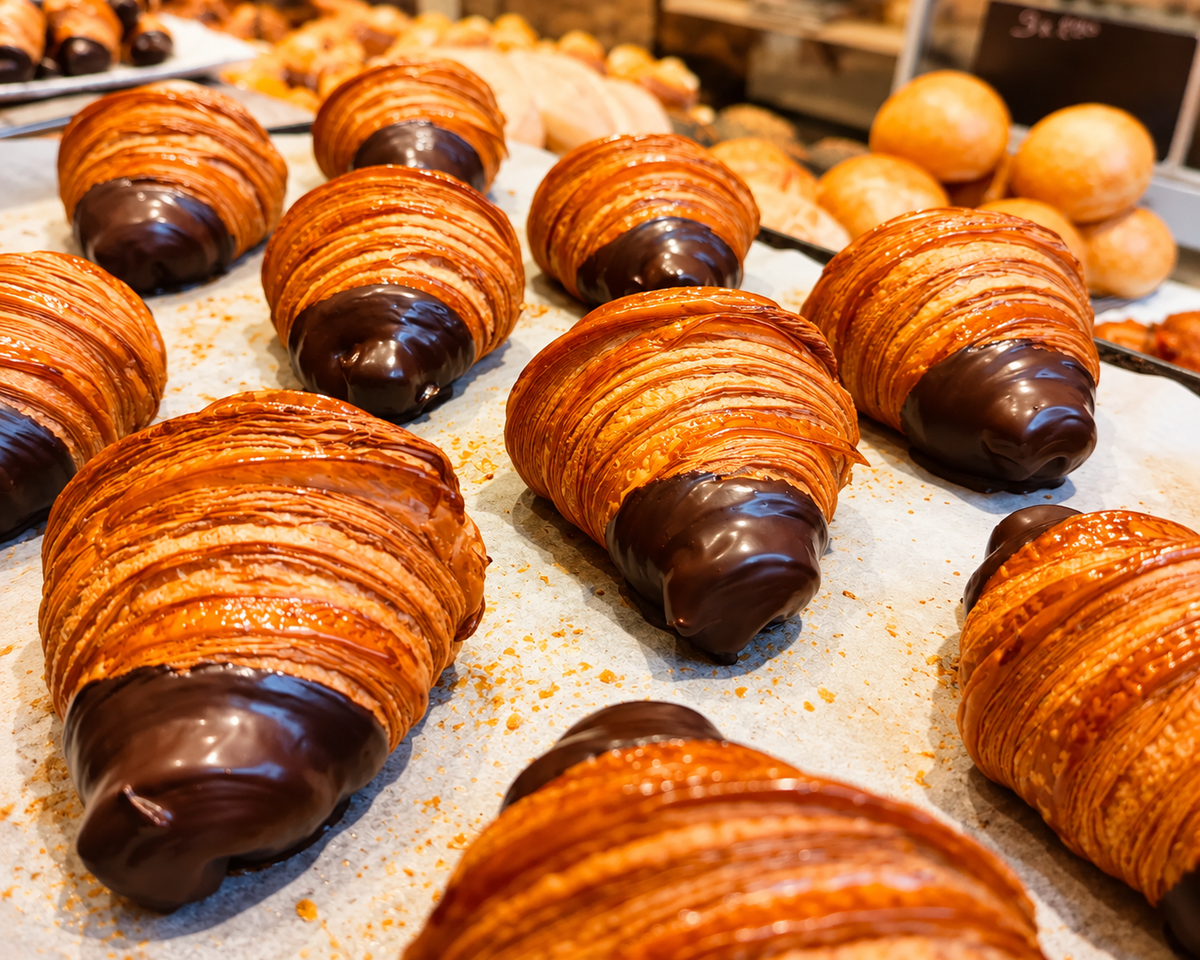
The bakery has modernized without dropping its traditional base. It pairs modern techniques with slow, hands-on methods such as long fermentation and sourdough. Its pa de pagès, the round Catalan country loaf, won the contest for the best pa de pagès in Catalonia in 2022 and again in 2024.
Guinardó is a quiet residential neighborhood in the north of the city, with cafés and local shops. The Hospital de Sant Pau, one of Barcelona’s most important modernist buildings, is about a ten-minute walk away.
Address: Carrer de los Castillejos, 366, Horta-Guinardó, 08025 Barcelona
Source: Instagram (@montserratforners)
Practical Information
Getting Around
The shops fall into three rough groups. La Estrella and La Colmena are both in the old town and can be combined on foot. Escribà, Casa Vives, and Mauri are in the Eixample, and Casa Vives and Mauri sit on the same street, Rambla de Catalunya. Foix in Sarrià and Montserrat Forners in Guinardó are farther from the center, so plan on public transport for those. Sarrià has its own FGC train station a short walk from the square.
Opening Hours
Hours vary from shop to shop, and some traditional shops close on certain days. Check each shop’s website or Instagram before you go, especially on Sundays and public holidays.
Related read: Cheap Things To Do in Barcelona: A Day for Under €20
Frequently Asked Questions
Which historic pastry shops in Barcelona are open every day?
According to Barcelona Urbana’s guide to the city’s historic pastry shops, La Colmena and Foix de Sarrià both open seven days a week. Many other traditional shops close one day a week or keep shorter hours on Sundays. Opening times change, so confirm on the shop’s own channels before making the trip.
Does Escribà have a shop on La Rambla?
Yes. Along with its original Gran Via shop, Escribà runs a second shop at La Rambla, 83, in the Antiga Casa Figueras. The building’s modernist facade and interior are worth seeing even if you only stop for a coffee.
What are bolados?
Bolados are traditional hard-boiled sweets. La Colmena is the best-known place to buy them in Barcelona, made to a recipe more than a century old and sold in flavors like fennel, pomegranate, and honey. They keep well, which makes them a practical edible souvenir.
When is the best time of year to visit Barcelona’s pastry shops?
Two seasons stand out. Before Easter, pastry shops fill their windows with the mona de Pascua, a cake topped with chocolate figures, and Antoni Escribà helped turn those figures into chocolate sculptures. Around All Saints’ Day (November 1), shops make panellets, small almond-based sweets eaten during the Castanyada festival.
Is pa de pagès the same as regular bread?
Pa de pagès is a round Catalan country loaf with a thick crust, and it has protected geographical indication (IGP) status. The IGP standard calls for slow fermentation, at least partial hand-shaping, and baking in a stone-floored oven. Montserrat Forners won the official contest for the best Catalan pa de pagès in 2022 and 2024.
Related read: Where to Have Breakfast in Barcelona Like You Actually Live There

