

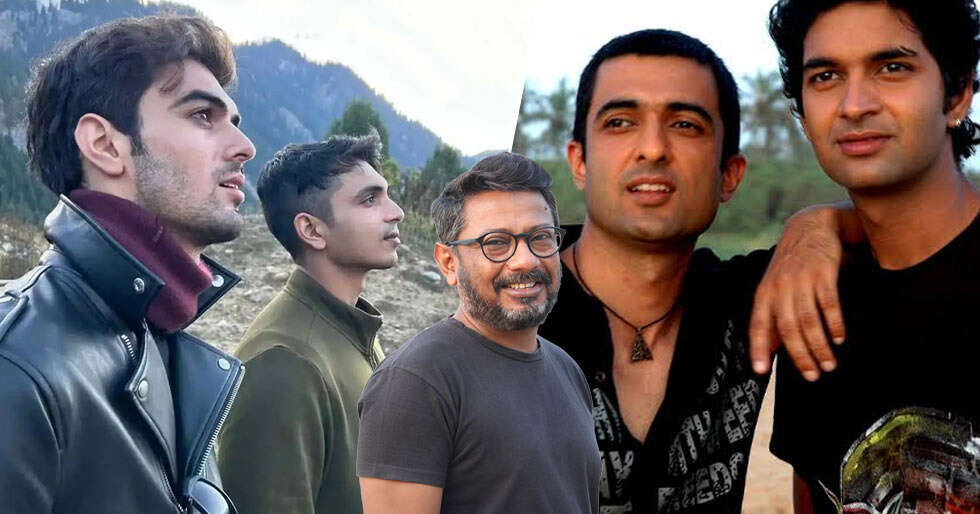
Among the filmmakers, who have approached ostracized subjects with sincerity and sensitivity, there is Onir. His work has given voice to characters that are often overlooked and stereotyped. His film My Brother…Nikhil (2005) explores the story of Nikhil, a gay swimmer residing in Goa who faces social exclusion after testing HIV–positive. He is even arrested and thrown into a rat-infested sanatorium much against his own will, and the only support he receives is from his sister Anu (Juhi Chawla), her husband and Nigel, who is Nikhil’s lover. After being publicly scorned and deserted by his own family, Nikhil finds support in these three people who help him fight for his release. At a time when HIV/AIDS were heavily stigmatized in India, Onir’s film came across as a deeply humane portrayal of love, dignity and resilience. The film is a crucial reminder that queer lives deserve the fundamental right to live with respect that is often ascribed to heterosexual people by birth.
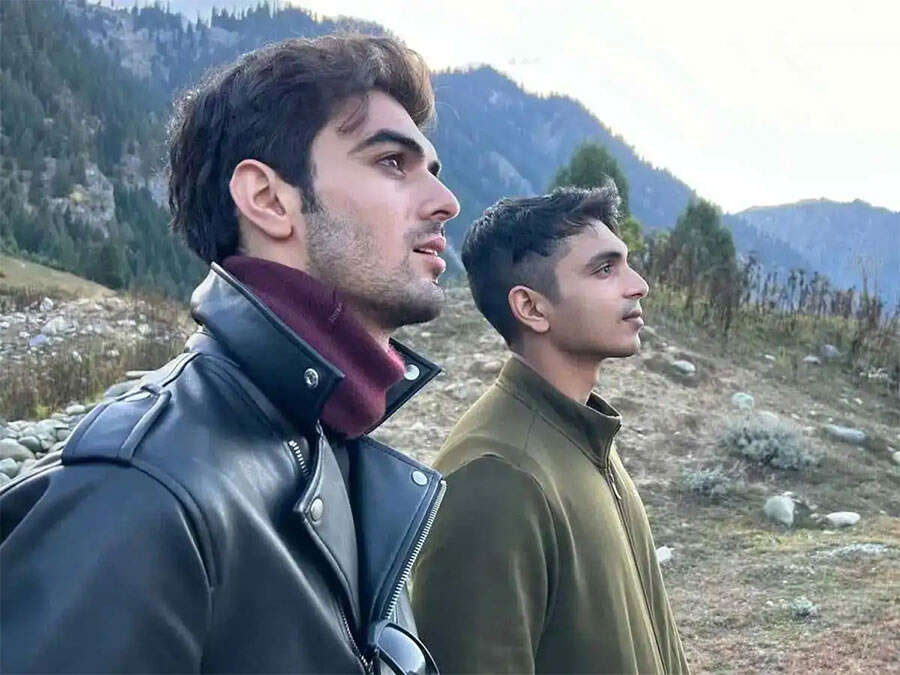
Onir’s most recent film, We are Faheem & Karun (2024) is another achingly real and humane portrayal of what it’s like to live in a conservative society, that surveys every choice you take and every move you make. Set in Kashmir, the film explores the relationship between Karun, a young security officer from South India stationed in Gurez, and Faheem, a local man navigating the rigid expectations of faith, family and society. Bearing the burden of surveillance at borders, the film feels like a fragile take on the reality of queer desire and identity.
After being a pioneering voice for queer rights and queer cinema for nearly 20 years in the industry, Director Onir expresses his thoughts on the pace of change in representation of queer characters, challenges faced by filmmakers to tell queer stories and more.
For Onir, portraying LGBTQIA+ stories comes with immense responsibility. “When straight filmmakers make queer films, they need to be careful about things they don’t have lived experiences of”, he says. “The most important thing to me is not pandering to a heteronormative audience or sensibility anymore and to be as true to queerness and the queer gaze as possible”, he adds.
Despite the decriminalization of homosexuality in India through the Supreme Court’s 2018 order striking down Section 377, Onir argues that change in cinema remains slow. “After 2018, there was a promise that things would change. But I’m struggling to get one film through the CBFC board even in 2026. So, I feel things have not radically changed”, he says.
Reflecting on his journey, Onir says, “It was a struggle in 2005 when I made My Brother…Nikhil, but Yash Raj came on board. I got two National Awards for a film that dealt with queerness when I directed I Am in 2011. But I feel that right now, unless you tell your story the way a heteronormative world wants to see it and feel comfortable with it and think, “Oh my God, we are so accepting”, things are fine. The minute you question and make people uncomfortable with their shortcomings, they frown. If someone doesn’t accept queer lives, it’s their insecurity, their phobia, their need to hold on to the status quo.”
He is also critical of the way queerness is often reduced to a narrative tool. “Anybody’s identity shouldn’t be a twist in the story. I find it very demeaning to queer identity when queerness is used as a plot device. The problem is that most queer people are just so grateful that we’re being shown that we’ve stopped critically looking at how we’re being shown.”
Onir highlights the reason behind the languid progress. “The problem is that we are in such an insane milieu where people don’t know how or what to acknowledge. Everyone celebrates Red, White & Royal Blue and Heated Rivalry but forgets that people are struggling to really get, forget theatres, even platforms”, he says.
As he talks about people’s discomfort in seeing queer intimacy on screen, he questions the industry’s obsession with “subtle” queer representation. “I was always told that one should really look at subtle representation where no one knows the person is gay. Tell me one series you watch where people would say, “Oh my God, it’s so subtle, no one knows he’s straight.” Straightness is on your face, but queerness is supposed to be subtle – why? So, we are just an industry full of double standards.”
Speaking about his memoir, titled I am Onir and I am Gay, he shares that the title came from an earlier campaign and became a conscious decision to embrace identity without hesitation. “I had done an ad. The title of the ad was, I am Onir, I’m gay, and more. My sister kept saying that there are not too many people who celebrate their identity out loud”, he reveals. “For young people who are in the closet, seeing that someone is not scared and someone is not being subtle about their queerness is empowering”, he says.
“I was glad I kept that name because when it released, people sent me messages on Instagram and Facebook with photos from airports and cafeterias saying, “We saw this book and it just made us feel so visible”, Onir remarks.
Ultimately, Onir feels authentic representation comes from within the community. “I feel authentic representation is when you see a character of any class or gender portrayed through the lens of the way that community looks at itself — without disrespect, without judgement, and without shaping it around what makes others comfortable watching.”
“Like one keeps saying that we need more women behind the scenes for better representation of women, right? Similarly, we need more queer people talking about our own stories because the way we look at ourselves and the world is different. That difference has to be accepted.” Onir concludes.
Also Read: Livingston Honours Filmmaker Onir With Township Citation
