

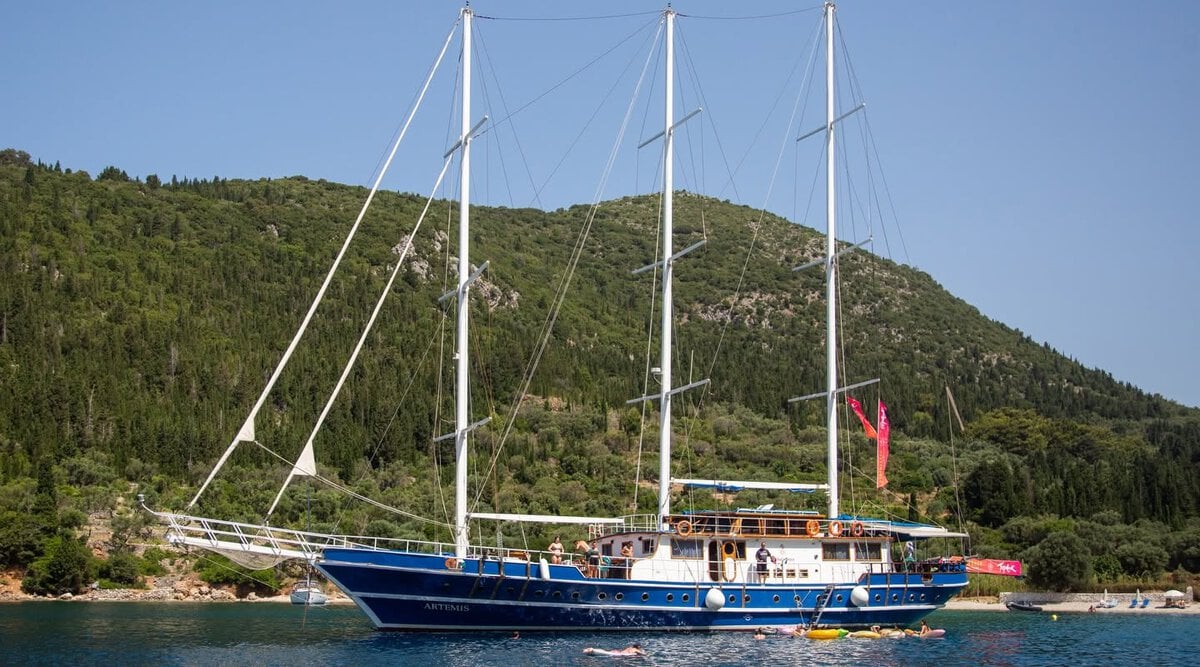
A gulet cruise in Greece is a week on a traditional wooden boat with a small group of guests and a crew who sail, cook and look after you. You sleep in a compact cabin, swim straight off the boat, eat Greek food on deck and spend most evenings tied up in a harbor town. Think of it as a floating guesthouse with its own crew.
If you have seen gulet holidays advertised and wondered what a normal day really looks like, this is what to expect, including the parts brochures skip: small cabins, what is not included in the price, and who will enjoy it most.
Sail the Ionian From Corfu With Sail in Greece
Sail in Greece, the operator behind this guide, runs the Corfu week described below: 8 days and 7 nights on a gulet, sailing to Sivota, Parga, Paxos and Antipaxos and back to Corfu.
Good to know
Saturday to Saturday, boarding around 17:00 at Corfu Old Port
From £763 per person for a June 2027 week, checked October 2026
Port fees and cruise tax of €150 per person are paid on top
A cabin to yourself costs 50% extra
Cabins are compact, so pack a soft bag
Check dates and prices for the Ionian cruise →
Or see all Sail in Greece routes
This section contains partner links. If you book through them, we may earn a commission at no extra cost to you. We only feature partners whose services we believe add genuine value for travelers.
What is a gulet?
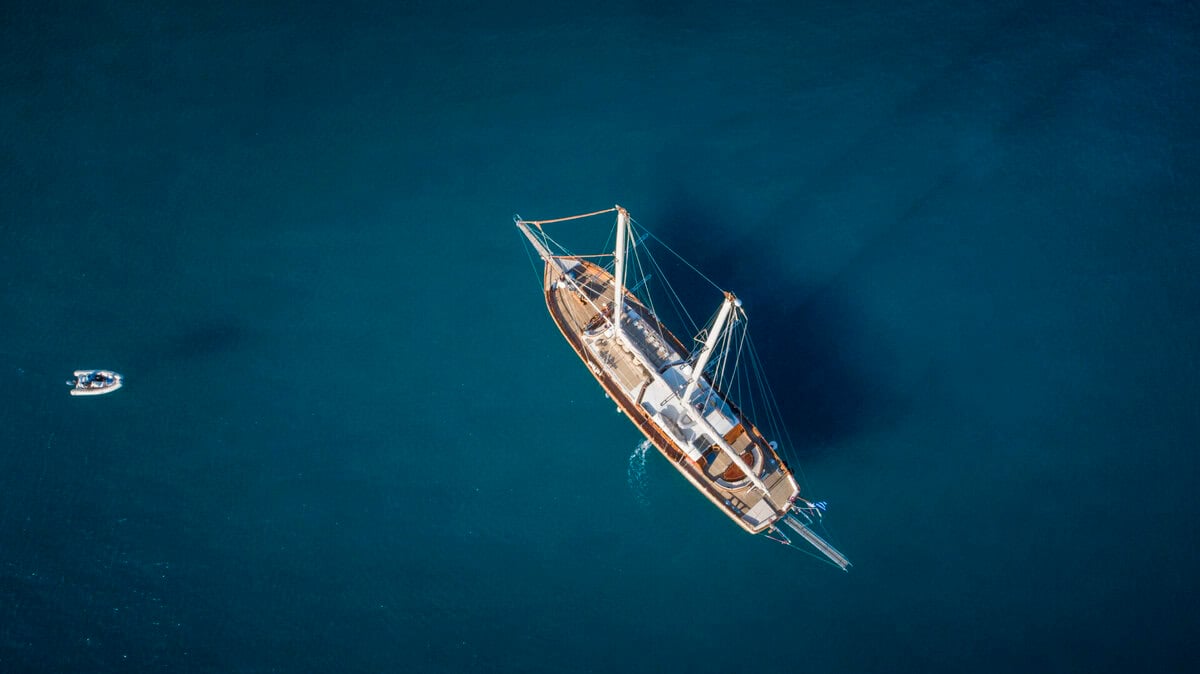
A gulet is a traditional wooden sailing vessel, originally built by Turkish and Greek boat builders for fishing and cargo. Many have since been converted into comfortable cruising boats for guests, with a deck for sunbathing and dining, a lounge or bar, and cabins below.
You do not need any sailing experience. The crew run the boat. Your job is to swim, eat, explore and relax.
Who is on board
Boats in the Greek gulet fleets are small. Most carry between 12 and 42 guests, with a typical boat nearer 15 to 40, and anywhere from 5 to 15 cabins depending on the vessel and class. That is small enough that people usually know each other by the second day.
The crew normally includes:
- A captain, who plans the route around weather and port space
- A chef, who cooks breakfast and lunch on board
- A couple of deckhands, who handle ropes, anchors, swim stops and getting you on and off the boat
Groups vary by cruise
Some weeks are couples and friends, some are solo travelers, and there are dedicated 18 to 39 cruises with a livelier crowd. Ask your operator who typically books the sailing you are looking at.
What the cabins are really like
Be realistic here, because this is where first-timers are most surprised. Gulet cabins are compact: a bed, a little storage, and usually an ensuite bathroom. You spend your days on deck, so most people find it perfectly comfortable, but do not expect hotel-room space.
Practical points:
Pack in a soft bag. A duffel fits under or beside a bunk. A hard suitcase usually does not.
Check the layout. Many boats offer double and twin cabins, and some also have triples and quads (bunk beds). If you are traveling with friends, this matters.
Check the comfort features. Ask whether your cabin has individual air conditioning, and whether the bathroom has a separate shower area. Higher boat classes tend to have more space and extras, so compare classes rather than just prices.
A typical day on a gulet cruise
There is no strict timetable, and the captain adjusts for weather, but most days follow the same easy rhythm:
- Morning. You wake up, step out on deck and find a new island or bay outside. Breakfast is a buffet.
- Swim stop. The boat anchors in a cove or bay and you jump in from the deck. Many people snorkel here.
- Lunch on board. The crew serve a Greek lunch buffet. A glass of ouzo is a local tradition.
- Afternoon. A little cruising, more swimming, or just lying on the sun deck with a book.
- Evening in port. The boat ties up at a nearby harbor. You are free to wander the village, shop, find a taverna or have a drink at a waterfront bar.
- Night. Back on board for the cool island breeze. Some guests sleep out on deck and wake to the sunrise.
Distances between stops are usually short, so most days mix a few hours of cruising with swimming and time ashore rather than a full day at sea.
What you eat and drink
Food is one of the best parts, and it is mostly included.
Breakfast: fresh bread, yogurt and honey, fruit and eggs.
Lunch: Greek dishes served as a buffet, such as salads, grilled meat or fish, dips and fresh bread.
Dinner: varies. Some evenings are cooked on board, others are in a local taverna ashore. Welcome and captain’s dinners are common.
Drinks: usually not included. Most boats have a stocked bar and run a bar tab that you settle at the end of the week. Ask how it works.
Tell the crew about any dietary needs before you sail, not on the first night.
Example week: the Ionian from Corfu
To make this concrete, here is how a real 8-day, 7-night route works on the Ionian side, starting and finishing in Corfu. (Embarkation is on a Saturday afternoon around 17:00 from Corfu Old Port, and you disembark the following Saturday at around 09:00.)
The route heads south from Corfu along the mainland coast to Plataria, Sivota and Parga, then crosses to Paxos and Antipaxos, with stops at Gaios and Lakka on Paxos, before sailing back to Corfu. Along the way you pass the Blue Lagoon at Sivota, the Venetian castle above Parga, the beaches of Antipaxos and the Blue Caves of Paxos.
What is included, and what to budget for
Operators differ, so always read the inclusions line by line. On a typical cruise, expect the following.
Usually included:
- Seven nights on board in your cabin
- Daily breakfast and lunch
- Daily swim stops
- Crew and boat
- Wi-Fi (signal can be patchy at sea)
- Welcome dinner and captain’s dinner (on some cruises)
Usually extra
- Flights and travel insurance
- Alcohol and soft drinks from the bar
- Dinners ashore (unless listed)
- Excursions and activities, such as boat trips or bus tours
- Port fees and cruise tax. On the Ionian cruise above this is EUR 150 per person per week, paid on top of the fare, so ask whether it is in the price you are shown.
- Tips for the crew, which are customary. Ask your operator how they are normally handled.
Solo travelers: a single cabin usually carries a supplement. On the Ionian cruise above, it is 50% extra.
Who a gulet cruise suits (and who it does not)
It suits you if:
- You want to see several islands without packing and unpacking every day
- You like swimming, snorkeling and simple, social days
- You are happy with a compact cabin
- You are traveling solo and want to meet people, or with friends or a partner
Think twice if:
- You want large cabins, a spa and a busy entertainment program (a conventional cruise ship may suit better)
- You need step-free access throughout (boats have steps and narrow passages; ask the operator)
- You are very prone to motion sickness (choose calmer waters and bring remedies; the Ionian is known for gentler conditions than the Aegean in summer)
What to pack
- Soft duffel bag, not a hard suitcase
- Swimwear (two sets, one will always be damp), quick-dry towel
- Reef-safe sunscreen, hat and sunglasses
- Flat, non-slip shoes for the boat, plus sandals for ports
- Light layers for evenings, and a thin waterproof jacket
- Snorkel and mask if you have your own (ask whether the boat provides them)
- Seasickness tablets, just in case
- A power bank and a European plug adapter
- A little cash and a card for tavernas and the bar tab (ask how the tab is settled)
Questions to ask before you book
- What exactly is included, and are port fees and cruise tax in the price?
- Which boat class is my cabin, and does it have air conditioning and an ensuite bathroom?
- How many guests and crew will be on board?
- What is the typical daily cruising time?
- How does the bar tab work, and what is the tipping guidance?
- Who usually books this departure (couples, solos, younger groups)?
Frequently Asked Questions
Do I need sailing experience for a gulet cruise?
No. The captain and crew handle the boat. You just need to be comfortable stepping on and off a boat and swimming in open water.
Is a gulet cruise all-inclusive?
Not usually. Accommodation, daily breakfast and lunch and the crew are normally included. Drinks, excursions, tips and sometimes port fees are extra.
Can I swim from the boat every day?
Yes. Daily swim stops are part of the routine, weather permitting.
Is a gulet cruise good for solo travelers?
Yes, many people travel alone. Expect a single supplement if you want a cabin to yourself.
How big are the cabins?
Compact. Expect a bed, some storage and usually an ensuite bathroom. Higher classes are roomier.
Which is better for a first gulet cruise, the Ionian or the Aegean?
Both work. The Ionian is generally the gentler choice for first-timers, with calmer conditions and short hops between green islands. The Aegean offers the more famous islands. Our guide to Ionian vs Aegean sailing in Greece compares wind, distances and scenery, and you will find more ideas in our Greece travel guides.
