

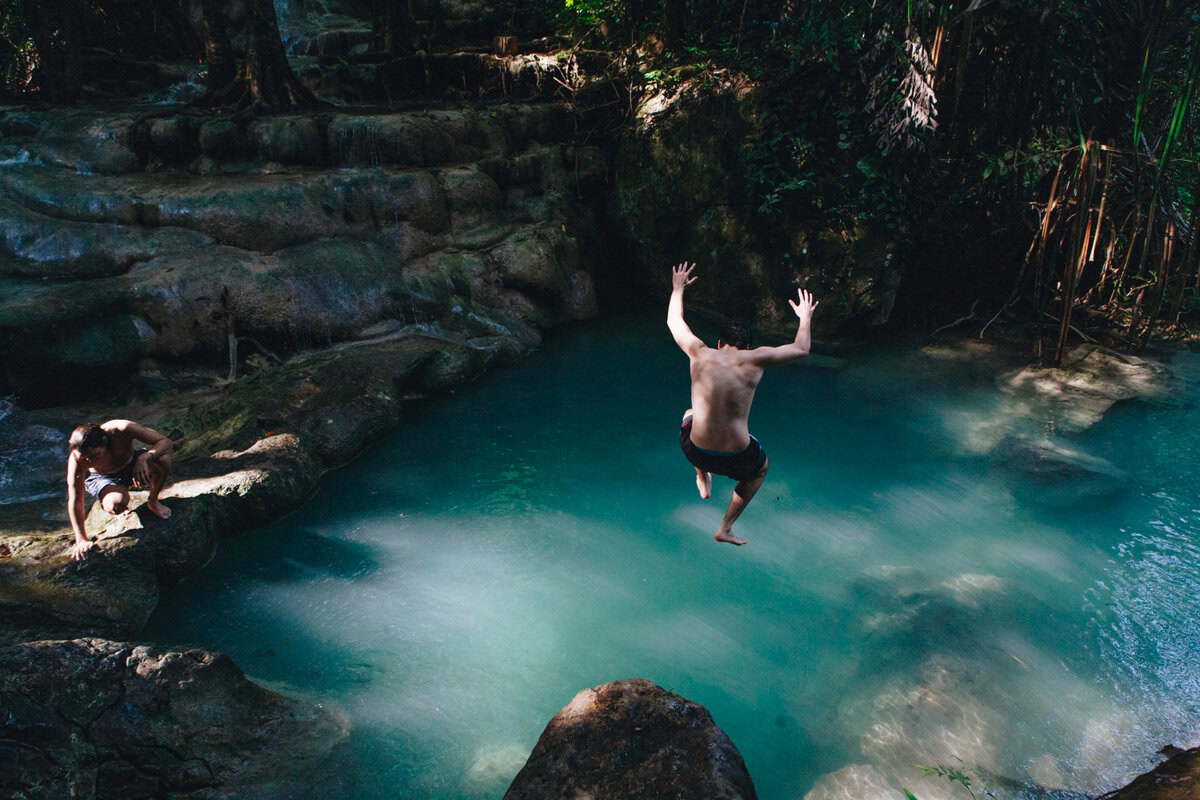
The road from Panama City climbs through hills, then drops into a broad green bowl ringed by high walls of forest. Above the town, a ridge lies in the outline of a woman resting on her back. Locals call her La India Dormida.
El Valle de Antón sits inside the caldera of an ancient volcano, and the ridge is its best-known landmark. The hike up is steeper than the photos suggest, the folk story behind the silhouette is worth hearing, and the town below keeps working while you climb. This guide covers the trail, the legend, the seasons, and what to do once you’re back on flat ground.
A Day in the El Valle Crater With a Guide
Live Folks, the author’s Panama City tour company, runs a full-day small-group trip into El Valle de Antón, the crater town below the ridge of La India Dormida. Your guide takes you to El Chorro El Macho waterfall, the hot springs and the town, with transport from the city handled for you.
Good to know
Duration: About 10 hours, with pickup in Panama City or Playa Bonita
Price: From US$100 on the Live Folks site, checked October 2026
Included: Certified guide, transport, entry fees and bottled water
Group: A maximum of 10 travelers, tours in English, Spanish and French
Keep in mind: Lunch is not included, and the tour runs rain or shine
See the El Valle de Antón tour
This section contains partner links. If you book through them, we may earn a commission at no extra cost to you. We only feature partners whose services we believe add genuine value for travelers.
The Crater Under Your Feet
El Valle isn’t a viewpoint town built beside a volcano. The town fills the caldera itself. The fertile soil left by that geological history and the cooler mountain climate have shaped local farming and settlement for generations.
You’ll often hear that this is one of the largest inhabited volcanic craters in the world, and some describe it as the second largest. Treat the ranking as a local talking point rather than a settled fact. What you can verify is simpler: you arrive by descending into a crater, and the walls stay in view wherever you walk in town.
The air is noticeably cooler and fresher than in Panama City. It smells of damp earth and flowering plants, and birds call from the treetops.
The Legend of the Sleeping Woman
From the valley floor, the ridge reads as a woman lying peacefully on her back. The best-known version of the legend tells of Flor del Aire, also called Luba, the daughter of an Indigenous chief, or cacique. She falls in love with a Spanish conquistador, while an Indigenous warrior who loves her is consumed by jealousy. The story ends in tragedy. Heartbroken, Flor del Aire dies, or in some tellings lies down to grieve in the mountains, and her figure becomes the ridge you see today.
Details change from one teller to the next. It’s folklore. No historical record backs it. But it’s a real part of how people in El Valle talk about their landscape, passed down through generations.
Many visitors arrive expecting a pretty mountain and a few photographs. Then a local tells them the story, and the ridge stops looking like an unusual formation and starts looking like a character. If someone offers to share the tale, listen to it, and ask permission before photographing them.
On the Trail
The Trail at a Glance
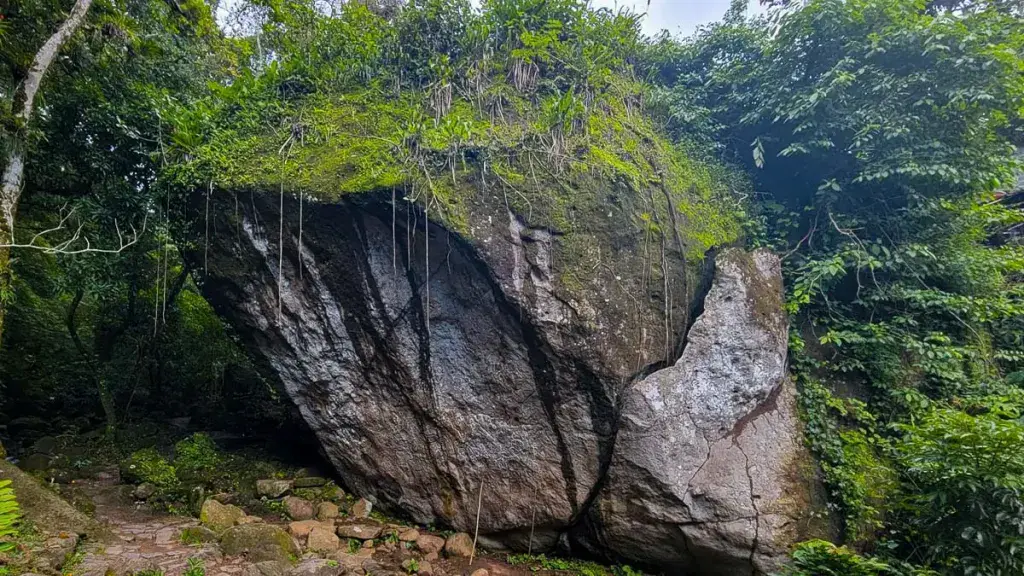
- Trailhead: the Piedra Pintada entrance, next to the pre-Columbian petroglyph rock, about a 15 to 20 minute walk from the town center
- Distance: roughly 3 to 6.5 km (1.9 to 4 miles) round trip, depending on the route and where you turn around
- Time: 1 to 3 hours for a typical hike, plus the walk to and from town. Longer ridge routes or a waterfall extension take 4 to 6 hours or more
- Difficulty: moderate on the main route, with steep, rocky sections that get slippery. The longer extensions need good fitness and secure footing
- Entrance: around 3 dollars per person
The route starts at the petroglyphs and climbs through tropical greenery on uneven stone paths toward open viewpoints on the ridgeline, looking down into the crater. It gets steep sooner than most people expect. The sounds of the village fade, and bird calls and rustling leaves take over.
Somewhere on the way up, you’ll want to stop and catch your breath. Turn around when you do. The valley opens below you in a patchwork of green fields, rooftops, and forest, framed by the crater walls. With every step the view widens. At the top, a breeze comes across the ridge and the whole valley spreads out beneath you.
The Descent
Allow more time for the way down than you think you need. The descent can be just as hard as the climb, especially on sections that turn muddy, slippery, and uneven after rain. That’s true even when the weather looks clear at the trailhead.
A View You Can’t Guarantee
Mountain weather changes fast here. Clouds roll in later in the day and cut visibility from the ridge, so a clear summit view is never promised. Check the weather and trail conditions before you set out, and confirm access arrangements locally, since they can vary with the weather.
When to Hike
Start early in every season. Mornings are best, before the clouds build and the temperature climbs.
Dry Season (Mid-December to April)
This is the most reliable window. Trails are typically drier, footing is better, and your chances of a clear view across the crater improve. It’s also the busiest period, especially on weekends and holidays.
Early Rainy Season (May to September)
The valley turns greener, streams run, and the mountain air feels fresh. Expect afternoon showers, muddy paths, and some cloud cover. An early start matters most in these months.
Peak Rainy Season (October to Mid-December)
Frequent rain makes the steep sections slippery and can hide the summit view. Hiking may still be possible in good weather windows, but check local conditions first.
Beyond the Summit
Locals will tell you the hike is only half the visit. El Valle is a working community. Families run small businesses, farmers bring produce to market, and religious celebrations and community traditions set the rhythm of village life. Spend time in the town center and the surrounding countryside before or after you climb.
The Sunday Market
If your trip includes a Sunday, go to the market. Farmers and artisans sell seasonal produce, flowers, plants, and handmade crafts, and the morning turns into a gathering as much as a shopping trip. It’s the best place to look for regional crafts and local flavors, and buying from the stalls supports the people who live here.
What to Eat
Start the day with a hojaldre and a cup of Panamanian coffee at a local fonda or small neighborhood café. Hojaldres are golden fried dough, lightly crisp outside and soft and airy inside. They come with eggs, cheese, or salchichas guisadas (stewed sausages).
After a morning on the trail, look for the small roadside fruit stands. Stopping for fresh tropical fruit or a freshly prepared juice is a habit tourists often skip and locals rarely do. For something heavier, order sancocho de gallina, a chicken soup flavored with culantro and served with rice. It suits the cool air.
Manners in a Working Town
Greet people politely. Ask before you photograph anyone. Buy from local vendors when you can. These small courtesies change how people receive you.
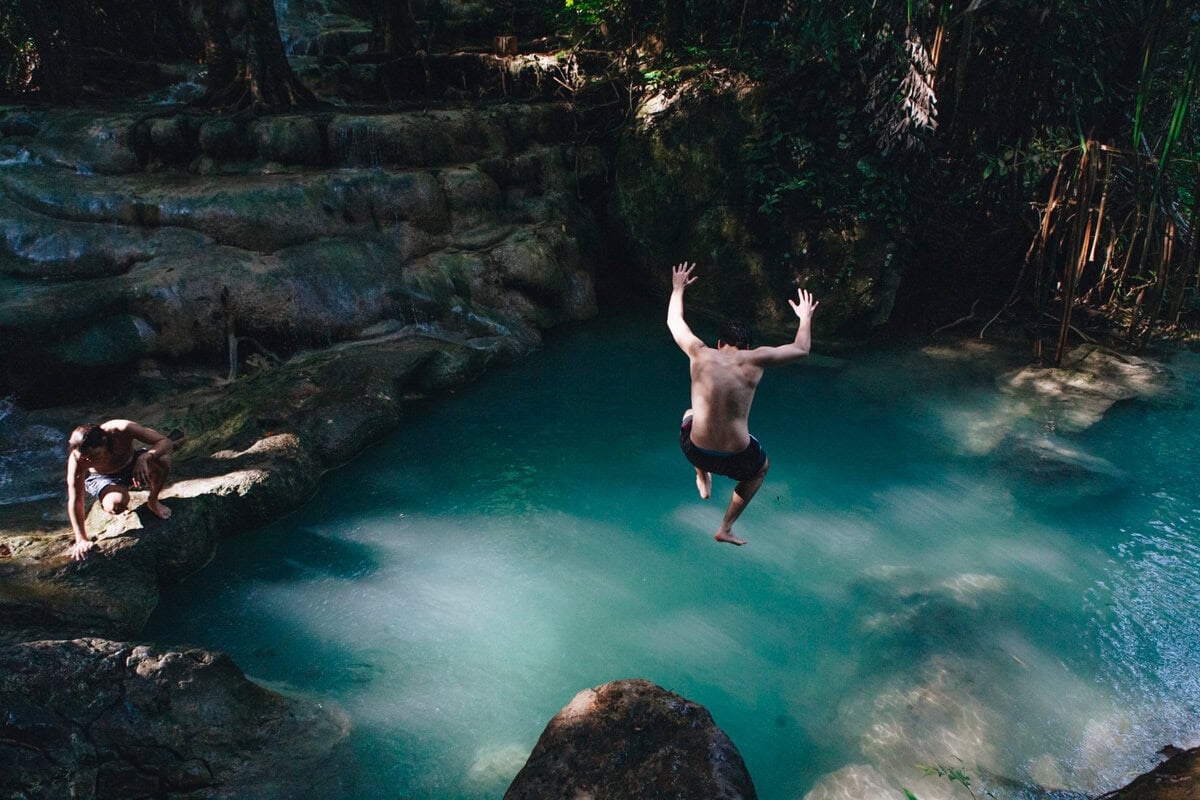
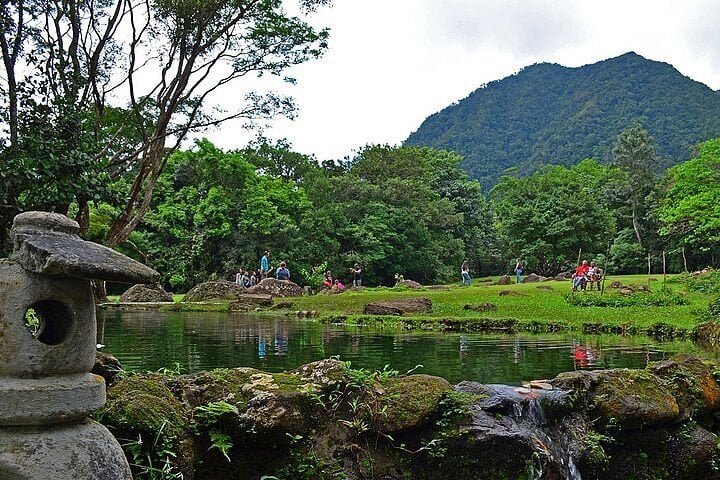
If you have extra time, the town’s gardens and waterfalls are also worth a visit. Check conditions locally before you go, as with the trail.
Practical Information
Getting There
Most travelers come from Panama City, about two hours by road. From Tocumen International Airport (PTY), allow roughly 2 to 2.5 hours by car, depending on traffic and where you’re starting.
By rental car or private transfer, follow the Pan-American Highway west toward San Carlos. Turn inland at Las Uvas and continue uphill into the valley. The mountain road winds, so allow extra time. The landscape shifts from busy urban roads to rolling hills and greenery, and then the road descends into the crater.
By public bus, take a direct bus from Albrook Bus Terminal in Panama City to El Valle de Antón. The trip typically takes 2 to 3 hours and is the affordable choice for independent travelers. If you’re doing a same-day trip, confirm the return schedule in advance.
Arrive early either way. You’ll want daylight for the hike and time to see the town.
Finding the Trailhead
Search for “La India Dormida Trailhead” or “Piedra Pintada” in Google Maps. From the town center you can walk there in 15 to 20 minutes or take a local taxi.
What to Bring
- Shoes with strong traction
- Enough drinking water
- Sun protection and insect repellent
- A lightweight rain jacket
- A phone or camera with plenty of battery
- Cash in small denominations for vendors and any entrance fees
Costs
The trail entrance costs around 3 dollars per person. The public bus from Albrook costs about 4.50 to 5 dollars each way. Other attractions in the valley, such as the waterfalls, gardens and hot springs, usually charge between 3 and 10 dollars each. Carry small bills for these fees and for the market vendors.
Hiring a Local Guide
A local guide is worth it on your first visit, on the longer ridge routes, and if you want to hear the legend and the story of Piedra Pintada from someone who grew up with them.
Frequently Asked Questions
How hard is the La India Dormida hike?
Harder than the photos suggest. The path gets steep quickly, and the stone sections are uneven. After rain they can be muddy and slippery, and the descent is just as demanding as the climb.
Can I hike La India Dormida as a day trip from Panama City?
Yes, though you’ll want an early start to keep daylight on your side. If you take the bus from Albrook Bus Terminal, confirm the return schedule before you leave the city. Arriving early also leaves time for the town.
Is the legend of La India Dormida true?
It’s folklore. No historical record backs it. In the version most people tell, Flor del Aire, a cacique’s daughter, falls for a Spanish conquistador, and a jealous warrior’s love ends in tragedy that leaves her figure on the ridge. Locals tell it as part of their storytelling tradition, and many visitors say hearing it changes how they see the ridge.
What should I eat after the hike?
Try the roadside fruit stands for fresh tropical fruit or juice. If you want a full meal, a local fonda serves sancocho de gallina with rice. A hojaldre with coffee is the classic start to the day.
How long is the La India Dormida hike, and where does it start?
The main route is roughly 3 to 6.5 km round trip and takes 1 to 3 hours, depending on how far along the ridge you go. It starts at the Piedra Pintada entrance, a 15 to 20 minute walk from the town center, and entry costs around 3 dollars.
What happens if it rains during my visit?
The valley is greener in the rainy months, but paths get muddy and steep sections turn slippery. Start early, carry rain protection, and check local conditions before heading up. If weather closes in, the town and the market still make a good day.

More ideas for your trip are in our Panama travel guides, including things to do in Panama beyond the Canal.
