

Winter Camping in the South: Where to Go and How to Prepare
Winter camping in the South works because the season flips. From December into early spring, desert parks that pass 100 degrees in summer turn hikeable, Everglades mosquitoes thin out and Gulf Coast beaches empty. Daytime highs feel like a northern spring.
The nights are what people misjudge. A damp evening in the 40s can chill you faster than a dry, freezing one, and a fuel-burning heater inside the tent is a real danger. Pick your landscape, pack for the overnight low and book early, because the best winter sites fill months before the first cold front.
Why Winter Is Camping Season in the South
Up north, winter means locked campground gates and a tent drying out in the garage until spring. Across the South, the calendar runs the other way. Places too hot or too buggy to enjoy in summer become comfortable once temperatures drop. Desert parks that are dangerous at midday in July welcome hikers in January. Southern wetlands lose their mosquito swarms and the heavy humidity, which is why birders and paddlers plan their trips around the cooler months.
Crowds thin out compared with peak summer travel, though not everywhere. Popular parks still draw snowbirds escaping northern winters, so booking ahead stays essential, but trails and campsites feel roomier. If you have already camped the Southwest in winter, the southern states add coastline and wetlands to the desert.
That mild weather is the draw. It’s also why so many campers underprepare.
Two Cold-Weather Risks That Still Apply in the South
A southern winter forecast can lull you into packing for spring. Both of the big cold-weather risks still apply when the thermometer never touches freezing.
Hypothermia Above 40°F
Hypothermia doesn’t need snow. According to the CDC, it can occur at cool temperatures above 40° Fahrenheit (4° Celsius) when you get chilled from rain, sweat or cold water. A rainy night on the Gulf Coast, or a sweaty afternoon hike followed by a desert evening that cools fast after sunset, sets up exactly those conditions.
Watch for shivering, exhaustion, confusion, fumbling hands, memory loss, slurred speech and drowsiness. If someone shows these signs, get them somewhere warm, remove wet clothing and warm them under dry layers. If their body temperature drops below 95° Fahrenheit / 35° Celsius, get medical help immediately.
Carbon Monoxide From Heaters
The second risk comes from the fix people reach for. The Consumer Product Safety Commission warns against using portable heaters or lanterns while sleeping in tents, campers or vehicles, because fuel-burning appliances can build up carbon monoxide in an enclosed space.
The symptoms are headache, dizziness, weakness, nausea, vomiting, sleepiness and confusion. They mirror a cold or the flu, which makes them easy to dismiss in the middle of the night. Keep fuel-burning heaters out of enclosed spaces and get your warmth from layers, a properly rated sleeping bag and dry clothes.
What to Pack for a Southern Winter Camping Trip
A southern winter trip can run from shirtsleeve afternoons to near-freezing nights within a few hours, so your clothing works as a system. A base layer manages moisture, a mid layer holds warmth and a shell blocks wind and rain. Layering also guards against the wet chill behind mild-weather hypothermia. Pick wool or synthetic base layers and socks. Cotton stays cold once it’s damp.
The most common mistake is packing for the daytime forecast. Check the overnight low for the campsite itself, not the nearest city. Mountain and desert sites can be much colder than towns, and elevation adds to it. Big Bend Ranch State Park ranges from 2,350 to over 5,000 feet (716 – 1524 meters).
Besides clothing layers, pack these:
- A sleeping bag rated for the coldest expected night. Treat the temperature rating as a hard limit and choose one rated below the forecast low.
- A sleeping pad. The ground pulls heat from your body faster than the air around you.
- Rain gear for Gulf and Atlantic coast trips. Wet weather is what turns mild temperatures dangerous.
- A hat and gloves for the evenings. Your head and hands lose heat quickly once the sun sets.
- Sun protection for desert days. Winter sun at altitude still burns.
- Spare dry clothes kept separate for sleeping. If your daytime layers get damp, you still have a dry set for the night.
Our camping and hiking gear guide covers the rest of the kit.
How to Choose a Winter Camping Destination in the South
Pick the experience first, then the place. Most southern winter trips fall into one of three landscapes.
Desert and Dark Skies
Desert winter nights are long, and Big Bend Ranch State Park in far west Texas is made for them. It’s an International Dark Sky Park and the largest state park in Texas, with drive-up and hike-in primitive campsites. Summer is the wrong season to come. The Texas Parks and Wildlife Department warns that temperatures typically exceed 100 degrees by late morning (38° Celsius) during the warm months and stay dangerous after sunset, which makes winter the practical season to go.
Plan for remoteness. The interior Sauceda Ranger Station sits 27 miles down a rugged dirt road from FM 170, some campsite roads need four-wheel drive or high clearance, and the park often reaches capacity. TPWD recommends reserving for both camping and day use.
Wetlands and Wildlife
For wetland camping, the Everglades are hard to beat in winter. The park’s dry season runs from December through April, which is also its busy season. Warm winters draw the widest variety of wading birds and the predators that follow them. Come in the wet season, May through November, and you trade the birds for rain and mosquitoes. If you’re a birder, paddler or photographer, plan your winter around this one.
The park covers 1.5 million acres. You reach the northern section via Miami or Everglades City and the southern section through Homestead. For more campgrounds across the state, see our guide to the best camping spots in Florida.
Coast and Beach
The Gulf Coast and the Atlantic coast from Savannah down to the Florida Keys give you beach walks and fishing without summer’s heat. The Atlantic hurricane season officially ends on November 30, so a winter trip also sits outside the storm months. Of the three landscapes, the coast has the most forgiving weather, which makes it the easiest first winter camping trip.
Tent Site, RV Hookup or Cabin
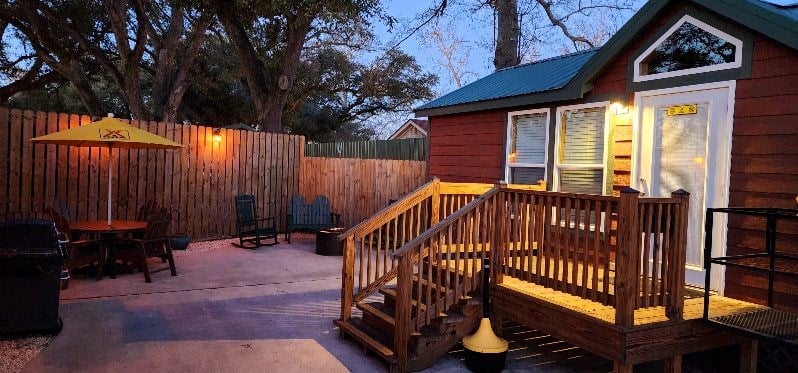
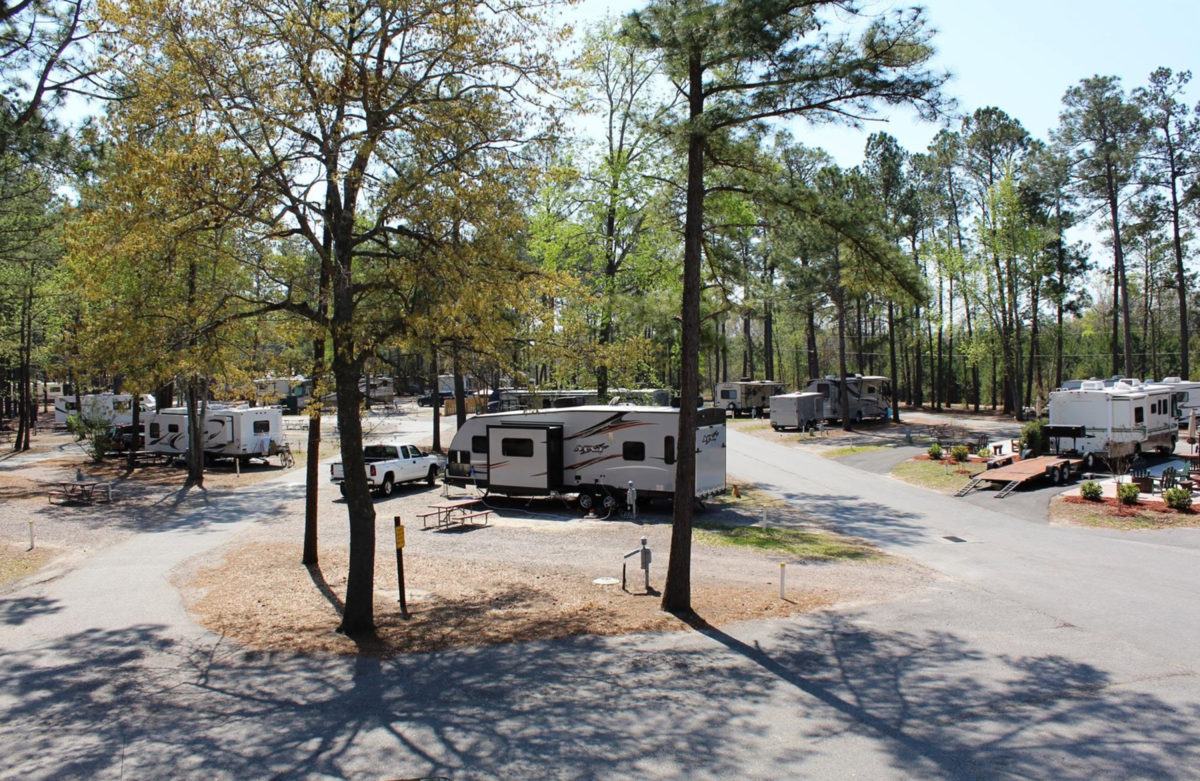
Southern winter campers choose between tent sites, RV sites with hookups and cabins for the nights the temperature drops. Tents suit flexible campers in the milder zones. Hookups make sense for long stays. Cabins give families, and anyone unsure about cold nights, a warmer fallback.
Having all three at one campground lets you switch if a cold front arrives mid-trip.
These year-round campgrounds line up with the landscapes above:
- Sugarloaf Key / Key West KOA Resort sits on the water at Mile Marker 20, about 30 minutes from Key West, with deluxe cabins, RV sites and only four tent sites, so book those early. Here’s how to get to Key West by land, sea and air.
- South Padre Island KOA Holiday covers the Texas Gulf coast and is open all year, with waterfront RV sites.
- Savannah South KOA Holiday in Richmond Hill, 18 miles south of Savannah, puts you on the Atlantic side. Ibis, herons and egrets gather on its 35-acre lake at dusk.
- New Orleans KOA Holiday in River Ridge is the closest KOA to the French Quarter, with tent sites, lodges and a shuttle into the city.
According to KOA, “most of the KOAs in this part of the country remain open.” Many campers pair a park day trip with a campground that has showers and power, and state and national park campgrounds remain options too.
How to Book Your Campsite Before It Fills Up
Winter sites at popular parks are claimed long before the season starts. Florida State Parks allow residents to reserve up to 11 months in advance and nonresidents up to 10 months ahead, and new dates are released daily at 8 a.m. Eastern. Campsites there currently cost $16 to $42 a night, plus a $6.70 reservation fee per booking. Even remote Big Bend Ranch often reaches capacity, so booking windows matter everywhere.
A simple sequence works:
- Pick your dates and a backup set.
- Confirm the campground is open in winter.
- Reserve the day your booking window opens.
- Note the cancellation terms in case your plans change.
- A week before arrival, call or check the campground page to confirm water, showers and hookups, since services can shift with the season.
For more trip ideas across the country, browse our USA travel guide.
Frequently Asked Questions
Is winter camping in the South actually cold?
Days are often mild, but nights can drop toward freezing, especially at desert and higher-elevation sites. The bigger risk is wet cold, since hypothermia can set in above 40°F when you’re damp from rain or sweat. Pack layers and keep a dry set of clothes for sleeping.
Where is the warmest place to camp in the South in winter?
South Florida and the Florida Keys stay the warmest, which is why the Everglades and the Keys book up first. Desert parks like Big Bend Ranch have warm, sunny days but the coldest nights of the three landscapes, so pack for both.
Are southern campgrounds open in the winter?
Many stay open year-round, including the four KOA campgrounds listed above, but some limit services in the colder months. Check that water, showers and hookups are running before you arrive.
How far ahead should you book a winter campsite?
Book as soon as your window opens. Florida residents can reserve state park sites 11 months ahead and nonresidents 10 months ahead, and popular winter dates go quickly. Texas state parks such as Big Bend Ranch also take reservations and often reach capacity.
Can you use a heater in a tent?
Keep fuel-burning heaters and lanterns out of the tent. They can release carbon monoxide in an enclosed space, and the CPSC warns against using them while you sleep. If you want guaranteed warmth on a cold night, book a cabin and rely on a rated sleeping bag, an insulated pad and dry layers in the tent.

